
To improve your desk posture, focus on exercises like scapular wall slides, prone I, T, and Y movements, and band pull-aparts, which strengthen your shoulder blades and upper back. Aim for 2 sets of 10-12 reps daily, using proper form to avoid strain. These exercises help correct muscle imbalances and support better alignment. Keep practicing, and you’ll discover more tips to maintain a healthy, pain-free posture throughout your day.
How Poor Desk Posture Damages Your Shoulder Blades and Body
Poor desk posture, such as slouching and craning your neck forward, actively strains your shoulder blade muscles and disrupts their balance. When you neglect proper alignment, your shoulder blades tend to move apart, disrupting scapula alignment and leading to muscle imbalance. Properly adjustable ergonomic features, like lumbar support mechanisms, can help promote better spinal alignment and reduce strain. This posture encourages your upper trapezius and levator scapulae muscles to tighten up, while your lower trapezius and rhomboids weaken, impairing shoulder blade stability. Over time, these imbalances cause pain, limited mobility, and increased injury risk, like shoulder impingement or rotator cuff issues. Poor posture places excessive stress on your shoulder blades and upper back, forcing compensatory movements that strain your neck, shoulders, and spine. Fixing your posture helps restore muscle balance, protect your shoulder blades, and improve overall body mechanics.
Signs You Need to Strengthen Your Shoulder Blades
Are you noticing that your shoulders tend to round forward or slump during long hours at your desk? This often signals weak shoulder blade muscles that need strengthening. If you experience upper back fatigue or discomfort after desk work, it’s a sign your scapular stabilizers are underactive. Difficulty maintaining proper posture, with ears over shoulders, reveals poor shoulder blade endurance, risking shoulder and upper neck issues. Tension in neck and shoulder muscles from compensating also indicates imbalance. Limitations with shoulder blade squeezes or wall slides point to insufficient strength. Recognize these signs and consider consulting a physical therapist. Strengthening your shoulder blades can improve posture, reduce neck pain, and keep your shoulders healthy. Additionally, understanding range of motion requirements helps in selecting effective exercises for shoulder blade stability.
Top Shoulder Blade Exercises for Better Posture
Focusing on exercises that strengthen your upper back, improve shoulder mobility, and align your posture can make a big difference. Incorporating movements like shoulder blade squeezes and wall slides helps build stability and flexibility. Using targeted adjustable straps during these exercises can enhance posture correction efforts by providing better support and engagement.
Strengthening Upper Back
Strengthening the upper back is essential for correcting desk posture and preventing discomfort from prolonged sitting.
Focusing on the shoulder blade and scapular muscles helps maintain proper alignment and reduces strain. Incorporate strengthening exercises such as:
- Prone I, T, Y movements to activate shoulder blade stabilizers
- Band Pull-Aparts for building upper back and rear shoulder strength
- Scapular Wall Slides to improve mobility and scapula alignment
- Shoulder Blade Squeezes to reinforce postural support muscles
Perform these exercises consistently—2 sets of 10 to 12 reps daily—to enhance upper back strength. This targeted approach not only counters rounded shoulders but also alleviates upper back muscle strain, improving your overall desk posture and comfort throughout the day. Proper ergonomics plays a crucial role in maintaining healthy posture while sitting for extended periods.
Improving Shoulder Mobility
Improving shoulder mobility is essential for maintaining good posture, especially for those who spend long hours at a desk. When your shoulder stabilizers and scapular muscles move freely, you reduce the risk of rounding the shoulders and neck strain common in desk jobs. Using adjustable armrests that support proper ergonomic positioning can further enhance shoulder comfort and alignment during work. Exercises like shoulder blade squeezes strengthen the muscles supporting your posture by encouraging scapular retraction. Scapular wall slides promote proper alignment and increase shoulder mobility by sliding your arms against the wall while maintaining contact with key points on your body. The Prone I, T, and Y exercises target your shoulder stabilizers directly, helping you regain control over your scapula’s movement. Incorporating these exercises regularly helps keep your shoulders flexible, improves posture, and relieves tension from prolonged sitting.
Enhancing Postural Alignment
To enhance your postural alignment, incorporating targeted shoulder blade exercises can make a significant difference. These exercises strengthen the muscles supporting your shoulders and upper back, helping to correct rounded shoulders and improve overall alignment.
For example, shoulder blade squeezes firm up the muscles by squeezing the blades together and holding for 5 seconds, repeating 10-15 times. Prone I, T, Y exercises target stabilizers by lifting your arms in specific positions while lying face down. Band pull-aparts strengthen rear shoulder and upper back muscles by pulling a resistance band apart. Scapular wall slides help improve scapula alignment and mobility by sliding your arms up and down against a wall.
Consistent practice of these exercises supports better postural alignment during long desk periods.
- Shoulder blade squeezes
- Prone I, T, Y exercises
- Band pull-aparts
- Scapular wall slides
How to Incorporate Shoulder Blade Exercises Into Your Daily Routine
Incorporating shoulder blade exercises into your daily routine is an effective way to support better posture at your desk, especially when you make them frequent and easy to fit into your day. Schedule short sessions, like Shoulder Blade Squeezes or Scapular Wall Slides, 1-2 times daily. Integrate these exercises into regular work breaks every 30-60 minutes to reduce muscle tightness and improve desk posture without disrupting productivity. Use reminders or apps to prompt movement breaks, ensuring consistency for long-term benefits. You can also combine strengthening exercises, like Band Pull-Aparts, with stretches such as Chest Doorway Stretches to enhance flexibility and strength for ideal shoulder blade positioning. Understanding ergonomic support and incorporating targeted movements can significantly improve spinal alignment.
Common Mistakes to Avoid During Shoulder Blade Exercises
When doing shoulder blade exercises, you might accidentally overuse your shoulder muscles or mimic improper arm positioning, which can limit effectiveness or cause strain. Pay attention to your pain signals and never push through discomfort, as ignoring pain can lead to injury. Avoid rushing or using momentum—move slowly and keep proper form to protect your shoulders and maximize benefits. Incorporating ergonomic support can help maintain proper posture and reduce muscle strain during exercise routines.
Overusing Shoulder Muscles
Overusing shoulder muscles during shoulder blade exercises can undermine your efforts to improve posture. When you overactivate muscles like the upper traps, you risk increased tension and muscle fatigue, which hampers progress.
To avoid this, focus on relaxing your shoulders and engaging the correct muscles. Overusing shoulder muscles often leads to compensatory movements that strain your neck and shoulders, rather than strengthening the shoulder blade area. Utilizing appropriate ergonomic support can also help maintain proper muscle engagement during exercises.
Keep in mind these points:
- Don’t shrug or lift shoulders toward your ears during exercises.
- Avoid using excessive resistance or speed that causes overactivation.
- Don’t hold your breath; it increases muscle tension.
- Engage your core and upper back to prevent excessive shoulder muscle use.
Proper technique guarantees balanced muscle recruitment, supporting your upper body and posture improvement.
Incorrect Arm Positioning
Paying attention to arm positioning is key to performing shoulder blade exercises correctly and avoiding common mistakes. When doing shoulder blade exercises, avoid shrugging your shoulders or lifting them toward your ears, as this engages the wrong muscles and increases neck tension.
Keep your left hand and other limbs relaxed, maintaining a neutral arm position to promote proper scapular movement. Avoid locking your elbows or overextending your shoulders, which can cause joint strain and reduce exercise effectiveness.
Be careful not to flare your elbows too far forward or backward, as this can compromise the targeted activation of your upper back muscles. Additionally, refrain from letting your shoulder blades drift apart or wing out, since this diminishes exercise benefits and worsens posture. Incorporating ergonomic support tools like lumbar cushions can also help maintain proper posture during exercises and daily activities.
Ignoring Pain Signals
Ignoring pain signals during shoulder blade exercises can lead to serious injuries and setbacks. If you feel sharp or persistent pain, stop immediately—pushing through can worsen strain or cause damage.
Overstretching or forcing your range of motion might seem helpful but may harm muscles or ligaments instead of providing relief. Performing exercises with improper form, like shrugging shoulders during shoulder blade squeezes, reinforces poor posture and increases discomfort.
Additionally, neglecting the importance of warming up or overdoing repetitions without rest can cause muscle tightness and inflammation. Using adaptively adjustable tools, such as adjustable ergonomic footrests, can also help maintain proper posture and reduce strain during exercises or prolonged activity.
- Ignoring pain signals can escalate minor discomfort into injury
- Overstretching risks muscle or ligament damage
- Proper form is essential for effective, safe exercises
- Rest and warm-up prevent muscle fatigue and injury
How an Ergonomic Setup Supports Your Posture Goals
An ergonomic setup plays a crucial role in supporting your posture goals by encouraging proper alignment and reducing strain throughout the workday. Positioning your monitor at eye level helps prevent neck strain and promotes shoulder alignment. Using a lumbar support cushion maintains spinal balance, preventing slouching and supporting shoulder blades. Guarantee your feet are flat on the floor, with legs uncrossed, to distribute weight evenly and improve upper back posture. An adjustable chair with proper height and armrests allows your shoulders to relax and upper back muscles to engage correctly, reducing tension. Regular movement breaks, combined with these adjustments, prevent muscle tightness and promote shoulder blade stability.
| Feature | Benefit |
|---|---|
| Eye Level monitor | Reduce neck and shoulder strain |
| Lumbar support cushion | Proper spinal alignment |
| Feet flat on the floor | Support upper back posture |
When to Seek Professional Help for Shoulder and Posture Issues
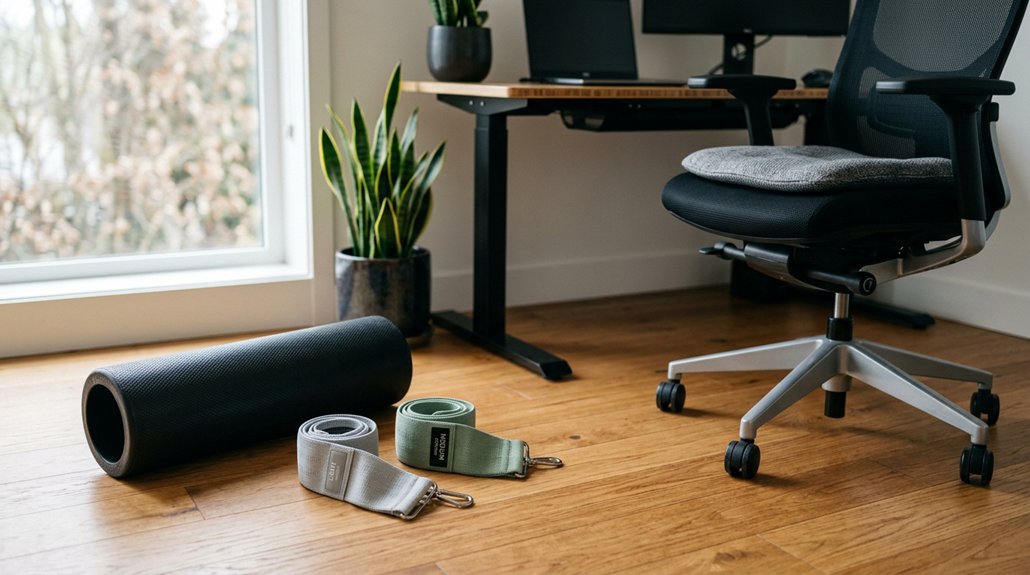
While maintaining an ergonomic setup helps prevent many posture-related issues, certain warning signs indicate when professional help is necessary.
If you experience persistent shoulder pain beyond a few weeks despite stretching and strengthening exercises, it’s time to see a healthcare provider. Seek immediate care if your pain follows an injury or includes swelling, redness, or intense discomfort.
If numbness, tingling, or weakness occurs in your arms or hands, nerve involvement may be present, and a professional evaluation is essential.
You should also consult a specialist when poor posture causes chronic pain, reduced range of motion, or limits daily activities. A physical therapist can create tailored exercises and ergonomic strategies to address these issues and prevent long-term complications.
Frequently Asked Questions
How to Improve Shoulder Posture at Desk?
To improve shoulder posture at your desk, sit tall, do shoulder blade squeezes regularly, perform scapular wall slides, and use resistance bands for pull-aparts. Take frequent breaks and guarantee your workspace supports good ergonomics.
How Do I Fix My Shoulder Blade Posture?
You can fix your shoulder blade posture by regularly doing shoulder blade squeezes, strengthening with band pull-aparts, practicing scapular wall slides, and maintaining awareness with ergonomic adjustments and movement breaks to reduce rounding and enhance alignment.
Can Sitting at a Desk Cause Shoulder Blade Pain?
Yes, sitting at a desk can cause shoulder blade pain due to poor posture, muscle imbalance, and lack of movement. You might develop tight muscles, fatigue, and discomfort, especially if you don’t take regular breaks or maintain ergonomic habits.
Does Squeezing the Shoulder Blades Help Posture?
Yes, squeezing your shoulder blades improves your posture by strengthening supporting muscles, pulling shoulders back, reducing neck strain, and promoting better alignment. Doing this regularly helps counteract desk work’s negative effects and keeps your upper back healthy.


Leave a Reply