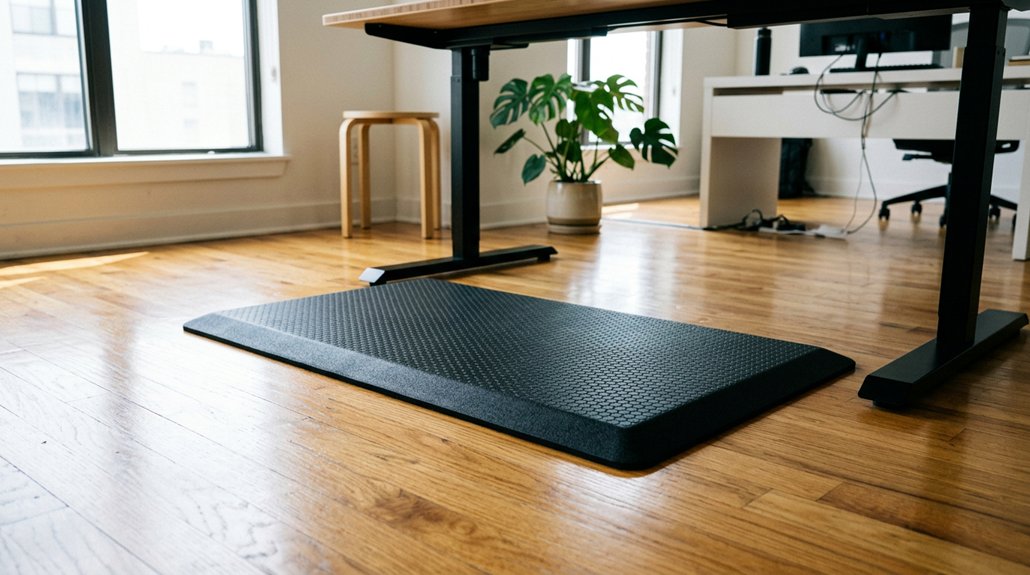
Anti-fatigue mats help you stay comfortable and productive by reducing muscle fatigue and improving circulation during prolonged standing. They absorb shock, support better posture, and encourage subtle muscle movements to boost blood flow. This reduces joint and muscle strain, lowering the risk of discomfort and injury. Plus, they enhance safety with slip-resistant surfaces and beveled edges. If you want to learn more about how these mats can benefit you, keep exploring the details below.
What Are Anti-Fatigue Mats and How Do They Work?
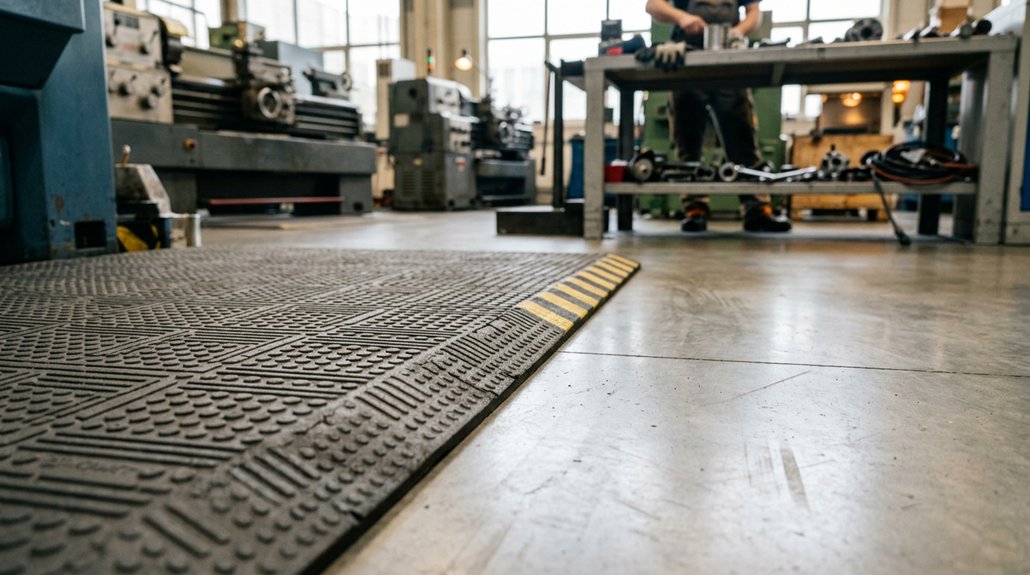
Have you ever wondered how anti-fatigue mats reduce discomfort when standing for long periods? These specially designed cushioned surfaces support your lower body during prolonged standing, helping to reduce fatigue.
When you stand on an anti-fatigue mat, it encourages subtle muscle movements that boost blood circulation. By promoting leg and calf muscle contractions, the mats activate the venous pump, which helps blood flow back to your heart more effectively. This improved circulation lessens muscle constriction and prevents fatigue from setting in quickly.
Additionally, anti-fatigue mats absorb shock from walking and standing, easing spinal compression and joint pressure. As a result, they support better posture and lessen physical strain on your feet, legs, knees, and hips—all essential for reducing discomfort during extended periods of standing. Proper surface texture also contributes to non-slip stability, ensuring safety and consistent support throughout use.
How Anti-Fatigue Mats Improve Circulation and Reduce Fatigue
Anti-fatigue mats directly enhance circulation by encouraging subtle muscle movements in your legs and calves. This activity supports the venous pump, which boosts blood flow and reduces muscle constriction.
The cushioning effect of these mats decreases physical stress on your feet and joints, lessening muscle fatigue and joint stiffness from standing too long. Improved blood flow from anti-fatigue mats helps lower symptoms like burning, itching, numbness, and swelling often caused by poor circulation.
Additionally, the elastic surface absorbs shock, reducing spinal compression and overall body fatigue by up to 50%. This combined effect of increased blood flow and decreased muscle strain keeps you energized longer and less fatigued, making anti-fatigue mats an effective solution for reducing the physical toll of prolonged standing. Recognizing the importance of material durability in these mats ensures long-term comfort and safety during extended use.
Health Benefits of Using Anti-Fatigue Mats at Work
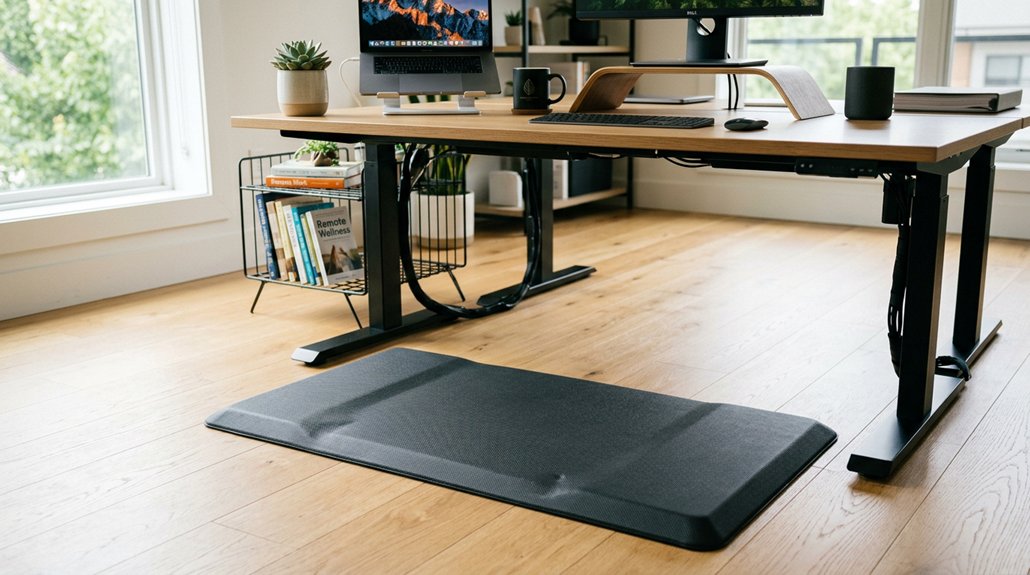
Using anti-fatigue mats at work improves your circulation, helping blood flow more efficiently and reducing fatigue. They also minimize joint strain and stiffness, lowering the risk of musculoskeletal issues. Overall, they promote better health, comfort, and safety during long hours of standing. Incorporating mats with massage nodules can further enhance circulation and muscle relaxation.
Enhanced Circulation Benefits
Standing for long periods can lead to poor blood flow in your lower limbs, but anti-fatigue mats help counteract this by encouraging subtle muscle movements in your legs and calves. These movements promote enhanced circulation, allowing better blood flow back to your heart and preventing blood pooling. The non-slip rubber bottom of anti-fatigue mats ensures stability, preventing slips and further supporting circulation by maintaining a secure stance.
Improved circulation reduces symptoms like foot burning, itching, and numbness caused by poor venous return. By supporting the venous pump function, anti-fatigue mats help ease muscle constriction and decrease fatigue in your feet, legs, and lower back.
This increased blood flow also lowers the risk of varicose veins and circulation-related issues. Overall, using anti-fatigue mats during extended standing supports better blood circulation and helps maintain your vascular health throughout your workday.
Reduced Joint Strain
When you stand for long periods on hard surfaces, your joints take the brunt of the impact, which can lead to pain and long-term wear. Anti-fatigue mats work by cushioning your feet and distributing pressure evenly across your standing posture, reducing joint strain. Using a high-quality mat designed with anti-slip backing or textured surfaces also helps maintain stability, preventing slips that could cause additional strain or injury. These mats promote subtle muscle movements that enhance blood flow, helping to prevent stiffness and swelling in your joints. Using anti-fatigue mats can cut joint pain by about 50%, making prolonged standing more comfortable. They absorb shocks from walking and reduce spinal compression, protecting your hips, knees, and lower back from chronic impact. Consistent use supports healthier posture, easing strain on your joints and decreasing the risk of musculoskeletal discomfort linked to extended standing on hard floors.
Lower Musculoskeletal Risks
Anti-fatigue mats play an essential role in lowering the risk of musculoskeletal disorders by reducing strain on muscles and joints during prolonged periods of standing. They help minimize joint stiffness, back pain, and muscle fatigue, promoting better overall musculoskeletal health.
By cushioning hard surfaces, these mats encourage proper posture and reduce pressure on the spine by up to 50%, easing back pain. They also enhance blood circulation through subtle muscle movements, preventing chronic discomfort.
Using anti-fatigue mats can greatly decrease fatigue-related issues, such as foot burning, numbness, and swelling.
- Reduce joint stiffness and joint-related discomfort
- Lower risk of back pain and spinal issues
- Improve posture and muscle alignment
- Prevent venous issues like varicose veins
- Decrease overall musculoskeletal strain
Safety Benefits of Anti-Fatigue Mats in the Workplace
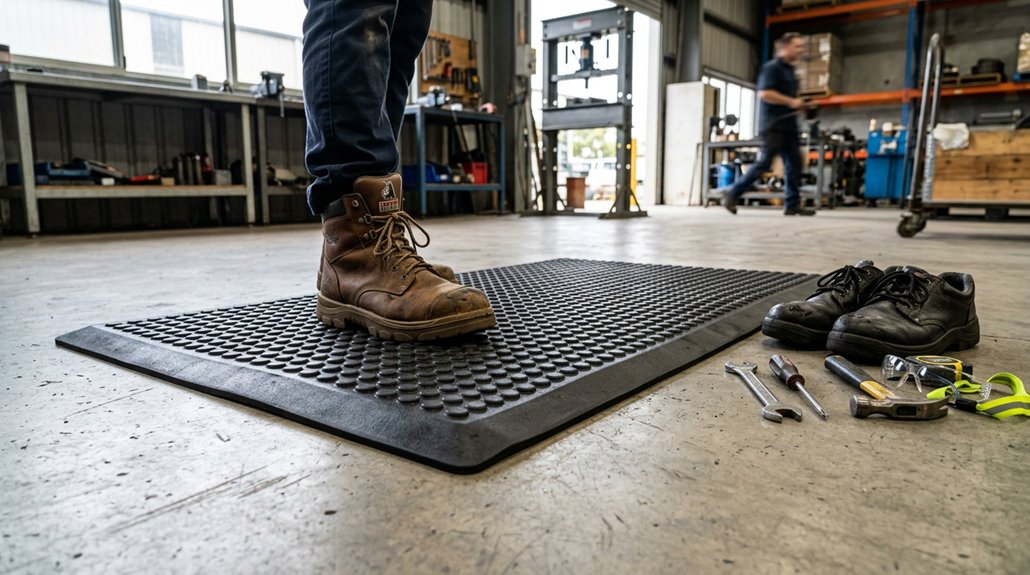
Workplace safety is greatly enhanced by anti-fatigue mats, which are designed with features that help prevent common injuries. These mats have non-slip ribbed surfaces that markedly lower the risk of slips and falls, a leading cause of workplace injury.
They also cushion impacts and promote subtle muscle movements, helping to prevent joint stiffness and muscle fatigue, especially during long standing periods. The shock-absorbing properties of anti-fatigue mats reduce spinal compression, supporting better posture and decreasing strain-related accidents.
Additionally, by decreasing physical discomfort, these mats help reduce distractions and improve attentiveness, creating a safer environment. Floor protection, along with ergonomic design, plays a crucial role in preventing long-term musculoskeletal issues. Overall, anti-fatigue mats not only improve comfort but also play a vital role in minimizing injuries associated with slips, falls, and fatigue.
How Anti-Fatigue Mats Support Better Posture and Reduce Musculoskeletal Strain
Anti-fatigue mats help you maintain a natural standing posture by encouraging subtle movements and weight shifts. They absorb shock and reduce joint pressure, easing stress on your knees, hips, and lower back. This support helps prevent musculoskeletal strain and promotes better overall alignment during long periods of standing. Additionally, using non-slip features can enhance stability and safety, further supporting ergonomic posture.
Encourages Natural Standing Posture
Standing for long periods can lead to poor posture and musculoskeletal discomfort, but using mats designed to promote natural alignment can make a significant difference.
Anti-fatigue mats encourage natural shifts in standing posture and promote subtle leg and calf muscle movements. This dynamic adjustment helps reduce static muscle strain and keeps you more comfortable.
By cushioning hard floors, these mats distribute body weight evenly, supporting proper upright posture and preventing slouching caused by fatigue. Maintaining better posture during prolonged standing reduces stress on your spine and hips.
Additionally, anti-fatigue mats often feature ergonomic design features that promote core engagement and micro-movements, further enhancing comfort and reducing fatigue.
- Promotes natural shifts in muscle activity
- Encourages upright posture naturally
- Minimizes static muscle strain
- Supports healthy standing alignment
- Helps prevent fatigue-related slouching
Reduces Joint and Muscle Stress
Since prolonged contact with hard surfaces can lead to joint stiffness and muscle fatigue, using mats designed to cushion those surfaces effectively reduces these issues.
Anti-fatigue mats help reduce stress on your joints and muscles by distributing your body weight evenly, which minimizes pressure points on knees, hips, and feet. Standing on these mats encourages subtle leg and calf muscle movements, improving blood circulation and alleviating musculoskeletal fatigue.
They also decrease spinal compression, supporting better posture and reducing back and lower limb discomfort. Studies show anti-fatigue mats can reduce muscle and joint fatigue by approximately 50%, considerably supporting overall musculoskeletal health during extended standing periods.
The use of ergonomic mats can further enhance support and comfort, promoting healthier standing habits over time.
Boosting Employee Productivity and Morale With Anti-Fatigue Mats
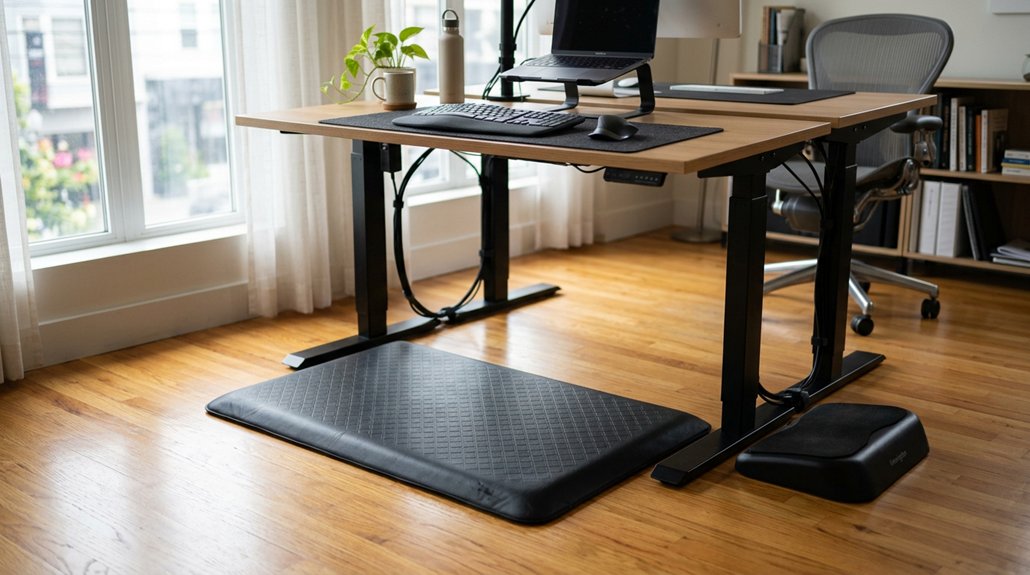
When employees stand for long periods on hard flooring, discomfort and fatigue can quickly take a toll on their focus and efficiency. Anti-fatigue mats help by cushioning feet and promoting blood circulation, leading to higher productivity during extended standing.
They minimize aches and pain caused by standing on hard surfaces, allowing workers to maintain focus without distraction. Studies show that providing anti-fatigue mats boosts morale and overall productivity by reducing fatigue caused by standing.
Using these mats also supports natural shifts in posture, preventing slouching and back pain. When employees feel comfortable and safe, they’re more motivated and engaged. Properly designed anti-fatigue mats can improve circulation and reduce fatigue, enhancing overall workplace well-being.
- Improved comfort and safety
- Reduced physical strain
- Decreased distractions
- Enhanced focus and efficiency
- Sustained working ability
How Anti-Fatigue Mats Protect Your Joints and Muscles
Anti-fatigue mats actively protect your joints and muscles by cushioning your feet and absorbing shock from hard floors.
When you’re standing on hard surfaces, your joints endure constant pressure, which can lead to stiffness and discomfort. Anti-fatigue mats help reduce this strain by providing a softer surface that decreases joint stiffness and lowers stress on your knees, hips, and ankles. They also promote subtle muscle contractions and improve blood flow, preventing muscle fatigue and easing tension in your shoulders, neck, and back.
The cushioning lessens pressure on your joints, helping to prevent varicose veins and relief from chronic joint pain caused by prolonged standing. Using anti-fatigue mats ultimately decreases spinal compression, encouraging better posture and reducing the risk of musculoskeletal issues linked to standing on hard floors.
Choosing the Best Anti-Fatigue Mat for Your Work Environment
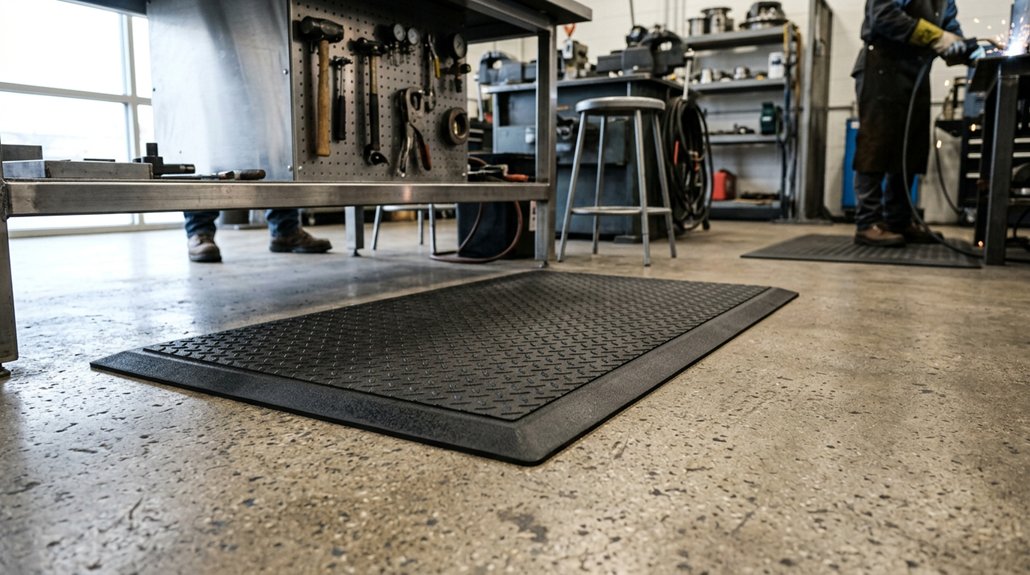
Choosing the right anti-fatigue mat for your work environment involves evaluating factors like thickness, material, and safety features to guarantee maximum comfort and protection. You want mats with appropriate thickness and elasticity to provide superior cushioning, assuring effective shock absorption and muscle activation.
Select rubber mats with slip-resistant surfaces and beveled edges to reduce trip hazards and improve safety. Consider environmental conditions such as moisture, chemicals, or cleanliness needs—materials like rubber, PVC, or nitrile are suited for demanding workplaces.
Match the surface profile, whether ribbed or studded, to support micro-movements that boost circulation and lessen fatigue. Also, affirm the mats are easy to clean and meet hygiene standards, especially in food or medical settings.
Maintaining Your Anti-Fatigue Mat for Durability and Safety
Maintaining your anti-fatigue mat is essential for preserving its durability and safety. Regularly clean your anti-fatigue mats with mild detergents and water to prevent dirt, oils, and debris from building up. This keeps the mats slip-resistant and hygienic.
Regular cleaning with mild detergents keeps anti-fatigue mats slip-resistant and hygienic.
Always inspect mats frequently for wear, tears, or curled edges to avoid trip hazards and confirm they remain cushioned and effective. Proper placement with sloped edges helps prevent tripping and allows smooth movement of carts or equipment.
Avoid exposing mats to harsh chemicals or extreme temperatures, which can degrade the material and shorten their lifespan. Rotating or replacing mats periodically based on usage helps sustain ergonomic benefits and workplace safety.
Proper maintenance guarantees your anti-fatigue mats deliver long-lasting comfort and protection.
Are Anti-Fatigue Mats a Cost-Effective Investment for Your Business?
Investing in anti-fatigue mats often proves to be a smart financial decision for many businesses. These mats help lower the costs associated with employee discomfort by reducing joint, back pain, and muscle weakness during long periods of standing.
The benefits extend beyond health, as they can cut insurance premiums and decrease worker’s compensation claims. You’ll also see improved productivity and fewer hidden costs related to absenteeism.
Anti-fatigue mats support healthier staff, which means fewer lost workdays and less expense for long-term medical treatment.
- Reduced medical expenses and insurance premiums
- Lower costs associated with absenteeism
- Fewer work-related injury claims
- Better employee morale and engagement
- Increased ROI through healthier, more productive staff
Do Anti-Fatigue Mats Work at Home or With Standing Desks?
Have you ever wondered if anti-fatigue mats truly make standing desks more effective at home? They do. These mats reduce muscle fatigue and boost blood circulation by encouraging subtle leg and calf movements during prolonged standing. If you’re standing for long on a hard floor, anti-fatigue mats cushion pressure, decreasing joint stiffness and lower back pain. They help maintain proper posture, making standing work more comfortable.
| Feelings | Benefits |
|---|---|
| Discomfort | Reduced pain when standing on hard floors |
| Fatigue | Longer standing periods without exhaustion |
| Stiffness | Better joint flexibility and posture |
| Focus | Increased productivity and focus |
In work environments or home setups, anti-fatigue mats support natural shifts in posture, preventing strain and venous issues.
Frequently Asked Questions
Do Anti-Fatigue Mats Actually Help?
Yes, anti-fatigue mats help by reducing fatigue, improving circulation, and lowering muscle strain. They cushion shock, distribute pressure evenly, and decrease back tension and foot discomfort, making your standing work more comfortable and less taxing overall.
What Are the Disadvantages of Anti-Fatigue Mats?
Anti-fatigue mats can wear out quickly with heavy use, cause muscle fatigue if too soft, pose trip hazards if poorly installed, lead to foot soreness, and might not fully eliminate discomfort unless combined with proper footwear and work practices.
What Do Anti-Fatigue Mats Do?
Anti-fatigue mats reduce your fatigue by encouraging subtle foot movements, improving circulation, and softening shock. They enhance posture, distribute weight evenly, and lessen muscle soreness, helping you stand comfortably longer while minimizing discomfort during extended periods.
Can Standing Mats Help With Plantar Fasciitis?
Standing mats can definitely help your plantar fasciitis by cushioning your feet, improving blood flow, reducing pressure on your heel and arch, and encouraging better posture—making standing more comfortable and helping alleviate pain and inflammation.
In Summary
Investing in anti-fatigue mats can make a real difference in your comfort, safety, and overall health at work. By reducing fatigue, improving circulation, and supporting better posture, these mats help prevent musculoskeletal issues and boost productivity. Whether you’re working at a standing desk or on a factory floor, choosing the right mat is key. Keep it well-maintained to guarantee lasting benefits, making your workspace safer and more comfortable for the long term.