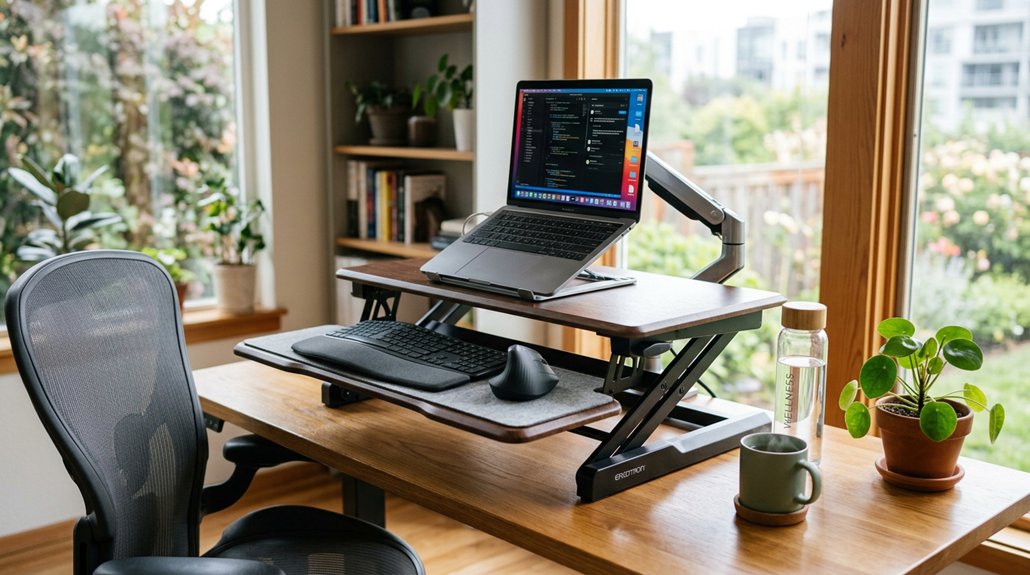
Using desk converters long-term can cause poor posture, leading to neck, back, and wrist strain. Limited adjustability and stability issues increase the risk of musculoskeletal disorders and discomfort over time. Repeated adjustments may lead to fatigue, while workspace restrictions can cause muscle imbalance and stress. Safety concerns from wobbling or tipping, plus productivity disruptions, add to the long-term health impacts. To better understand how these factors affect you and potential solutions, keep exploring the details.
Are Desk Converters Good for Your Long-Term Musculoskeletal Health?
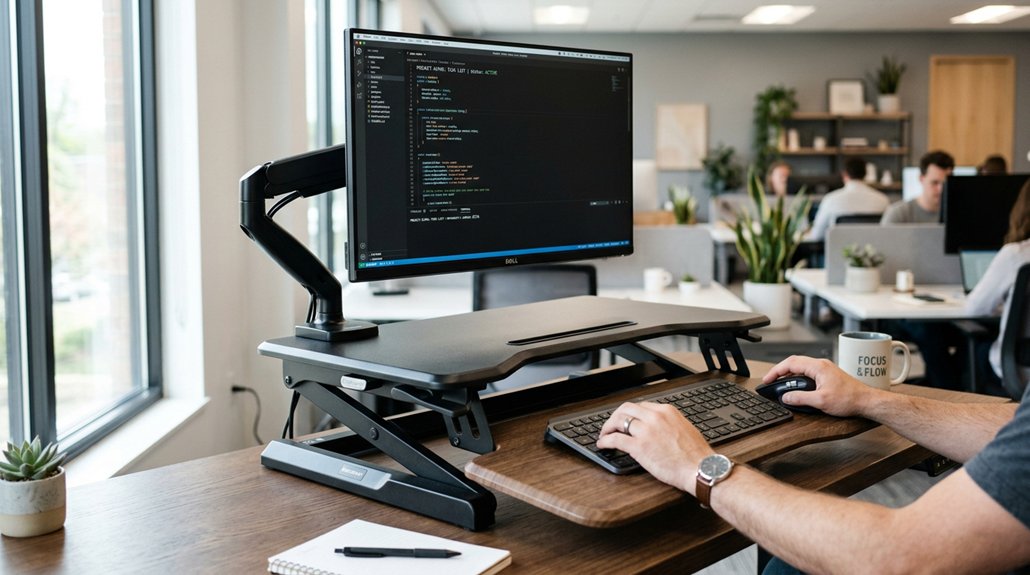
Are desk converters truly beneficial for your long-term musculoskeletal health? Likely not. While desk converters and standing desk converters aim to promote movement, many offer limited ergonomic adjustability.
A fixed height range can make it tough to find a proper sitting or standing position, leading to poor posture. This often results in musculoskeletal strain, especially in your neck, back, and wrists.
Frequent adjustments can disrupt stability, causing awkward postures that increase discomfort over time. Additionally, limited workspace and poor stability on some converters may force you into harmful positions.
Unlike adjustable standing desks, desk converters don’t support sustained ergonomic health, making long-term use potentially risky for musculoskeletal well-being. Adjustment mechanisms play a crucial role in ensuring smooth and safe transitions, yet many models lack sufficient versatility for personalized ergonomic setups.
What Are the Ergonomic Drawbacks of Desk Converters?
Desk converters often fall short in providing flexible ergonomic adjustments, which can lead to poor posture and discomfort. Their limited height options force many users into awkward sitting positions, causing musculoskeletal strain. Additionally, the small workspace restricts monitor, keyboard, and mouse placement, complicating proper ergonomic setup. Instability and wobbling further diminish comfort and safety, prompting users to adopt unstable postures that strain the neck, back, and wrists. Heavy converters require frequent manual repositioning, increasing injury risk and reducing ergonomic stability. To better understand these drawbacks: compact design and the importance of adjustable features are crucial considerations in avoiding ergonomic issues.
Can Desk Converters Disrupt Your Workflow and Focus?

Frequent height adjustments with desk converters force you to move your devices and cables, breaking your focus. The more time you spend rearranging, the more your productivity drops. Additionally, constant repositioning can lead to ergonomic issues, such as increased strain on muscles and joints.
Disruptions From Frequent Adjustments
| Issue | Impact | Frequency |
|---|---|---|
| Moving items & reconnecting cables | Interrupts focus; causes delays | Multiple adjustments daily |
| Repositioning heavy converters | Time wastage; reduces workflow efficiency | Daily |
| Lack of smooth adjustments | Increased frustration; workflow disruptions | Common in manual models |
| Disrupted productivity | Affects long-term health and work satisfaction | Ongoing |
Workflow Interruptions During Repositioning
Repositioning a desk converter can often disrupt your workflow and break your concentration, especially when it involves moving items and reconnecting cables. These workflow interruptions make it harder to maintain focus and momentum. Adjusting converters multiple times daily wastes time and hampers productivity, as you need to stop and reorganize your workspace. Unlike dedicated standing desks, desk converters lack seamless height adjustment, making sit-stand shifts cumbersome and distracting. Each time you move items or tweak the converter’s position, you introduce disruptions that break your creative flow. The repeated need to rearrange your workspace increases cognitive load, making it more difficult to stay engaged with your tasks. Additionally, frequent adjustments may lead to mechanical wear and tear, reducing the converter’s lifespan and stability over time structure stability.
Are Desk Converters Stable and Safe Over Time?
You might notice that many desk converters wobble or tip over after months of use, raising safety concerns. Their heavy, adjustable parts can wear down or become unstable, making frequent adjustments risky. Choosing a monitor stand with a sturdy, reliable mounting method, such as a heavy-duty clamp or a weighted base, can help mitigate these issues and ensure long-term stability. Long-term stability
Long-Term Stability Concerns
Over time, many desk converters become unstable, frequently wobbling or rocking during use, which can distract you and create safety hazards. These stability concerns often lead to tipping hazards, especially when the converter extends beyond desk edges or during frequent height adjustments.
As you use them longer, the risk of sudden movements increases, making prolonged use unsafe and uncomfortable. The weight and size of these converters, often between 28.7 and 61.9 pounds, make them difficult to lift safely and increase injury risk if repositioned improperly.
Compared to full-sized electric standing desks, desk converters offer less secure support, making movement under typical work pressure more prone to instability. Over time, this instability can compromise safety, productivity, and your overall comfort. Proper ergonomic design features, such as stable bases and secure locking mechanisms, are essential to mitigate these risks.
Wear and Tear Risks
As desk converters age, their stability often diminishes due to mechanical wear and component fatigue. Frequent height adjustments and daily lifting of these converters, which can weigh between 28.7 to 61.9 pounds, accelerate wear on their parts, increasing the risk of failure or damage. Using high-quality monitor arms with robust construction can help support weight and maintain stability over time. Over time, the lighter, less rigid construction makes them more prone to wobbling and rocking, especially with prolonged use. If converters extend beyond the desk edge, they can tip more easily, posing safety concerns. Without robust structural integrity, the stability of desk converters decreases, raising ergonomic and safety risks. The lack of durable materials and constantly stressed components means that, over months or years, these devices become less reliable and more prone to issues, compromising long-term safety and functionality.
Safety During Use
Although desk converters are designed to provide adjustable ergonomic options, their stability often diminishes over time, raising safety concerns during use. Over prolonged use, issues like wobbling and rocking can occur, increasing safety risks during tasks. The elevated position of these converters may extend beyond your desk edge, creating tipping hazards during vigorous typing or reaching. Frequent readjustments become necessary, leading to user anxiety and potential musculoskeletal strain from compensatory postures. Unlike full-sized electric standing desks, converters typically lack the robust build and secure anchoring needed for consistent stability. Over time, their heavy and bulky nature heightens the risk of accidental drops or collapses when moved, further compromising your safety during daily use. Ensuring stability is essential for a safe and ergonomic workspace, especially considering the material strength of the converter’s components.
How Do Desk Converters Affect Workspace and Accessory Use?
Have you noticed how desk converters can make your workspace feel cramped? These devices typically occupy about 40 inches of a standard 60-inch desk, considerably reducing your surface area. This limited space restricts how many accessories you can comfortably use, often forcing you to leave essential items on the lower desk or elsewhere.
A multi-functionality design with built-in compartments and adjustable sections can help optimize your workspace, but many converters lack this feature. Without integrated cable management, cords become tangled and require frequent rearranging, disrupting your workflow. Small, elevated surfaces also hinder customization, making it hard to organize monitors, peripherals, and other peripherals effectively.
As a result, you may find your workspace cluttered and inefficient, which can impact your comfort and productivity over time. In short, desk converters often restrict your accessory use and limit how you organize your workspace.
What Are the Long-Term Costs of Desk Converters Compared to Standing Desks?
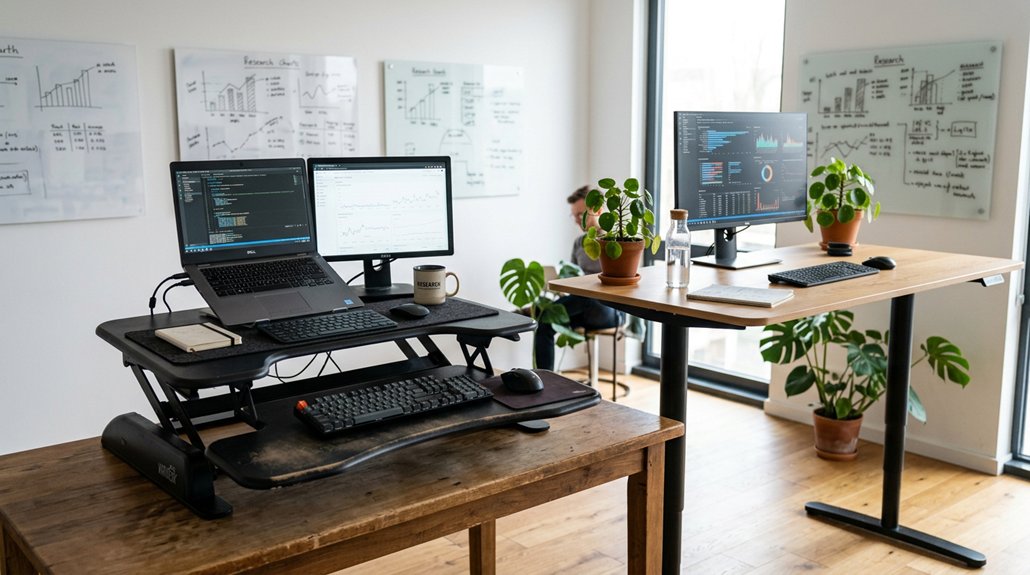
Are the initial savings from purchasing a desk converter worth the long-term costs? While desk converters are cheaper upfront, their limited ergonomic adjustability can lead to musculoskeletal discomfort and posture issues over time, increasing long-term health expenses.
A proper monitor arm with adjustable reach and height, like those in the monitor extender arms options, can significantly improve ergonomic setup and reduce strain.
Frequent replacements and repairs diminish the initial cost-effectiveness, pushing up ongoing costs. Additionally, their smaller workspace and stability challenges can reduce productivity, raising operational expenses in the long run.
Poor monitor positioning and improper height adjustments can cause biomechanical strain, risking chronic pain or injuries that fully adjustable standing desks help prevent. Although initially affordable, the cumulative costs of reduced health benefits, discomfort, and workflow inefficiencies make desk converters less cost-effective than standing desks with customizable features over extended periods.
Do Poor Posture and Frequent Adjustments Pose Health Risks?
Poor posture and frequent adjustments while using desk converters can lead to posture strain and muscle fatigue over time.
Constant moving and awkward positioning increase your risk of musculoskeletal issues and discomfort. Plus, distractions from adjusting or balancing your workspace can reduce focus and productivity, adding to long-term health concerns.
Posture Strain Accumulation
When you frequently adjust your desk converter without proper ergonomic settings, it can lead to significant posture strain over time. Constant repositioning causes musculoskeletal stress, especially when you’re struggling to find a comfortable spot. The lack of fine ergonomic adjustments means you often adopt awkward postures, increasing the risk of repetitive strain injuries. Also, wobbling converters force you to readjust repeatedly, further compounding the strain. Imagine this ongoing cycle:
| Adjustment Type | Posture Impact | Resulting Strain |
|---|---|---|
| Manual Height Changes | Poor alignment | Neck and back pain |
| Cable Repositioning | Awkward postures | Wrist and shoulder stress |
| Wobbling Converters | Instability | Repetitive strain |
| Reaching on Limited Space | Muscle imbalance | Chronic discomfort |
This cycle leads to persistent posture strain, affecting your health long-term.
Increased Musculoskeletal Risk
Frequent adjustments to your desk converter, especially when it lacks fine ergonomic control, can greatly increase the risk of musculoskeletal issues. Standing desks with limited height ranges often force you into poor postures, leading to neck, back, and wrist pain over time.
When you need to alternate between sitting and standing, moving items and cables disrupt your workflow and increase awkward, repetitive movements, adding unnecessary musculoskeletal stress. Reduced stability and wobbling can cause discomfort, prompting you to adopt compensatory postures that worsen strain.
The limited surface space on converters makes reaching or stooping necessary, further stressing your muscles. Sudden or frequent sit-stand changes without gradual adaptation can also stress your lower back, legs, and feet, risking injury from prolonged sitting and improper positioning.
Adjustment-Induced Distractions
Adjusting your desk converter often forces you to move cables and items, breaking your focus and making it harder to maintain proper posture. Frequent height adjustments disrupt workflow and concentration, which can lead you to adopt rushed or awkward postures.
These quick fixes often involve poor posture, straining your neck, back, and wrists.
Consider these issues:
- Repeated adjustments increase distractions, pulling focus away from tasks.
- Limited height range prevents achieving ergonomic alignment, leading to discomfort.
- Reaching to access desk items may require stooping or stretching, worsening poor posture.
- Instability from frequent movements might cause anxiety and reduce attention to proper ergonomics.
All these factors elevate health risks by promoting poor posture and sporadic focus during work.
How Do Desk Converters Influence Your Posture and Comfort Long-Term?
Desk converters can negatively impact your posture and comfort over time because their limited ergonomic adjustability often results in improper monitor height and keyboard placement. When the height range is restricted and fine-tuned adjustments are lacking, you may adopt awkward positions that cause neck, back, and wrist pain. This poor alignment develops gradually, leading to chronic discomfort.
Additionally, the frequent need to reposition desk items or cables during height changes can disrupt your workflow and cause muscle strain from repetitive reaching or stooping. Some converters also wobble or rock, increasing discomfort and anxiety, further reducing long-term comfort.
Reduced workspace on these devices may force you into cramped or awkward postures, ultimately exacerbating musculoskeletal issues and diminishing the ergonomic benefits they should offer.
What Is the Effect of Desk Converters on Productivity and Well-Being?

Have you noticed how slight disruptions in your workflow can honestly hamper your productivity? Standing desk converters can cause several issues affecting your well-being and efficiency.
- Frequent height adjustments may require rearranging items and cables, leading to productivity losses.
- Stability concerns can make you distracted and anxious, reducing focus.
- Limited workspace restricts proper monitor placement, causing clutter and awkward postures that compromise ergonomic comfort.
- Inability to fine-tune ergonomic height increases musculoskeletal discomfort, impacting your overall well-being.
While desk converters are affordable, their physical bulk and lifting demands may cause fatigue or injury over time. These factors make it harder to maintain consistent productivity and may contribute to long-term health issues.
Is a Desk Converter the Right Choice for Your Workspace and Goals?
Is a desk converter the right choice for your workspace and goals? If you need a flexible way to switch between sitting and standing, desk converters offer a cost-effective option.
However, limited ergonomic adjustability can lead to discomfort and musculoskeletal issues over time, especially if they don’t support proper alignment. Stability concerns, such as wobbling or tipping, may cause distractions and reduce overall comfort during long use.
Additionally, their smaller surface area and lack of integrated cable management can disrupt workflow and complicate dual-monitor setups or workspace organization. Frequent height adjustments might interrupt your concentration and cause workflow disruption, particularly if rearranging desk items or cables is necessary.
Consider these factors carefully to determine if a desk converter meets your ergonomic needs and productivity goals.
Frequently Asked Questions
How Desk Jobs Affect Your Body?
Your desk job causes your body to experience muscle strain, poor posture, and reduced circulation, which can lead to back pain, headaches, and increased health risks like heart disease, diabetes, and metabolic issues due to prolonged sitting and inactivity.
What Is the 20/8-2 Rule for Standing Desks?
The 20/8-2 rule recommends you stand for 20 minutes, then sit for 8 minutes, followed by 2 minutes of movement. It helps you gradually adapt, reducing strain, promoting circulation, and preventing fatigue during desk work.
Are Standing Desks Actually Healthier?
Yes, standing desks are healthier when you alternate between sitting and standing, improving circulation, reducing pain, boosting focus, and supporting metabolic health. They promote better posture and decrease musculoskeletal issues compared to prolonged sitting.
What Is the 20/8-2 Rule?
The 20/8-2 rule suggests you sit for 20 minutes, then stand for 8 minutes, and move for 2 minutes. This pattern helps reduce strain, improve circulation, and keep you alert during work, especially when using desk converters.
In Summary
In the end, desk converters can boost your workspace flexibility and comfort if used correctly, but they aren’t perfect. Be mindful of potential ergonomic issues, stability concerns, and your workflow. Regularly check your posture and adjust your setup to avoid health risks. Ultimately, whether a desk converter fits your goals depends on your specific needs and habits — use it wisely to stay healthy and productive long-term.