To boost weight loss at your desk, incorporate simple exercises like chair squats, seated leg lifts, and desk-supported push-ups throughout your day. Maintain proper posture to prevent strain and use tools like resistance bands and balance boards for more effective movement. Take frequent breaks to stretch and move around, set goals, and track your progress. Stay motivated by involving coworkers and gradually increasing exercises. Keep going, and you’ll discover more ways to stay active even during work hours.
Why Sitting All Day at Your Desk Can Make You Gain Weight
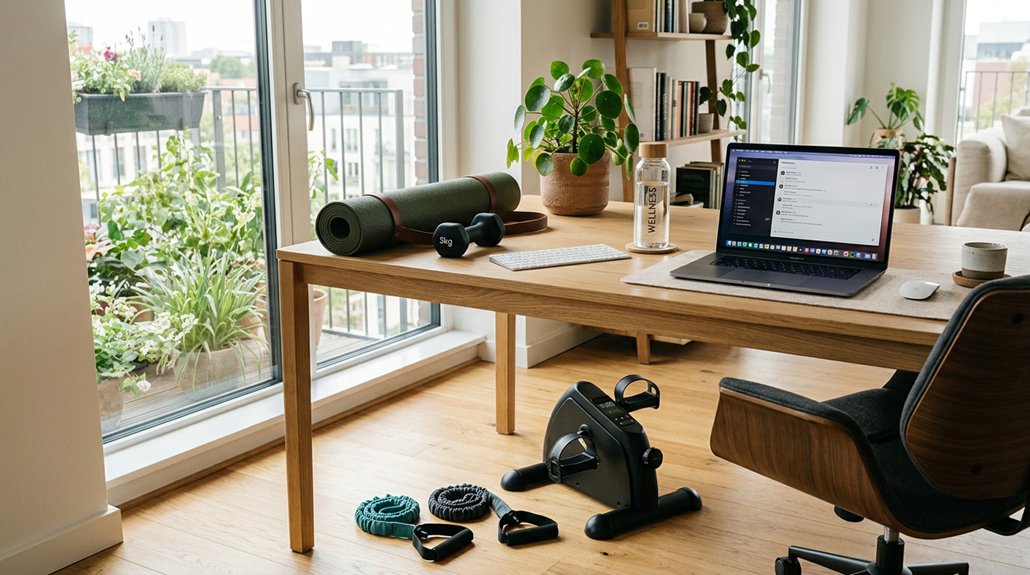
Sitting all day at your desk can greatly contribute to weight gain because it slows down your metabolism. When you stay seated for long periods, your body burns fewer calories, making it easier to gain weight.
This prolonged inactivity also decreases muscle activity, especially in your legs and core, reducing overall energy expenditure. Over time, this can lead to increased fat around your abdomen and other areas.
Additionally, sitting too much can cause back pain from poor posture and lack of movement. Without enough physical activity, your insulin sensitivity may decline, promoting more fat storage and raising diabetes risk.
Sedentariness also affects hunger hormones, often making you hungrier and leading to overeating. Incorporating movement breaks helps counteract these effects and promotes healthier weight management.
To combat these issues, integrating ergonomic work setups and regular movement routines can significantly improve your overall health and aid in weight loss efforts.
How Office Sedentariness Affects Your Weight and Health
When you stay seated all day, your body burns fewer calories, slowing your metabolism and making weight gain more likely. This sedentary behavior can also lead to muscle loss and poor posture, reducing your overall energy and strength. Incorporating active under-desk movement with tools like footrest rockers can help mitigate these effects. Over time, these effects raise your risk of obesity, diabetes, and heart disease unless you find ways to stay active.
Increased Risk of Obesity
Spending long hours at your desk can greatly increase your risk of weight gain and obesity. Prolonged sitting decreases calorie expenditure, making weight loss harder for office workers. Sedentary behavior disrupts metabolism, leading to more fat storage and insulin resistance, increasing your chances of type 2 diabetes. Office sedentariness also promotes abdominal fat accumulation, a key factor in cardiovascular disease and metabolic syndrome. When you sit for over 6-8 hours daily, your inactivity slows muscle activity and lowers overall energy burn, impairing weight regulation. Here’s a closer look: Balance Board Accessories can help counteract some of these negative effects by encouraging movement and improving circulation throughout the day.
| Impact | Consequences | Health Risks |
|---|---|---|
| Reduced calorie burn | Higher fat storage | Obesity, metabolic syndrome |
| Disrupted metabolism | Insulin resistance | Diabetes |
| Increased abdominal fat | Heart disease risk | Cardiovascular issues |
| Slowed muscle activity | Decreased energy expenditure | Weight gain |
Metabolic Slowdown Effects
Extended periods of inactivity at your desk don’t just lead to weight gain—they also cause your metabolic slowdown to deepen, sometimes by as much as 90%. Sitting at your desk for too long reduces calorie burn and promotes fat storage, especially around the abdomen.
It also triggers insulin resistance, impairing fat metabolism and raising your risk for obesity and type 2 diabetes. Additionally, decreased activity reduces muscle mass, further lowering your metabolic rate and making weight loss harder.
To counteract this, you need to actively combat the effects of sitting at your desk. Here are some tips:
- Take frequent breaks to get moving
- Incorporate short standing or stretching sessions
- Avoid prolonged sedentary periods
- Stay active during breaks to keep your metabolism firing
- Using supportive anti-fatigue mats can encourage more comfortable movement and standing, making it easier to reduce sedentary time.
Posture and Muscle Loss
Prolonged sitting at your desk can lead to muscle loss because inactivity reduces the resistance exercises your muscles need to stay strong. Poor posture from extended desk time causes muscular imbalances and weak core muscles, impacting your overall body composition and fat distribution.
When you neglect movement, your muscles weaken, leading to decreased calorie expenditure and increased fat accumulation, heightening health risks like diabetes and heart disease. To combat this, incorporating simple desk exercises focused on muscles and posture can reverse muscle atrophy.
Good posture promotes muscle activation, improves core strength, and supports proper fat burning. Staying active at your workspace isn’t just about comfort—it’s essential for maintaining muscle mass, boosting metabolism, and supporting healthy weight management in a sedentary environment.
Proper Posture During Desk Exercises for Weight Loss
To get the most out of your desk exercises, keep your spine neutral and your core engaged throughout each movement. This not only boosts calorie burn but also protects your back from strain. Maintaining a balanced ergonomic support can enhance your posture and overall comfort during exercises. Remember to reset your posture between reps to stay aligned and prevent fatigue.
Maintaining Neutral Spine
Maintaining a neutral spine is essential for effective and safe desk exercises aimed at weight loss. A neutral spine keeps your natural curves aligned, reducing strain and preventing injury. Engaging in proper posture support ensures that your spine remains in a healthy position throughout activity, especially when using ergonomic chairs designed for extended sitting. To do this, focus on these key points: 1. Engage your core muscles to stabilize your torso and support your back. 2. Keep your shoulders relaxed and away from your ears, promoting proper posture. 3. Sit with your feet flat on the ground, hips slightly higher than your knees, and avoid slouching or leaning forward. 4. Regularly check your posture by using mirrors or ergonomic cues to make certain your spine stays in a neutral position.
Engaging Core Properly
Engaging your core properly during desk exercises is essential for maximizing their effectiveness and preventing injury. To do this, maintain a proper posture by sitting or standing with a straight back, relaxed shoulders, and feet flat on the floor. Keep your hips square and your spine in a neutral position. Avoid leaning forward or slouching, as poor posture decreases core engagement and can cause pain, negating weight loss benefits. Keep your core tight and braced during movements like seated bicycle crunches or torso twists to boost muscle activation and caloric burn. Consistent focus on proper posture guarantees better core engagement, reduces muscular tension, and speeds up metabolism. Paying attention to ergonomic design features can further support correct alignment and posture during exercises.
Incorporate Movement Into Your Daily Tasks for Better Results
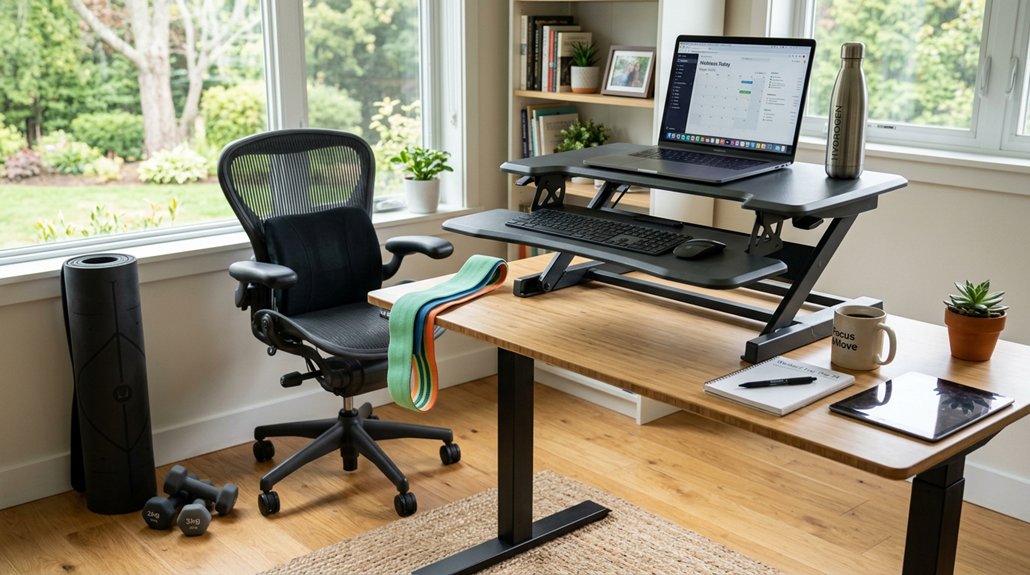
Incorporating movement into your daily tasks can greatly enhance your weight loss efforts without disrupting your routine.
Enhance weight loss by adding simple movements to your daily routine without disrupting your schedule.
If you spend the day sitting at your desk all day, find simple ways to stay active throughout the day.
- Stand during phone calls, such as doing standing leg balances, to burn calories while working.
- Perform quick chair squats or tricep dips during breaks to boost your metabolism.
- Engage core and glute muscles while typing or reading to improve posture and increase calorie burn.
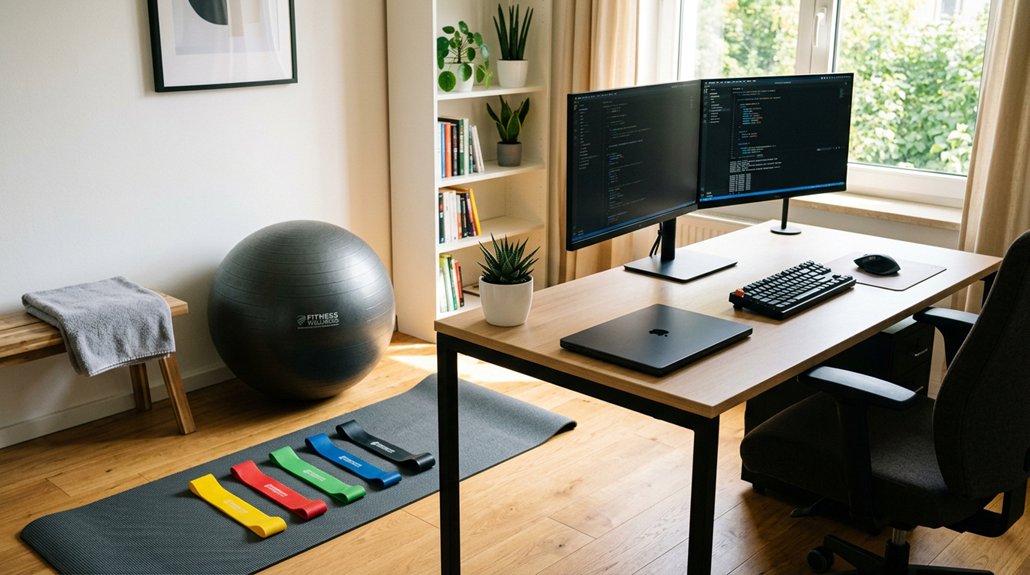
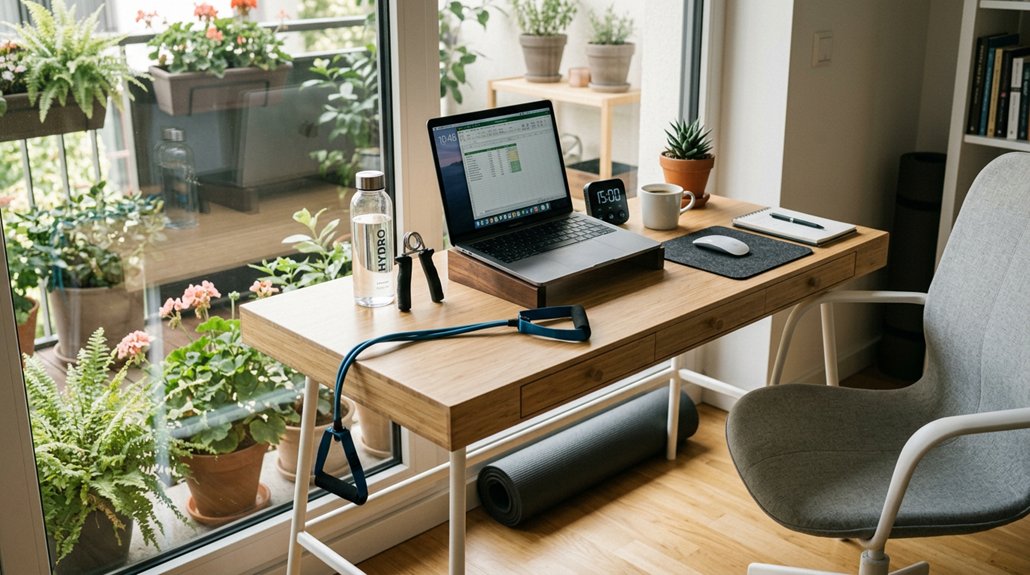
- Use resistance bands or light weights during short breaks to intensify your desk exercises.
- Opt for ergonomic footrests with adjustable height features to maintain proper leg positioning and promote circulation while working.
These small adjustments help break sedentary behavior, support circulation, and promote gradual weight loss, all without leaving your workspace.
Effective Strategies to Maintain Your Desk Exercise Routine
To stay committed, set clear, achievable goals like doing exercises during breaks or before meetings.
Keep track of your progress to stay motivated and identify areas for improvement.
Adjust your routine as needed, listening to your body to make long-term consistency easier.
Incorporating features like resistance levels can help vary the intensity of your workouts and prevent plateaus.
Set Clear Goals
Setting clear goals is essential for sticking to your desk exercise routine. To stay consistent, you need measurable targets. For example, aim for 10-15 repetitions of each exercise, done 3 times daily.
Establish time-based goals by completing each set within 15-60 seconds, fitting easily into your work breaks. Use reminders or alarms to prompt these sessions, ensuring you break sedentary patterns.
Additionally, challenge yourself gradually by adding light weights or resistance bands, setting milestone goals along the way to boost motivation.
Finally, document your progress regularly—tracking completed sets, posture improvements, or increased energy. This way, you reinforce your commitment, stay motivated, and make your desk exercises part of your daily routine. Incorporating ergonomic supports can further enhance comfort and prevent strain during your movement breaks.
Track Progress Regularly
Tracking your progress regularly keeps you motivated and helps identify areas for improvement. Use a journal or digital app to log the number of reps and duration of each desk exercise daily. This habit allows you to see your progress clearly and maintain momentum.
Set specific goals, like increasing reps by five each week or extending stretches by five seconds, to promote steady improvement and prevent plateaus. Also, periodically assess your energy levels, posture, or mood to gauge the overall benefits of your routine.
Set reminders or alarms to prompt consistent exercise breaks during your workday, ensuring routine adherence. Sharing your progress with a coworker or joining a virtual accountability group can boost your commitment and provide encouragement to sustain your desk exercise habit effectively.
Top Desk Exercises That Burn Calories Without Equipment
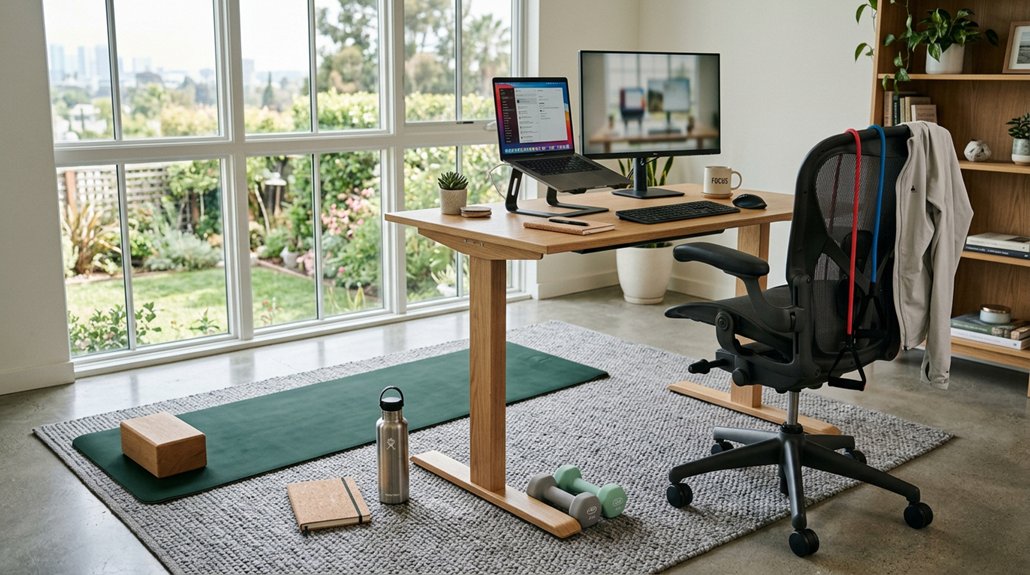
You can effectively burn calories at your desk without any equipment by performing simple, targeted exercises. These desk exercises engage large muscle groups and boost your calorie burn during sedentary hours.
Try these four effective moves:
- Chair squats and lunges – activate glutes and quads, increasing calorie expenditure and strengthening major muscles.
- Desk-supported push-ups and tricep dips – work your upper body muscles, elevating your metabolism for greater calorie burn.
- Calf raises and leg planks – enhance circulation and muscle activation in your legs, aiding fat loss.
- Core twists and seated bicycle crunches – activate multiple muscle groups simultaneously for efficient calorie burn.
Perform these in sets of 10-15 reps or 15-60 seconds to keep your heart rate elevated and maximize weight loss with minimal effort.
Track Your Progress and Stay Motivated With Office Workouts
Staying motivated during office workouts becomes easier when you monitor your progress regularly. By tracking your progress with daily logs or apps, you can see tangible improvements in strength, endurance, and consistency, which fuels your motivation.
Setting measurable goals, like completing 10-15 repetitions or increasing workout frequency, helps you stay on track and encourages steady weight loss. Using reminders or alarms for quick desk exercises keeps you active throughout the day, maintaining metabolic activity essential for overall health.
Celebrating small milestones, such as holding stretches longer or adding resistance bands, boosts your morale and commitment. Engaging coworkers in group challenges creates accountability, making your fitness challenge more enjoyable and effective, ultimately supporting your weight loss and health goals.
Top Mistakes to Avoid When Exercising at Your Desk
Exercising at your desk can be highly beneficial, but neglecting certain mistakes can undermine your efforts and lead to injury. To maximize safety and effectiveness, avoid these common pitfalls:
Desk exercises boost health—avoid common mistakes to stay safe and effective.
- Staying in prolonged static postures; push yourself to move every 15-60 seconds or perform 10-15 repetitions to boost circulation.
- Neglecting proper posture and core engagement; keep your back straight to reduce strain and improve workout results.
- Using excessive weight or resistance too soon; start with light weights and increase gradually to prevent overexertion.
- Skipping warm-up and cool-down stretches; these are vital for reducing joint strain and supporting muscle recovery.
Avoiding these mistakes guarantees safe, sustainable, and effective desk exercises for weight loss.
Set Up Your Workspace to Support Safe and Effective Workouts
Creating a workspace that supports safe and effective workouts starts with thoughtful setup. Make sure your desk allows plenty of space around it to perform movements like chair squats or lunges without risking collisions or losing balance.
If you’re using a standing desk, position it at a height that keeps your back straight and shoulders relaxed, reducing strain during seated or standing exercises like push-ups or shoulder shrugs. Use a supportive, ergonomic chair for stability during chair dips or seated crunches.
Wear comfortable shoes or lay down non-slip mats to improve grip during standing routines such as calf raises or glute bridges. Keep your water bottle within easy reach to stay hydrated, especially during quick workout breaks.
Proper setup helps prevent injuries and maximizes workout effectiveness.
Additional Resources and Apps for Desk Exercise Motivation
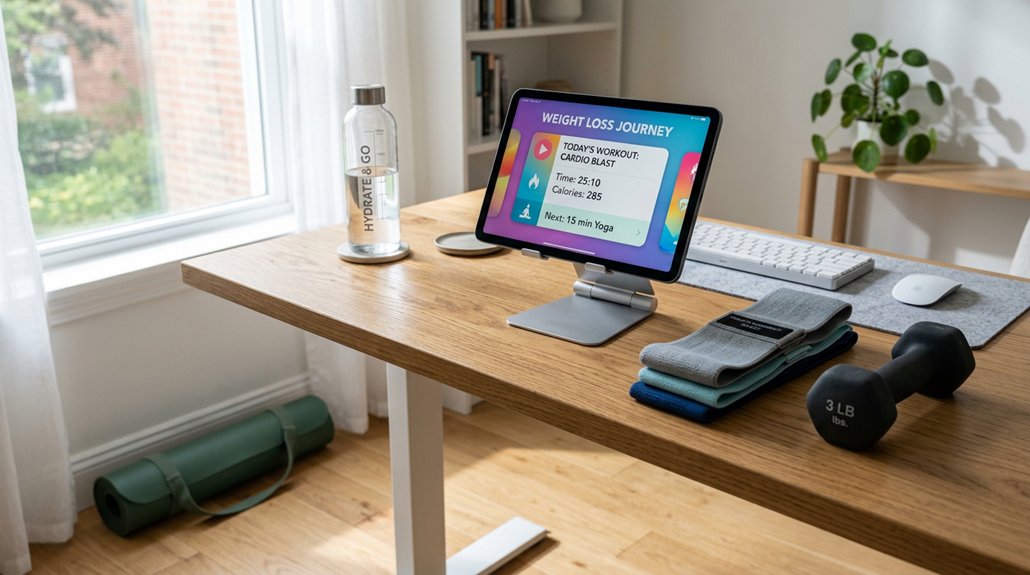
To keep your motivation high and your workouts consistent, leveraging additional resources and apps can make a significant difference. These tools help you stay accountable with reminders, track progress, and follow customizable workout plans designed for office environments.
- Use apps with built-in reminders to prompt you to stretch or perform quick exercises throughout the day.
- Choose apps that offer progress tracking so you can see your improvements over time and stay motivated.
- Opt for customizable workout plans that suit your fitness level and gradually increase intensity.
- Explore social features like group challenges or leaderboards to foster accountability and boost your commitment.
These resources make desk exercises more engaging and help you develop sustainable habits for weight loss and overall health.
Frequently Asked Questions
Are Desk Exercises Effective for Weight Loss?
Desk exercises can help you burn extra calories, improve circulation, and boost muscle tone, contributing to weight loss over time. While they aren’t a sole solution, combining them with regular activity supports your overall weight management efforts.
What Is the 3 3 3 Rule for Workouts?
The 3 3 3 rule involves doing 3 different exercises, each for 3 sets, with about 3 minutes per set. It helps you stay active, burn calories, and improve posture during short breaks at work.
What Exercises Help Lower A1C?
You can lower A1C by doing low-impact desk exercises like chair squats, lunges, and push-ups. Incorporate stretching and core moves, perform short bouts of activity regularly, and stay active throughout your workday to improve blood sugar control.
How to Lose Weight When Working at a Desk?
You can lose weight at your desk by doing quick, low-impact exercises like chair squats, desk push-ups, and seated crunches, staying active regularly, maintaining good posture, and combining these with healthy eating and hydration throughout your workday.
In Summary
Incorporating desk exercises into your routine can help you stay active and shed extra weight. Remember to prioritize proper posture, stay consistent, and modify movements to fit your workspace. Tracking your progress and avoiding common mistakes will keep you motivated. With a few simple adjustments, you can turn your desk time into an opportunity for better health. Stay committed, and you’ll enjoy the benefits of a fitter, healthier you without leaving your desk.