
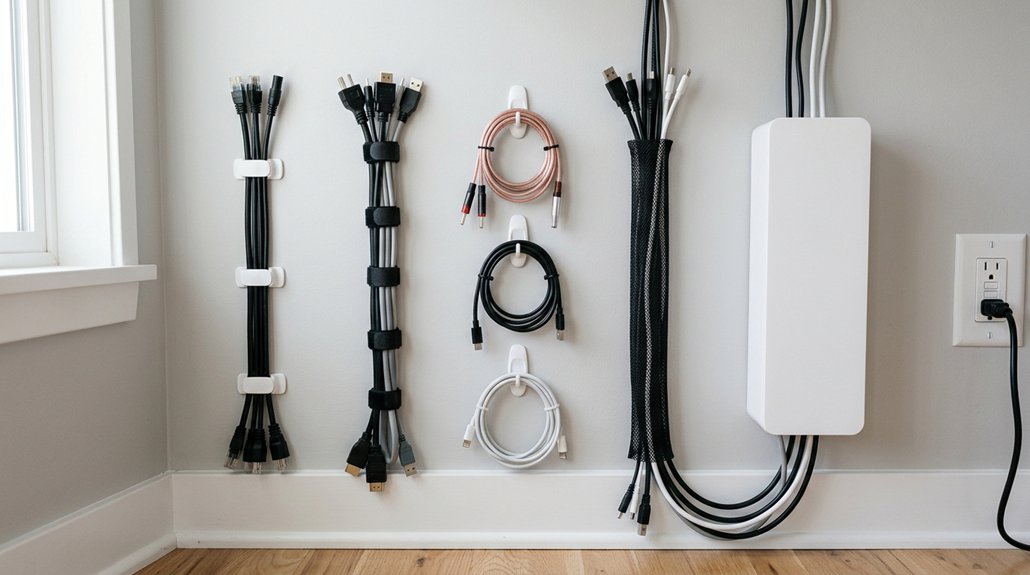
To organize cables vertically at home, keep cables off the floor using wall-mounted cable trays or magnetic hooks. Secure cords along walls or furniture with adhesive clips or Velcro straps for a tidy look. Use zip ties for bundling, but opt for reusable Velcro ties for flexibility. Label and color-code your cables for easy identification. These simple methods improve safety and clarity—continue exploring for detailed tips on creating a neat, efficient setup.
Why Vertical Cable Organization Boosts Workspace Safety
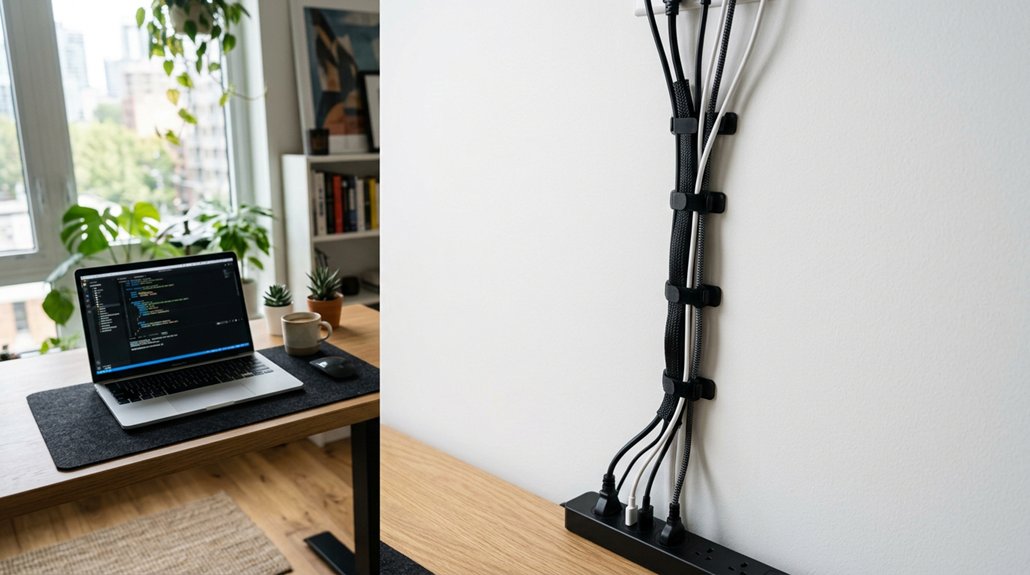
Have you ever tripped over loose cables while working at home? Vertical cable organization reduces trip hazards by keeping cables off floors and pathways.
Trip hazards are minimized with vertical cable organization, keeping cords safely off the floor and out of the way.
Using cable trays, adhesive cable clips, or Velcro straps to route cables along walls or furniture edges prevents tangled wires and damage, which enhances cable longevity and safety.
Elevating cables with under-desk cable management helps maintain clear floor space, making cleaning easier and reducing clutter. Securing cables vertically along desk legs or walls also prevents accidental unplugging, ensuring consistent device operation.
Proper vertical cable management not only minimizes the risk of falls but also keeps your workspace neat, professional, and distraction-free. Overall, organizing cables vertically plays an essential role in creating a safer, more efficient home workspace. Cable management kits
Secure Cables Along Walls and Furniture for Better Clarity
Securing cables along walls and furniture enhances your workspace’s clarity by preventing clutter and making it easier to identify specific connections.
Use adhesive cable clips or Velcro straps to run cords neatly along walls or furniture legs, preventing tangling and trip hazards.
Raceway channels mounted vertically conceal and protect cables while maintaining easy access. Magnetic cable clips attach securely to metallic surfaces like filing cabinets or radiators, keeping cables in check.
Install cable trays or vertical cable management baskets on walls or desks to organize multiple cords efficiently. Label cables with color-coded tags for quick identification and troubleshooting.
Choosing durable clips made from materials like ABS plastic or silicone (as recommended in cord organization products) ensures long-term reliability and easy reorganization.
With these methods, you’ll achieve a tidy, safe, and accessible workspace, making your vertical cable management both effective and visually unobtrusive.
Use Clips and Ties to Keep Cables Neat and Tangle-Free
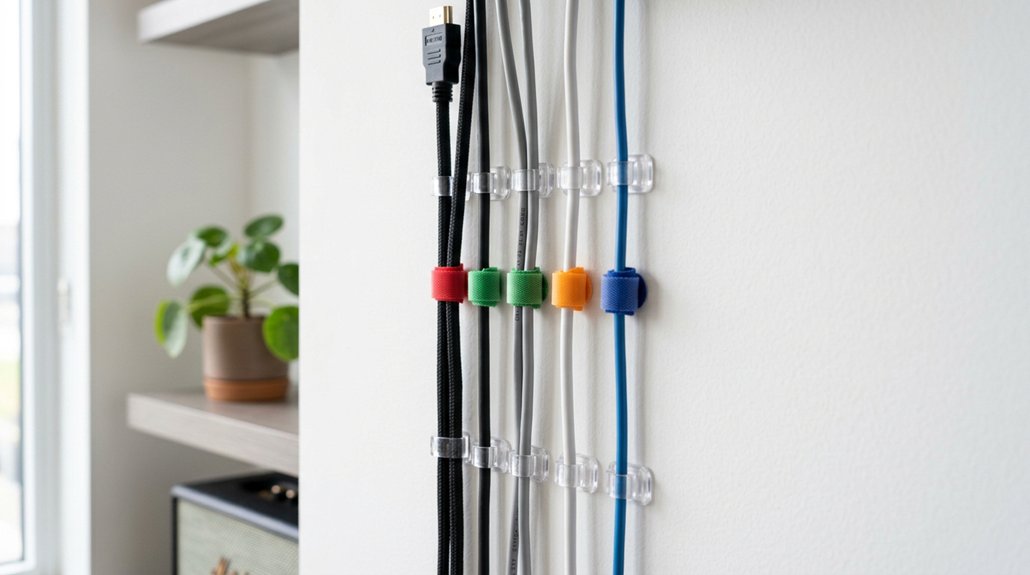
Keeping cables organized and tangle-free becomes simple when you use clips and ties designed for this purpose. Adhesive cable clips like Blue Lounge®CableDrop™ attach easily along surfaces, guiding cables vertically and preventing tangling. VELCRO® Ties are reusable and allow color-coded cable management, making rearrangement quick and wire damage prevention simple. Magnetic cable ties hold wires against metal surfaces, providing tidy storage. Zip ties effectively bundle multiple cables tightly, but are less suited for frequent adjustments. Vertical cable clips attached along furniture or walls can keep cables aligned and prevent twisting. Incorporating durable, fire-resistant materials enhances safety and prolongs the lifespan of your cables UL Recognition.
Install Wall Cable Trays and Magnetic Hooks for Flexibility
Installing wall cable trays and magnetic hooks offers a flexible and efficient way to organize your cables along vertical surfaces. It helps keep cables neatly contained, prevents tangling, and reduces tripping hazards. A well-designed setup can also incorporate ergonomic port placement to ensure easy access and minimize wrist strain when connecting devices. It helps keep cables neatly contained, prevents tangling, and reduces tripping hazards.
Label and Color-Code Cables for Easy Identification
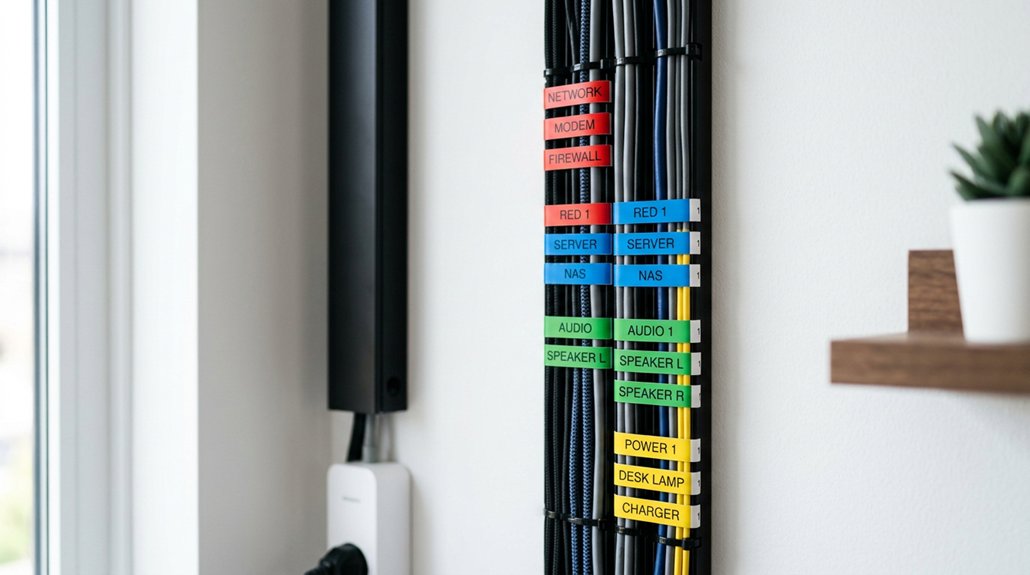
Labeling and color-coding your cables is a straightforward way to make vertical cable management more efficient. By using color-coded cable ties or Velcro straps, such as VELCRO® Brand ONE-WRAP®, you can visually differentiate cables by device or function for quick vertical cable identification. Reusable cable labels like heat shrink tubes, printable tape, or plastic tags that wrap around the cables remain visible even when cables run behind desks. Employ label printers to produce durable, clear markings with color coding on labels, grouping related cables effortlessly. This method simplifies vertical cable management, speeds up maintenance, and prevents disconnects. Incorporating durable materials into your labels ensures longevity and resistance to wear over time.
Frequently Asked Questions
How to Organize Cables at Home?
To organize cables at home, you can use vertical cable trays or raceways, secure cables with clips or Velcro, install grommets on furniture, bundle cables neatly, and hide power strips in management boxes for a tidy, accessible setup.
How to Organize Cables on Wall DIY?
To organize cables on your wall DIY-style, you can cut and mount raceways, attach adhesive clips, install small cable hooks or trays, and use Velcro fasteners to bundle and secure cables neatly, keeping your space tidy and accessible.
How to Organize Cords Without Buying Anything?
You can organize cords without buying anything by using household items like rubber bands, twist ties, or string to bundle excess lengths. Tuck cables behind furniture, use binder clips or tape, and label them with paper for easy identification.
How to Get Rid of Cable Clutter?
To get rid of cable clutter, you should group and secure cables with Velcro ties, run them through desk grommets or raceways, and hide excess length inside sleeves or boxes, keeping everything neat, accessible, and out of the way.



Leave a Reply