To correct forward head posture, start by evaluating your neck alignment with photos or apps to spot issues. Then, do targeted exercises like chin tucks and wall angels to strengthen neck and upper back muscles. Additionally, optimize your workspace by adjusting your monitor height and using ergonomic tools to maintain proper posture throughout the day. Keep practicing these tips, and you’ll discover more ways to improve your posture effectively.
How Can You Assess Your Forward Head Posture and Weak Spots?
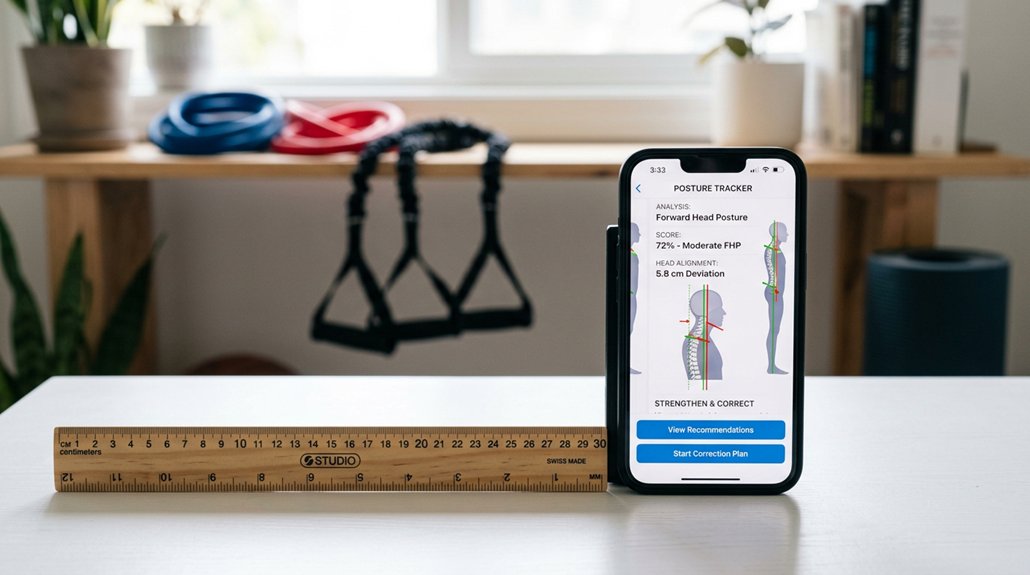
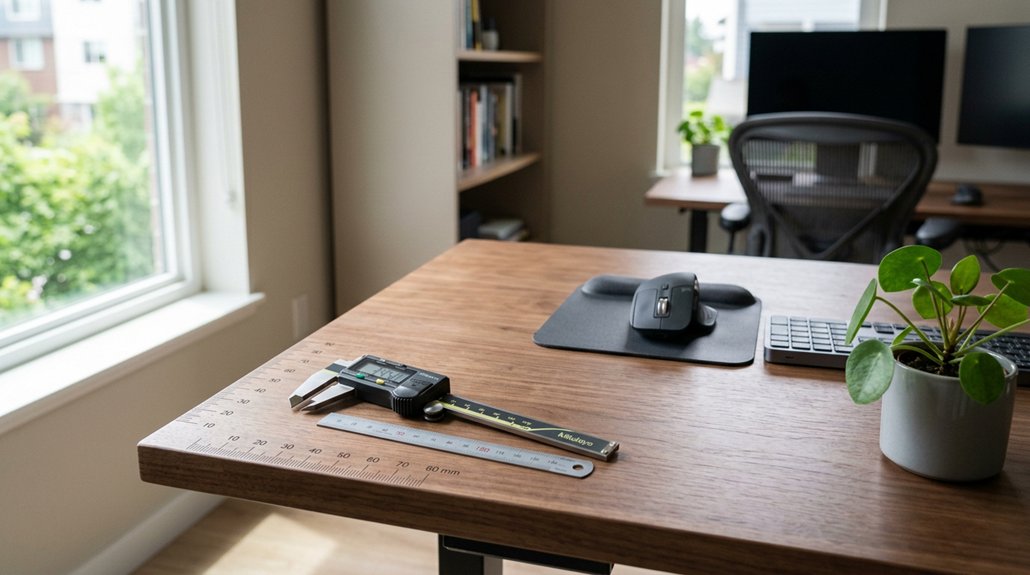
How can you accurately assess your forward head posture and pinpoint weak areas? Start by measuring your craniovertebral angle—using photographs or videos of your side profile during standing or sitting. A smaller angle indicates a more severe forward head posture, especially if your ears aren’t aligned directly above your shoulders.
Conduct a posture assessment by performing a chin tuck exercise to test your neck flexor muscles; difficulty maintaining this position signals weakness. Also, check for tightness or discomfort in the upper trapezius, levator scapulae, and pectoralis muscles, which often compensate for poor alignment.
Using photogrammetry or posture apps helps track deviations in real-time. These tools provide feedback on head and neck positioning, illuminating areas needing focus for correction.
What Daily Exercises Help Strengthen Your Neck and Correct Posture?
Maintaining good posture requires targeted exercises that strengthen your neck and upper back muscles. For forward head posture, chin tucks are essential — gently pull your chin straight back, hold for 5–10 seconds, and repeat 10–15 times daily. This helps strengthen your deep neck flexors and supports cervical spine alignment.
Incorporate wall angels by standing against a wall with your arms in a goalpost shape, then sliding them up and down to open your chest and engage postural muscles. Additionally, scapular retraction exercises, like squeezing your shoulder blades together while lying prone, bolster upper back strength. Stretching the sternocleidomastoid muscles also enhances neck flexibility.
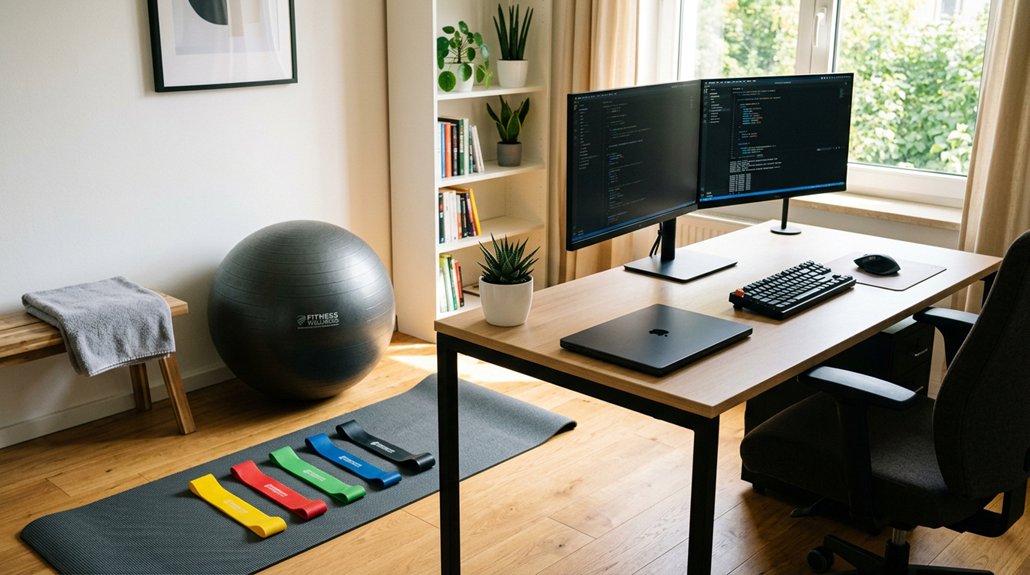
These corrective exercises, performed in brief, mindful sessions of 5–10 minutes daily, effectively improve posture and reduce forward head tendencies. Incorporating supportive back support pillows can further help maintain proper spinal alignment during prolonged sitting.
How Do Ergonomic Tips Support Long-Term Posture Improvement?
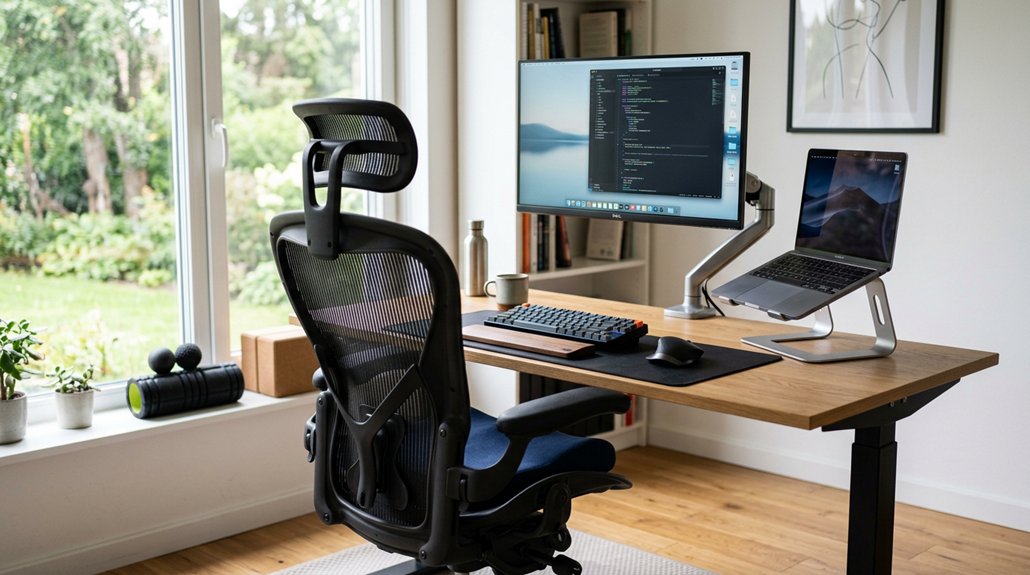
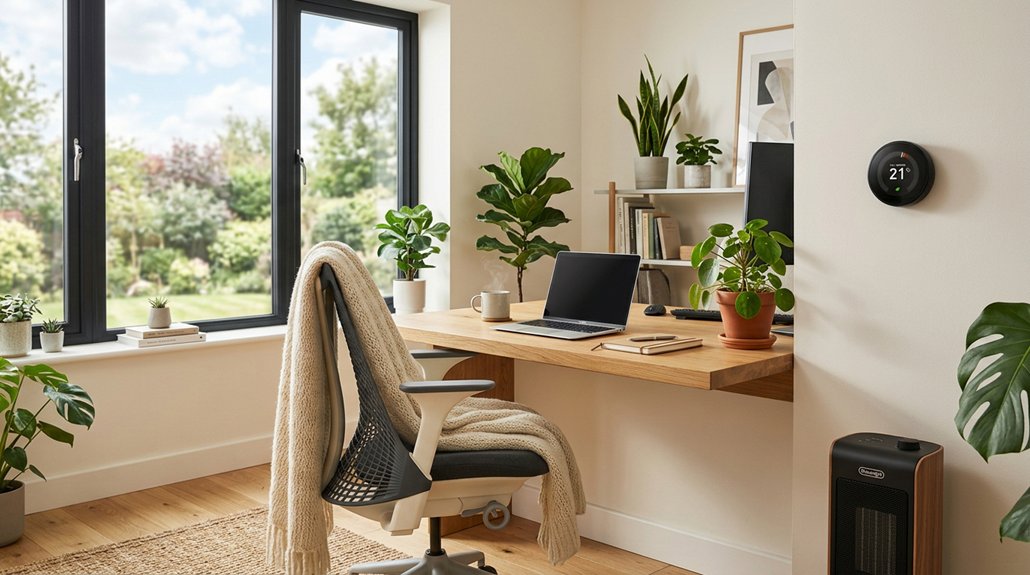
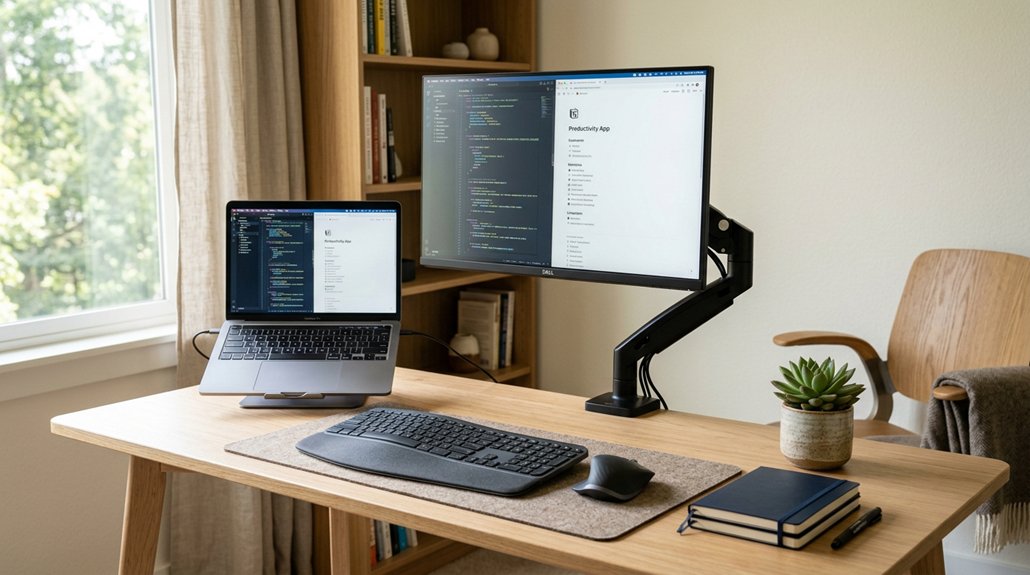
Ever wonder why ergonomic tips are essential for long-term posture improvement? Keeping your monitor top at or slightly below eye level helps maintain a neutral neck posture, reducing head forward movements and stress on your cervical spine. Using adjustable headrests can further support proper neck alignment and reduce muscle strain. Sitting about one arm’s length from your screen prevents the tendency to lean forward, which limits muscle strain caused by sustained forward head posture. Using adjustable chairs with lumbar support and headrests encourages proper spinal alignment throughout your workday, helping you stay balanced over time. Arranging multiple monitors at the same height and angle reduces neck twisting, supporting healthier muscle activation. Regularly scheduling posture reminders and using ergonomic tools reinforce proper head and neck alignment, ultimately promoting long-term posture health and preventing future discomfort or pain.
Frequently Asked Questions
Can You Actually Fix Forward Head Posture?
Yes, you can fix forward head posture with consistent exercises like chin tucks, stretches, and mindful postural habits. By committing daily and seeking professional help if needed, you’ll gradually realign your head and improve your posture.
How Long Will It Take to Fix Forward Head Posture?
It takes about 3 to 6 weeks for noticeable improvement and 3 to 6 months for full correction. Consistent daily exercises, ergonomic tweaks, and visual feedback help speed up your progress, but severe cases might need professional help.
What Is the Root Cause of Forward Head Posture?
The root cause of forward head posture is your head’s forward displacement due to prolonged poor posture, weak neck muscles, tight chest and back muscles, thoracic stiffness, and prolonged static positions that over time misalign your spine and weaken supporting muscles.
How to Undo Forward Head Posture?
You can undo forward head posture by regularly performing chin tucks, stretching your chest, strengthening with wall angels, maintaining proper ergonomic habits, and staying mindful of your posture throughout the day. Consistency is key for lasting correction.