To improve your posture with desk stretches, try simple moves like the Brueggers Relief Position, which opens your chest and relieves shoulder tension, and chin tucks to strengthen neck muscles and correct forward head posture. Incorporate side bends to stretch your sides and back extensions to loosen tight muscles. Remember to shift your position periodically and use ergonomic supports. Keep practicing these stretches regularly, and you’ll discover more quick tips to stay comfortable and aligned throughout your workday.
Why Regular Desk Stretches Help Your Posture
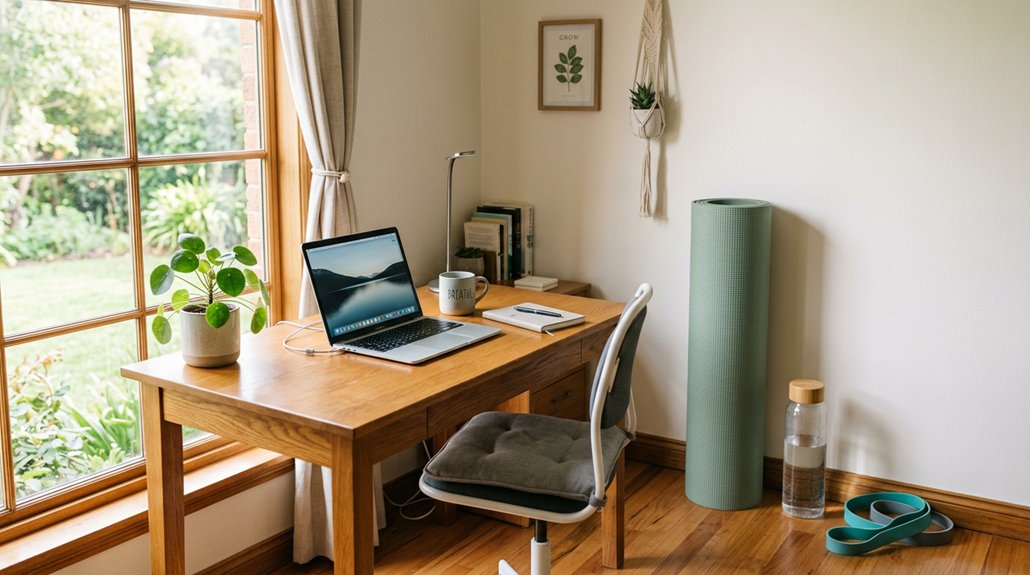
Regular desk stretches are essential because they improve joint mobility and loosen tight muscles that often contribute to poor posture during long hours of sitting. When you stay in one position too long, it can cause neck stiffness, shoulder pain, and restricted movement in your upper back. Incorporating stretches that target high-density memory foam support areas can enhance overall comfort and alignment. Stretching key areas like the chest, shoulders, and upper back helps counteract these issues, promoting better spinal mobility. By incorporating quick stretches every 30–60 minutes, you can maintain proper posture, reduce stiffness, and prevent muscles from becoming fatigued.
Over time, consistent stretching strengthens postural muscles, making it easier to hold good alignment throughout the workday. These routines support posture awareness, increase circulation, and decrease discomfort caused by prolonged sitting, helping you stay comfortable and productive.
Easy Office Stretches to Feel Better Throughout the Day
Incorporating simple stretches into your workday can make a noticeable difference in how you feel throughout the day. To alleviate tension, perform the Brueggers Relief Position by sitting or standing with palms facing forward and wrists extended, counteracting rounded shoulders from long periods at your desk. Repeat at least five times.
Incorporate back extensions by placing your hands on your hips and gently pushing your hips forward, opening up your rounded back with slow, pain-free movements—aim for five or more repetitions. Practice chin tucks while seated by retracting your chin to strengthen deep neck muscles, holding for 3-5 seconds, completing 2-3 sets of ten.
Adding side bends helps stretch the trunk laterally, with five repetitions per side to counteract stiffness. Regularly move or stretch every 30-40 minutes to maintain good posture. Utilizing adjustable straps and ergonomic designs can enhance comfort and ensure the stretches complement your posture correction efforts effectively.
How to Fit Quick Stretch Breaks Into Your Workday
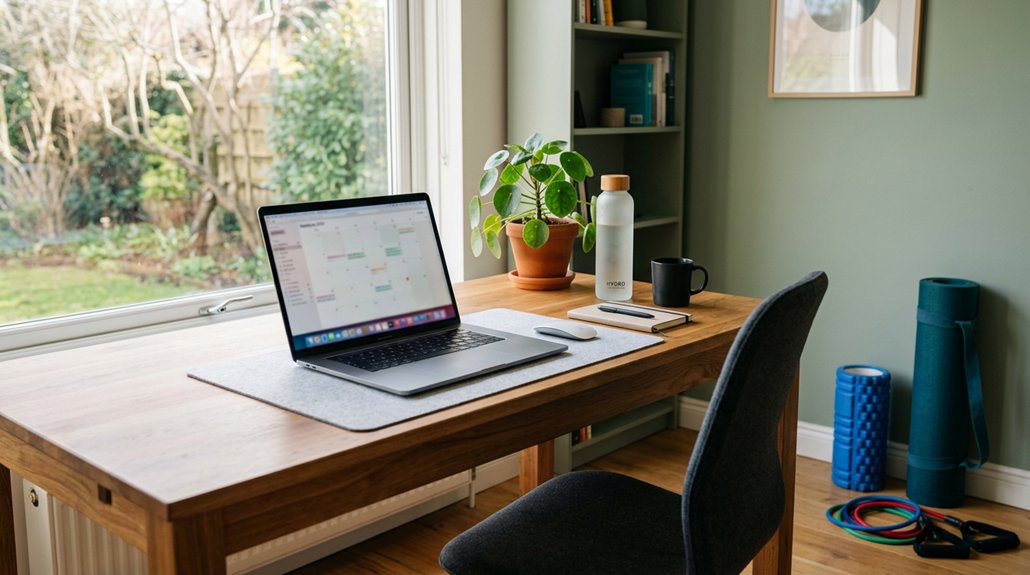
Finding time for stretch breaks during a busy workday is easier than you might think. Long work sessions can lead to poor posture if you don’t incorporate effective desk stretches. Incorporate lumbar support features into your workspace to enhance your posture during these breaks. Set a timer to remind yourself to take a 30–60 second break every 30–60 minutes. During these natural pauses, do quick exercises like shoulder shrugs, chin tucks, or the Brueggers Relief Position to freshen up and boost circulation. Make sure to stand or sit at the edge of your chair during stretches to engage your core and counteract prolonged sitting. You can also pair these breaks with ergonomic adjustments, such as lumbar support or monitor positioning.
Targeted Desk Stretches for Common Posture Problems
Many common posture issues can be tackled effectively with targeted desk stretches designed to address specific problems. For neck pain and rounded shoulders, the Brueggers Relief Position stretches the chest and extends wrists, helping you open up across the shoulder blades. To correct forward head posture, chin tucks strengthen deep cervical muscles by retracting the chin straight back, holding for a few seconds. Shoulder blade squeezes improve upper back strength and posture by squeezing shoulder blades together. For lateral tightness, side bends target the lateral trunk muscles—leaning sideways on each side stretches one side and relieves tension. Remember to keep your feet flat on the floor during these stretches to maintain stability. Incorporating ergonomic features like adjustable lumbar support and tilt functions can further enhance postural alignment during desk work.
Simple Tips to Keep Good Posture Before and After Your Stretches
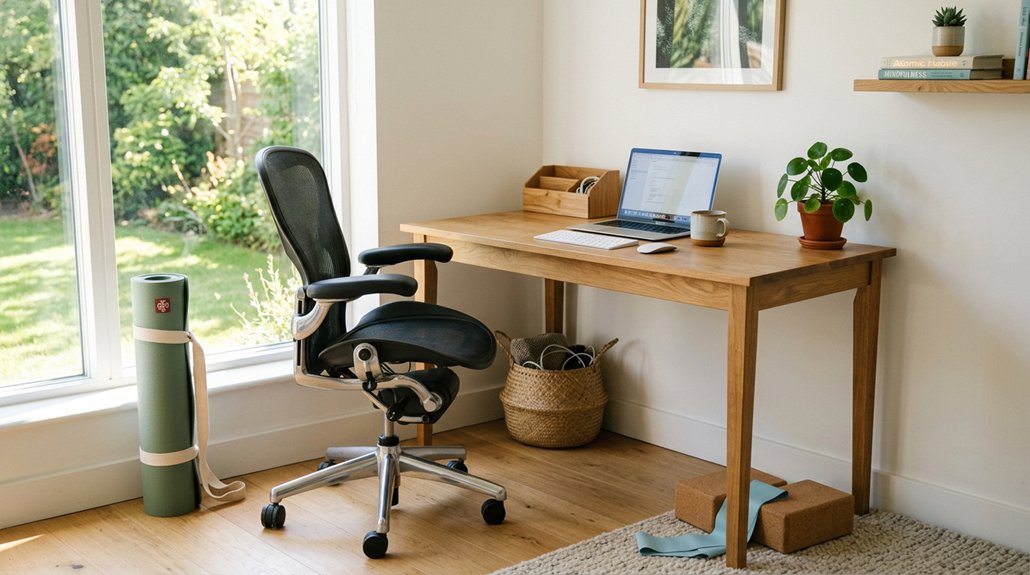
To maintain good posture before and after your desk stretches, focus on aligning your spine properly by sitting on your sitting bones rather than your tailbone. Keep your chest open and shoulders aligned with your neck to support healthy posture.
Regularly engage your core and shoulder blade muscles to avoid slouching, making it easier to feel a stretch without strain. Shift your weight or change your posture periodically between stretches—doing neck stretches three times can prevent stiffness.
When performing stretches, like lying flat on the floor or quick posture check-ins, stay mindful of your alignment to prevent health problems related to poor posture, especially in the lower back. These small habits reinforce good posture habits before and after your stretches. Incorporating adjustable armrests into your workspace can also help maintain proper arm and shoulder positioning for better ergonomic support.
- Sit on your sitting bones, not your tailbone
- Keep shoulders and neck aligned upwards
- Engage core and shoulder muscles regularly
- Shift posture periodically to avoid fatigue
Frequently Asked Questions
Can Desk Stretches Replace Full-Body Workouts for Posture Improvement?
Desk stretches can’t replace full-body workouts, but they greatly improve posture and reduce tension. Incorporate both for ideal health; stretches boost posture benefits, while full workouts enhance overall strength, endurance, and flexibility. Balance is key.
Are There Specific Stretches Recommended for Neck and Shoulder Pain?
Yes, try gentle neck tilts, shoulder rolls, and chest stretches to relieve neck and shoulder pain. Hold each stretch for about 15-30 seconds, and do them regularly to loosen tight muscles and improve comfort.
How Do I Know if I’m Stretching Correctly During Work?
You’ll know you’re stretching correctly if you feel gentle tension, avoid pain, hold each stretch for about 15-30 seconds, breathe steadily, and stay in a comfortable position without forcing or bouncing. Listen to your body.
Can Desk Stretches Prevent Long-Term Posture Issues?
Yes, desk stretches can prevent long-term posture issues by reducing muscle tension, improving flexibility, and encouraging better alignment. Regularly incorporating these stretches into your workday boosts overall posture, helping you avoid discomfort and chronic problems over time.
What Are Signs I Should Avoid Stretching at My Desk?
You should avoid stretching at your desk if you experience sharp pain, dizziness, or significant discomfort. Stop immediately if you feel numbness or tingling, and consult a healthcare professional before continuing any stretches to prevent injury.