To soundproof your open office, start by identifying main noise sources like HVAC, conversations, and foot traffic. Prioritize areas needing treatment, such as collaboration zones and conference rooms. Use acoustic panels, ceiling baffles, and sound-absorbing furniture to reduce echo and noise. Installing sound masking devices and encouraging quiet policies also help. For a quieter space, you can enhance comfort with noise-reducing flooring. Keep exploring these strategies to create a peaceful, productive environment.
Identify the Main Noise Sources in Your Office
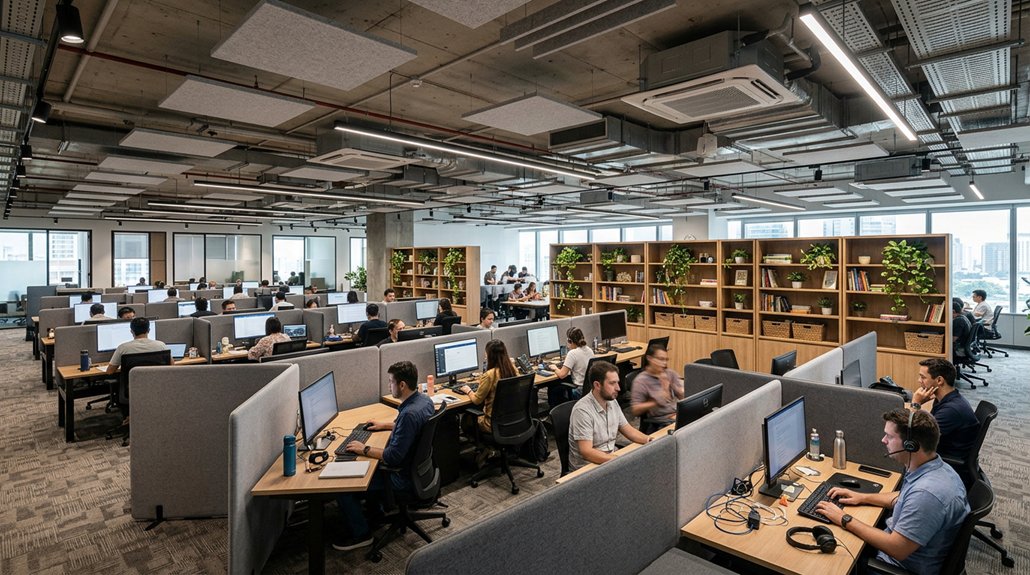
Have you ever wondered what the main noise sources are in your office? In open office acoustics, common culprits include typing on keyboards, HVAC Noise, and conversations.
Identifying key office noise sources helps improve acoustics and create a more focused work environment.
Typing typically produces around 40 dB, while HVAC systems add constant background noise between 45 and 50 dB, often requiring acoustic treatments to reduce vibrations and airborne sound.
Conversations are the most disruptive source, reaching 60 dB and higher, with louder laughter at 75-80 dB, which can considerably cut productivity.
Identifying noisy zones like collaborative areas, conference rooms, and break rooms helps you target sound absorption measures effectively.
Using acoustic panels, such as foam or polyester fiber options, can significantly diminish these sound levels and enhance speech clarity in your workspace.
Recognizing these sources allows you to strategically plan acoustic treatments, minimize sound travel, and improve the overall open office acoustics for a more focused, less distracting environment.
Prioritize Areas That Need Acoustic Treatment Most
Once you’ve identified the main noise sources in your office, the next step is to prioritize where to apply acoustic treatments for maximum impact. Focus on open collaboration zones, where loud talking and laughter create noise levels of 75-80 dB, disrupting concentration.
Install acoustic panels and ceiling baffles with dense, porous materials like PET felt near sound reflection sources to reduce reverberation. Treat workstations around noisy equipment or foot traffic with sound absorbers, furniture, and rugs that absorb ambient noise.
Also, allocate resources to quiet zones, ensuring they remain low-noise areas for focused work and stress reduction. By targeting these high-traffic, high-noise areas first, you’ll create a more balanced environment that minimizes distractions and enhances productivity across your office. Incorporating ergonomic office rugs can further reduce footstep noise and enhance acoustic comfort in shared workspaces.
Choose the Best Ceiling Solutions to Reduce Noise
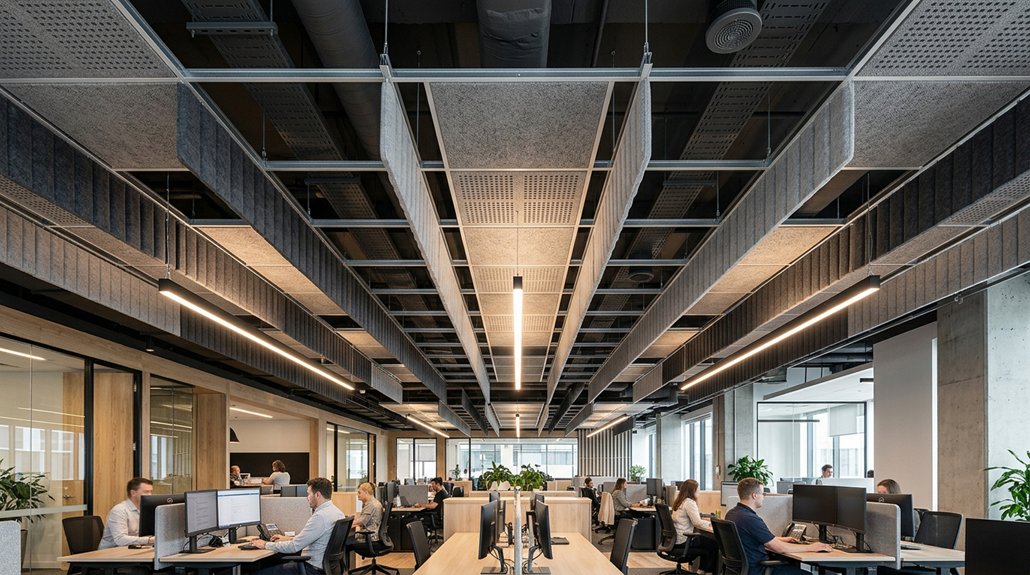
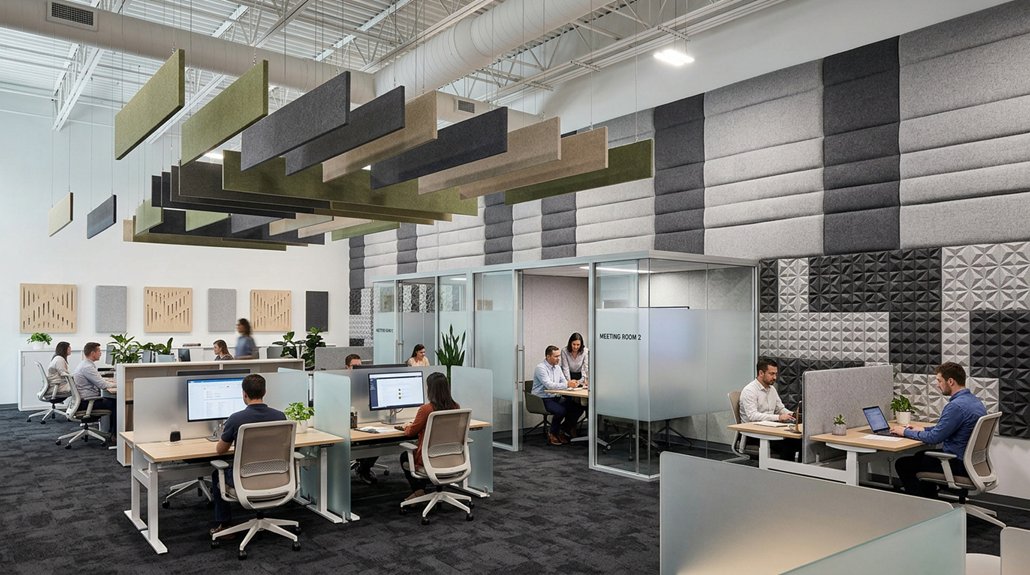
Wondering how to effectively reduce noise overhead? Choosing the right ceiling solution makes a big difference. An acoustic ceiling with panels or baffles made from porous, dense materials like PET felt can absorb airborne noise and cut down reverberation in your open office. Positioning acoustic panels directly above workstations, conference tables, and collaboration areas maximizes sound dampening. Combining these with ceiling-mounted fixtures that include sound-absorbing components adds dual functionality. Additionally, selecting dense, thick fabrics for ceiling treatments enhances sound insulative properties and further reduces echo throughout the space.
Add Wall Panels to Minimize Echo and Reverb
Choosing the right materials, like PET felt or wood slats, can boost both sound absorption and office aesthetics. A well-designed layout that incorporates bias lighting kits can also create a more comfortable and visually appealing environment. Position your panels near noisy areas such as conference rooms, break rooms, or vents for maximum effectiveness. Covering at least 25% of your walls with high-rated NRC panels helps greatly reduce echo and reverb.
Materials for Wall Panels
Selecting the right materials for wall panels is essential to effectively absorb sound and reduce echo in your office. Acoustic wall panels made from PET felt or wood slats are excellent choices because they maximize noise reduction and control reverberation.
Look for panels with a Noise Reduction Coefficient (NRC) rating of 0.7 to 1.0, which indicates strong sound-absorbing properties. Position these acoustic materials near high-noise areas like conference rooms or break zones to optimize their effectiveness.
Besides lowering overall noise levels, the right materials also improve speech privacy by limiting sound travel. Regular maintenance of your wall panels guarantees they continue to perform effectively over time, especially in air-purifying environments.
Placement Strategies
To effectively minimize echo and reverb in your office, it’s essential to strategically place wall panels near high-noise areas like conference rooms and break rooms. Acoustic wall panels should be installed on walls adjacent to HVAC vents to reduce airborne noise and dampen reverberation caused by machinery. Use dense materials such as PET felt or wood slat wall panels with NRC ratings of 0.8 or higher to maximize sound absorption and echo reduction. Place panels on the shortest path between reflective hard surfaces to intercept sound waves early and prevent reverberation buildup. Regular maintenance keeps these panels functioning efficiently. Highlighting the importance of proper material selection can further enhance the effectiveness of your soundproofing efforts.
Use Sound-Absorbing Furniture and Decor

Incorporating sound-absorbing furniture and decor is an effective way to reduce noise in your office, especially in open-plan spaces. Using acoustic solutions like fabric-upholstered chairs, couches, and lounge furniture adds soft materials that help absorb sound reflection and reverberation. Carpets, rugs, or cork flooring considerably cut impact noise from footsteps and chair movements, making your space quieter. Select office furniture with acoustic properties—such as high-backed couches and enclosed booths—to create physical sound buffers that dampen ambient noise. Supplementing these with ergonomic designs that promote comfort and core engagement can further enhance office productivity and well-being. Complement these with decorative soft elements like curtains or textile wall hangings, which enhance acoustic comfort without sacrificing style. Position sound-absorbing decor near high-traffic or noisy zones to maximize noise reduction, turning your open-plan office into a more soundproof office environment.
Set Up Quiet Zones for Focused Work
Creating dedicated quiet zones within your open office can greatly improve focus and productivity by reducing noise distractions. Use soundproof partitions or acoustic panels to create physical separation, minimizing intrusion from high-traffic areas and noisy equipment. Equip these quiet spaces with sound-absorbing materials such as PET felt ceiling baffles and wall panels to lower background noise to around 40 dB, enhancing concentration. Position the quiet zones away from HVAC noise and loud conversations to maximize their effectiveness. Incorporate furniture designed for sound dampening, like soft seating and acoustic dividers. Foster a culture of noise awareness through quiet hours, encouraging employees to respect these zones. Additionally, selecting wobble stools with sound-absorbing bases or cushions can help reduce noise when mobility is necessary. Here’s a visual reminder of key aspects:
| Strategy | Tools/Materials | Benefits |
|---|---|---|
| Creating quiet zones | Acoustic panels, partitions | Reduce noise intrusion |
| Noise reduction | Sound-absorbing wall panels | Lower background noise |
| Quiet hours | Office policies | Maintain low noise levels |
Upgrade to Noise-Reducing Flooring Options
Upgrading your flooring can greatly cut down office noise, especially with options like carpet that absorb sound and reduce echo.
LVT with the right underlayment, such as rubber beneath, also offers effective impact noise reduction. Choosing noise-reducing materials helps create a quieter, more comfortable workspace.
Benefits of Carpet Flooring
Carpet flooring effectively absorbs sound, making it a smart choice for reducing noise caused by footsteps and moving furniture in your office. It adds multiple sound absorption points that enhance acoustic design, creating a more comfortable environment. Upgrading to carpet or rugs helps reduce the amount of noise pollution, especially in open office spaces. Compared to hard floors like concrete or porcelain, carpeting offers moderate but effective noise reduction without costly modifications. Incorporating carpet flooring can greatly lower ambient noise levels, promoting productivity and wellbeing by minimizing auditory distractions.
| Benefit | Impact |
|---|---|
| Noise absorption | Minimizes echoes, reverberation, and footstep noise |
| Acoustic improvement | Enhances overall sound quality |
| Cost-effective | Less expensive than major structural changes |
| Comfort and aesthetics | Adds warmth and visual appeal |
| Noise pollution reduction | Promotes a quieter, more focused workspace |
Sound Absorption of LVT
Luxury Vinyl Tile (LVT) flooring naturally absorbs sound, making it an excellent choice for reducing noise in open office environments. Its acoustic properties help minimize echo and reverberation, enhancing overall office soundproofing.
With features like the 1mm IXPE backing in Parterre’s 5mm Rigid Core Click LVT, impact noise from footsteps and furniture is greatly dampened. The 5mm Loose Lay LVT, with its specialized backing, improves traction while actively reducing sound transfer.
Adding rubber underlayment beneath LVT can further boost impact insulation, lowering noise levels from open panels and office movements. Upgrading to noise-reducing LVT flooring creates a more comfortable, quieter atmosphere, making it easier for employees to focus and communicate effectively without disturbance.
Low Noise Impact Options
Hard flooring options like concrete, porcelain, and ceramic are common choices in office spaces, but they can greatly amplify noise pollution through footsteps and furniture movements. This increase in noise levels can disrupt concentration in open space environments.
Upgrading to noise-reducing flooring options such as carpet, cork, or rubber helps absorb sound and reduce echo and reverberation. Luxury Vinyl Tile (LVT) with rubber or IXPE backing like Parterre’s 5mm Rigid Core Click can also improve noise control because it inherently absorbs sound. Carpets are particularly effective at damping high-frequency noise at floor level, creating a quieter workspace.
When full replacement isn’t feasible, combining noise-reducing flooring with acoustic baffles and wall treatments can optimize overall sound management and reduce noise impact effectively.
Install Sound Masking Devices to Enhance Privacy
Installing sound masking devices is a highly effective way to bolster privacy in your office, especially in open-floor layouts. These systems emit low-volume ambient sounds, like white noise or natural soundscapes, which mask speech and improve speech intelligibility. Proper placement near open desks, phone booths, and collaboration areas guarantees peak noise reduction and coverage. This uniform background hum diminishes distractions without increasing overall noise levels. Sound masking complements acoustic panels by masking residual speech sounds, enhancing privacy. Regular professional tuning and adjustments keep sound levels just above the ambient noise floor for maximum comfort and effectiveness.
| Placement Area | Benefits | Best Practice |
|---|---|---|
| Open Desks | Masks conversations; improves speech privacy | Near frequently used zones |
| Phone Booths | Limits eavesdropping, promotes confidentiality | Close proximity to booths |
| Collaboration Areas | Reduces cross-talk, maintains focus | Consistent coverage across space |
Encourage Noise Etiquette and Quiet Policies Among Employees
Encouraging respectful noise levels helps maintain a focused work environment. Setting quiet hours and promoting mindful communication can greatly reduce disruptions.
Promote Respectful Noise Levels
To maintain a productive and comfortable office environment, it’s essential to foster respectful noise habits among employees. Promoting respectful noise behavior reduces noise distraction and supports office noise reduction. Encourage staff to speak softly, use headphones, and keep conversations quiet, especially in collaboration zones.
Establish clear policies on noise levels during focused work periods and reinforce them regularly through training and reminders. This creates a quiet office space where everyone can concentrate.
To visualize this, consider:
- Employees taking calls in designated phone zones
- Using quiet mode or headphones during deep focus tasks
- Limiting loud conversations or laughter during peak focus hours
Establish Quiet Hours
Implementing designated quiet hours in your office sets clear boundaries for noise levels during periods when focus is critical. This best practice reduces noise in an office by minimizing background noise and creating predictable, low-noise periods. Educate employees on sound etiquette, encouraging them to lower their voices, limit non-essential conversations, and silence devices during these times.
Clear guidelines, such as confining collaborative discussions to designated zones, help maintain a calm acoustic environment. Enforcing quiet hours consistently not only diminishes loud talking and phone disruptions but also lowers stress levels among staff.
Encourage Mindful Communication
Creating a mindful communication culture in your office can considerably reduce noise distractions and boost productivity. Encourage your employees to adopt mindful talking habits, emphasizing the importance of respectful speaking volumes.
Human speech at loud levels (75-80 dB) can be highly distracting, so promoting quiet, considerate conversations helps mitigate the noise problem. Establish clear guidelines, such as:
- Keeping phone conversations in designated zones
- Using noise-canceling headphones to manage individual noise sensitivity
- Avoiding loud laughter or discussions during focused work periods
Fostering a culture of noise awareness and respectful speaking volumes supports privacy without sacrificing communication. When everyone takes responsibility for their noise levels, your open office becomes a more productive, less disruptive environment.
Monitor Office Sound Levels and Adjust Treatments as Needed
Regularly monitoring your office’s sound levels is essential for maintaining an ideal acoustic environment. Use sound meters to measure noise, especially when office noise levels exceed 40-50 dB, caused by sources like HVAC systems or conversations.
Track distraction distance (rD) and privacy distance (rP) per ISO 3382-3 standards to assess speech intelligibility and noise control effectiveness. Keep an eye on reverberation times and background noise to determine if acoustic panels, ceiling baffles, or sound masking need repositioning or upgrades.
Periodically retune sound masking volumes and frequencies to maintain privacy and prevent listener fatigue. Combining employee feedback and noise complaints helps refine your noise reduction solutions, ensuring your open office remains comfortable, focused, and noise-controlled.
Frequently Asked Questions
How to Reduce Noise in an Open Office?
You can reduce noise by installing acoustic panels and ceiling baffles, adding soft furnishings, creating quiet zones, and using sound masking systems. These steps absorb sound, block echoes, and mask distractions, making your workspace calmer and more focused.
How to Block Sound in an Open Space?
You can block sound in an open space by using strategic physical barriers like cubicles and soundproof booths, placing dense, dampening materials near noisy equipment, and creating dedicated quiet zones to effectively limit sound travel and absorption.
How to Soundproof an Office Space?
You can soundproof your office space by installing acoustic panels, adding soft furnishings, creating quiet zones, and using sound masking technology. These steps reduce noise, improve privacy, and make your workspace more conducive to focused work.
How Can I Soundproof My Small Office?
You can soundproof your small office by installing acoustic panels or baffles, adding soft furnishings like rugs and fabric furniture, creating quiet zones, and using white noise machines to mask distracting sounds effectively.