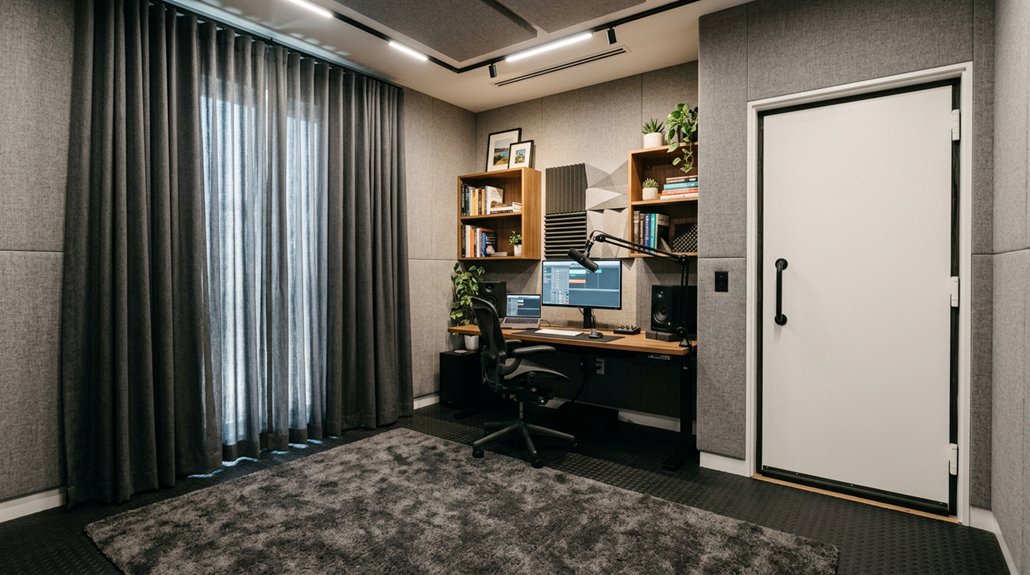
To soundproof your home office, focus on sealing gaps around doors and windows with weatherstripping, installing solid core doors, and using acoustic seals. Add mass-loaded vinyl or insulation inside walls and floors, and layer thick rugs with pads to absorb impact noise. Treat echoes with acoustic panels and heavy drapes, and place furniture strategically. Control HVAC noise with duct insulation and baffle boxes. Keep exploring for more effective tips to create a peaceful work environment.
What Are the Main Noise Sources in My Home Office?
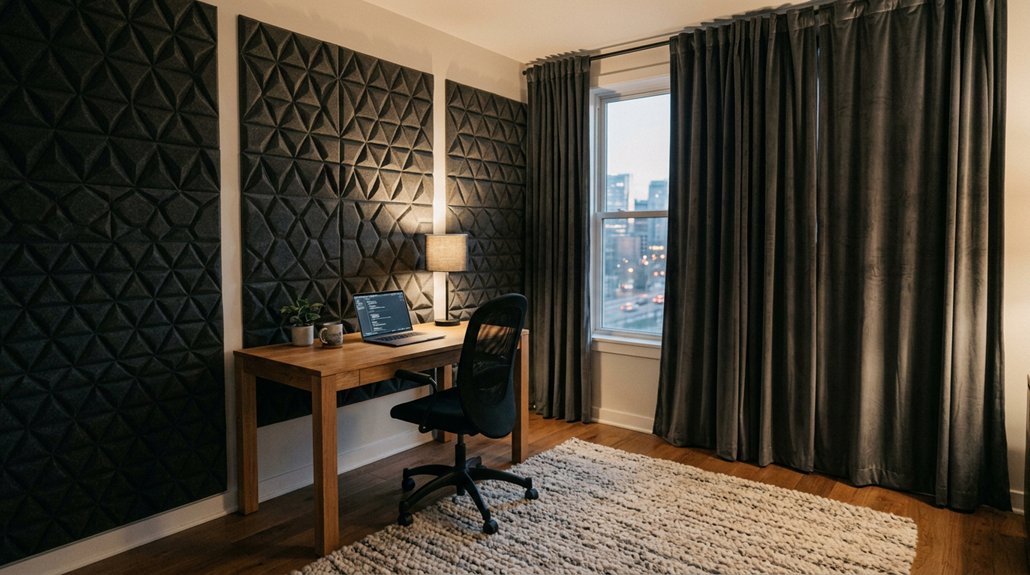
Have you ever wondered what noises are disrupting your focus in your home office? One major culprit is sounds coming from outside, like traffic, lawn equipment, or wildlife, which often penetrate through unsealed windows and weak door seals.
Inside, floor footsteps and movement from upstairs or downstairs can be just as distracting, especially if your office is near staircases. Household noises like dogs barking, conversations, and appliances add to the background clutter.
Sometimes, echoes or HVAC hums cause further annoyance. Structural elements play a role too—hollow-core doors, wall cavities, and gaps around doors and windows let noise slip through easily. Acoustic panels can help mitigate these issues by absorbing sound waves and reducing reverberation.
Pinpointing these sources is the first step to creating a quieter, more focused workspace.
How Can I Soundproof Walls and Floors Effectively?
To soundproof your walls, consider removing drywall and installing materials like Mass Loaded Vinyl with Green Glue, along with adding insulation in the stud cavities.
Using resilient sound isolation clips can decouple drywall from framing, reducing vibrations and noise transmission.
For floors, installing soundproofing underlayment beneath rugs or adding thick rugs and pads can greatly lower impact noises and footfall sounds.
Adding Deadening Insulation
Adding deadening insulation is a key step in reducing sound transmission through your walls and floors. Installing materials like mineral wool or fiberglass insulation in wall cavities absorbs sound energy, greatly cutting down noise. These insulations are effective at dampening airborne sounds, especially when combined with additional soundproofing layers. To boost results, consider placing mass-loaded vinyl or Green Glue Compound between drywall layers, which adds mass and dampens vibrations. For floors, underlayments like Iso-Step® beneath rugs or carpet minimize impact noise from footsteps, particularly on upper stories. Incorporating dense, thick fabrics like soundproof curtains can further enhance noise reduction by trapping sound vibrations and preventing echoes. While insulation alone makes a difference, pairing it with added mass and damping techniques provides a more all-encompassing soundproofing solution, blocking both airborne and impact noise more efficiently.
Using Decoupling Techniques
Decoupling your walls and floors is one of the most effective ways to reduce sound transmission, especially for controlling both airborne and impact noise. Creating an air gap between wall layers, such as building a new wall 30mm away from the existing one using metal studs, dramatically cuts down sound flow. Using resilient sound isolation clips (RSIC-1) suspends drywall, decreasing vibrations and preventing noise from traveling through structural connections. For floors, installing a floating system with materials like mineral wool and resilient underlayment (e.g., Iso-Step®) isolates impacts and footfall noise. Combining decoupling methods with added mass, like extra drywall layers and insulation, further enhances your soundproofing efforts. Properly managing cables with cable management kits can also prevent noise created by loose wires or cluttered setups. This approach effectively minimizes sound transfer, making your home office quieter and more private.
How Do I Seal Doors and Windows to Block Noise?
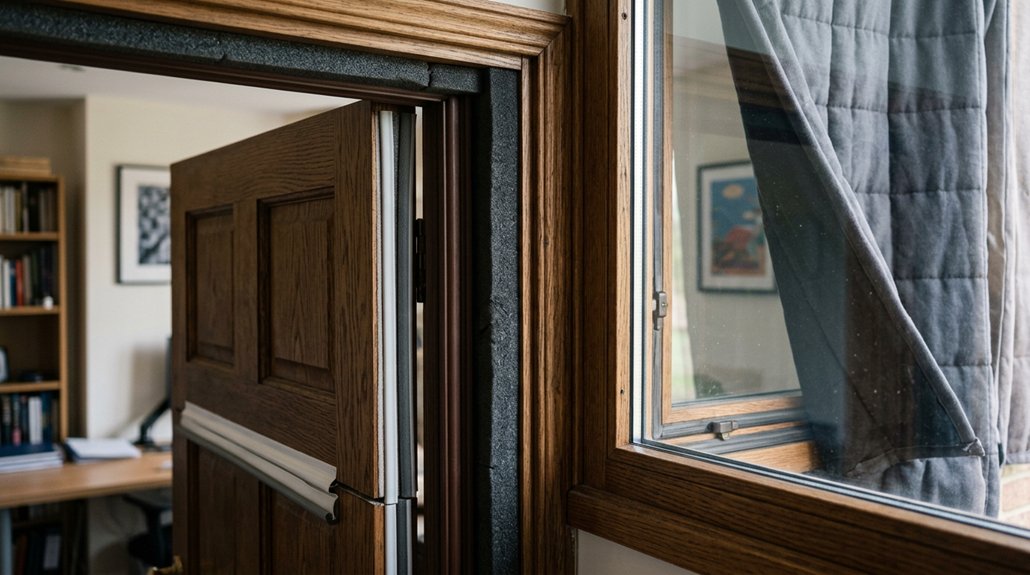
Sealing gaps around your doors and windows is key to blocking noise effectively. You can improve this by applying self-adhesive weather stripping and replacing hollow-core doors with solid ones. Using an air quality sensor to monitor your room can also help determine if your sealing efforts are successful in reducing noise infiltration. Upgrading door and window seals with products like PrivacyShield® can also make a noticeable difference.
Sealing Gaps Effectively
To effectively block noise from entering your home office, it’s essential to seal gaps around your doors and windows thoroughly. Start by installing self-adhesive weather stripping around door frames to seal gaps on the top and sides, which helps reduce noise infiltration. Use door draft stoppers or door sweeps that slide underneath the door to close gaps at the bottom and prevent sound leaks. Applying window seal kits like PrivacyShield® adds a transparent barrier without sacrificing natural light. Also, seal cracks around window frames, outlets, and switches with acoustical caulk to eliminate common sound leak points. Replacing hollow-core doors with solid core doors and installing soundproofing door seals further enhances airtightness and cuts down on noise transmission, creating a quieter home office environment. Additionally, using soundproofing materials such as mass-loaded vinyl barriers or acoustic panels can further improve the noise reduction capability of your space.
Upgrading Door and Window Seals
Upgrading your door and window seals is a straightforward way to block out unwanted noise and create a quieter home office. Start with your office door—install self-adhesive weatherstripping around the door frame to seal gaps that let sound in. For an even better seal, consider replacing a hollow-core door with a solid core door, which naturally reduces noise transmission. Add door draft stoppers or sweeps at the bottom to block sound leaks at the threshold. For windows, apply a window seal kit like the PrivacyShield® Window Seal Kit to enhance soundproofing without sacrificing natural light. Finally, seal all edges, cracks, and joints with acoustic caulk or rubber gaskets, ensuring every gap is airtight and soundproofed efficiently. Using fire-resistant materials for seals and gaskets can also improve safety alongside noise reduction.
What Are the Best Acoustic Treatments for Echo and Reverberation?
Addressing echo and reverberation in your home office is essential for a clear and professional sound environment. The best acoustic treatments for this include broadband acoustic panels, such as 24×36-inch linen-wrapped foam panels, which effectively absorb mid and high-frequency sound waves. Using sound absorption panels like AlphaSorb® fabric wrapped acoustic panels enhances indoor sound clarity and adds aesthetic appeal, with various colors to match your decor. Thick drapes and soundproof curtains help block external noise and reduce internal reflections. Soft materials like layered rugs, blankets, and padded furniture surfaces further dampen sound reflections that cause echo. Additionally, placing bass traps in corners targets low-frequency reverberations, creating a balanced acoustic environment ideal for virtual meetings and audio work. Incorporating monitor hoods can also contribute to reducing glare and visual distractions, indirectly aiding in creating a more focused acoustic setting.
How Can I Install Soundproof Doors and Windows?
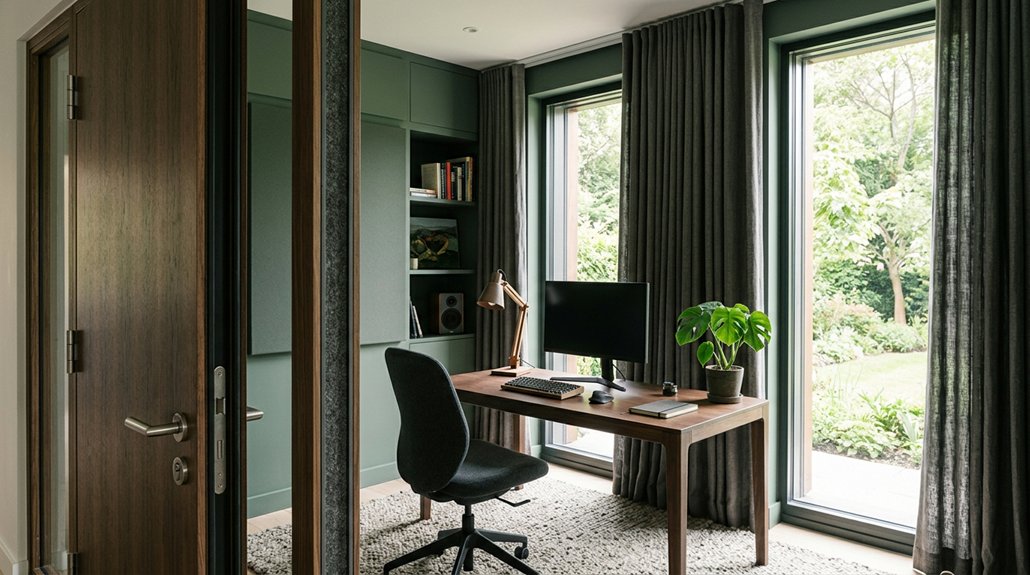
To improve soundproofing, start by sealing all gaps around your doors and windows with weather stripping, draft stoppers, and acoustic sealant. Upgrading to solid core doors or specialized soundproof options, like PrivacyShield®, can greatly block noise infiltration. For windows, consider installing double-glazed, laminated, or seal kits to create a more effective noise barrier. Using adhesive cable clips to organize and route cables neatly can also prevent unnecessary noise and clutter that might interfere with your work environment.
Sealing Door Edges
Sealing the edges of your doors and windows is one of the most straightforward ways to boost soundproofing in your home office. Proper sealing blocks gaps that allow noise to pass through, creating a quieter workspace.
To start, use a soundproofing door seal kit around the top and sides of the door to seal gaps effectively. Consider installing self-adhesive weather stripping strips, which are easy to apply and highly effective. Additionally, place door draft stoppers at the bottom of the door to eliminate noise leaks at the threshold.
For windows, use transparent window seal kits to guarantee a durable noise barrier without blocking natural light. Make sure all seals are tightly installed and maintained to prevent cracks or gaps that can undermine your soundproofing efforts.
- Seal gaps with a soundproofing door seal kit
- Install self-adhesive weather stripping strips
- Use door draft stoppers at the threshold
- Seal window edges with transparent seal kits
Upgrading Window Layers
Upgrading your windows with additional layers is one of the most effective ways to enhance soundproofing in your home office. Installing double-pane or triple-pane windows with laminated glass greatly reduces outdoor noise by increasing barrier mass and damping sound vibrations.
For an extra noise barrier, consider using PrivacyShield® Window Seal Kits, which add a transparent layer to your existing windows without sacrificing natural light, boosting sound isolation quickly. Proper installation is essential: seal all edges with acoustic caulking or weather stripping to prevent sound leaks through cracks.
Replacing hollow-core doors with solid or specialized acoustic doors, coupled with high-quality seals like PrivacyShield® Soundproofing Door Seal Kits, complements window upgrades. Together, these improvements create a quieter, more focused work environment.
What Soft Materials Like Rugs and Curtains Help Reduce Sound Reflection?
Have you ever noticed how hard surfaces like polished floors and bare walls make a room sound brighter and more echoey? Soft materials like rugs and curtains play a vital role in reducing sound reflection by absorbing sound waves before they bounce around.
- Multiple layers of rugs, even over existing carpet, effectively block sound by absorbing footstep noise and reducing sound transmission.
- Rug pad underlayments add extra cushioning, boosting sound absorption and limiting noise reflection.
- Thick, heavy drapes help reduce reverberation by absorbing sound waves inside the room.
- Soundproof curtains, made with dense materials and special backing, block external noise like traffic or neighborhood sounds.
Using these sound-absorbing soft materials creates a quieter, more focused home office environment.
How Do I Control HVAC and Ventilation Noise in My Office?
Ever wonder how to keep HVAC and ventilation noise from disrupting your home office focus? Start by installing baffle boxes over HVAC vents to block sound and reduce duct noise.
Using Energy Recovery Ventilators (ERV) allows for fresh air circulation without adding to the noise level. Choose quiet HVAC systems, like mini-split units, designed for low operational sound, so your workspace stays peaceful.
Apply acoustic insulation and guarantee proper duct sizing to minimize noise transmission through ducts. Make sure to seal all gaps around air vents and ductwork thoroughly—any leaks can allow sound to escape and disrupt your environment.
How Should I Arrange My Room for Optimal Sound Control?
Wondering how to set up your room for the best sound control? Start by positioning your desk and work area away from walls and corners. This minimizes sound reflections and creates a primary listening spot free of echoes.
Incorporate acoustic panels or fabric-wrapped AlphaSorb® panels on the walls and ceiling at first reflection points, which effectively absorb echoes and reverberation. Use thick rugs with underlayments on the floor near your workstation to soak up footstep noise and contain sound transmission, especially if above quieter rooms.
Strategically place bulky furniture, bookshelves, or soft items like blankets around the space to diffuse sound and reduce standing waves. Finally, make certain doors and windows are sealed, or add soundproof curtains for extra outdoor noise control.
How Can I Use Sound Masking and White Noise to Minimize Distractions?
After optimizing your room layout and adding acoustic treatments, incorporating sound masking and white noise can further diminish distractions. Sound masking uses steady, low-level sounds like white noise, pink noise, or nature sounds to cover disruptive noises, enhancing focus and privacy.
White noise machines or apps generate consistent sound frequencies that mask sudden noises like footsteps or conversations, preventing them from breaking your concentration. This approach is especially effective if your room has echo or poor sound insulation, as it smooths out irregularities and reduces virtual meeting disruptions.
Many sound masking systems are customizable, allowing you to adjust volume and sound type for comfort without causing fatigue. Paired with acoustic treatments, sound masking and white noise create an all-encompassing noise control system for a more focused home office.
How Do I Maintain and Check the Effectiveness of My Soundproofing?
Maintaining and checking the effectiveness of your soundproofing is essential to confirm it continues to block noise effectively over time. To make sure your soundproofing a home remains effective, perform regular inspections and tests.
- Regularly inspect door seals, weather stripping, and window seals for gaps or wear.
- Perform sound tests by playing outside noise and listening for leaks inside.
- Check for new cracks or openings around outlets, switches, and junction boxes.
- Confirm rugs, acoustic panels, and draft stoppers stay in place and are in good condition.
Tracking changes in noise levels during work helps you identify when additional soundproofing measures or maintenance are needed. Consistent checks help maintain the soundproofing’s performance and keep your home office quiet.
Frequently Asked Questions
How Do I Make My Home Office More Soundproof?
To make your home office more soundproof, seal gaps with weather stripping and draft stoppers, add rugs and thick curtains, hang acoustic panels, insulate walls with Green Glue, and guarantee outlets and windows are tightly sealed.
How Do You Soundproof a Room for Snoring?
You can soundproof a room for snoring by adding thick rugs and rugs pads, sealing gaps with weather stripping and draft stoppers, hanging heavy curtains, installing acoustic panels, and using soundproofing materials like vinyl or creating insulated double walls.
What Materials Block High Frequency Sound?
You can block high frequency sound with dense, stiff materials like multilayer drywall and Green Glue, acoustic panels, Mass Loaded Vinyl, tight door seals, thick soft materials like heavy drapes, layered rugs, and soundproof curtains.
Does Rockwool Soundproof?
Yes, Rockwool soundproofs by absorbing sound waves and reducing echo, especially in wall cavities. You’ll get better noise control by combining it with other materials like drywall or vinyl, making your home office quieter and more private.