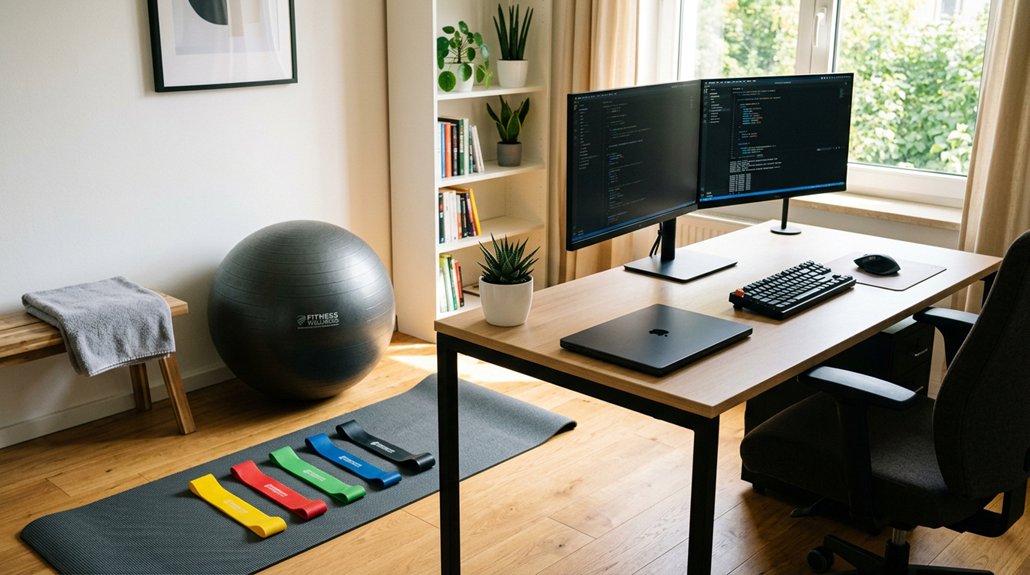
Poor posture at work strains your muscles, joints, and spine, leading to discomfort, pain, and inflammation. Over time, it can cause muscle imbalances, joint degeneration, and even affect your organ function due to compressed blood vessels and organs. Poor ergonomics like wrong monitor height or unsupported chairs worsen alignment, increasing risks of chronic issues. If you keep ignoring these habits, you could face long-term health problems—but there are effective ways to protect yourself.
How Poor Posture Develops at Work
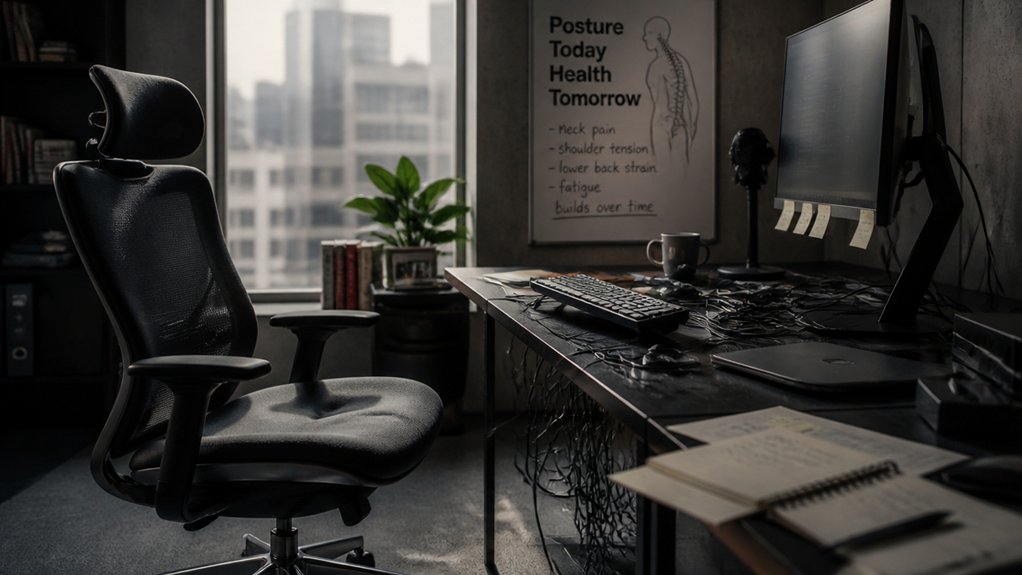
Poor posture at work often develops gradually due to the way you use your body during daily tasks. Poor posture causes muscles to become imbalanced and misaligned, especially when sitting for long periods with your head tilted downward at screens. This forward head posture increases spinal load, straining your neck and shoulders. Using an ergonomic office chair with adjustable lumbar support can help mitigate these issues. Sitting with improper ergonomics, like a low monitor or incorrect keyboard placement, further emphasizes poor alignment. When you carry heavy bags on one shoulder or sit with rounded shoulders, muscles become overused and fatigued. Sitting too much without breaks weakens your core muscles, reducing your spine’s support. Staying in non-ergonomic chairs or failing to maintain a neutral spine perpetuates these issues, making poor posture an ongoing problem at work.
The Immediate Effects of Bad Posture on Your Body
When you sit with bad posture, you immediately put extra strain on your neck and back muscles, leading to tightness and discomfort. This misalignment also restricts blood flow, making you feel tired and sluggish. Using posture reminder devices can help prevent long-term damage by promoting better alignment throughout your workday. As a result, pain and tension develop quickly, affecting your overall comfort and performance.
Muscle Strain and Tension
Bad posture forces your neck and back muscles to work harder than they should, leading to immediate muscle strain and tension. When you slouch or lean forward, your muscles between the shoulder blades and the neck bear extra pressure, causing discomfort and pain.
Over time, muscle imbalances develop: some muscles tighten and shorten, while others weaken and stretch. This imbalance exacerbates tension, worsening discomfort. Additionally, overusing fast-twitch fibers instead of supportive postural muscles speeds up fatigue and strain.
Continuous muscle strain triggers inflammation, which can cause ongoing pain and stiffness. You might notice head or neck pain, headaches, or a feeling of tightness spreading through your upper back.
These immediate effects highlight how poor posture compromises your muscular health and overall comfort.
- Increased neck and shoulder pain
- Headaches from muscle tension
- Accelerated muscle fatigue
- Juggled muscle balance issues
- Persistent stiffness and discomfort
Restricted Blood Flow
Maintaining poor posture, such as slouching or leaning forward, directly compresses blood vessels, which restricts blood flow throughout your neck, back, and legs.
When you sit or stand with bad ergonomics, circulation slows down, limiting oxygen delivery to muscles. This restricted blood flow causes immediate effects like muscle fatigue, numbness, and soreness, making you feel uncomfortable during the workday.
Poor posture also increases the risk of developing varicose veins and blood clots in your legs due to stagnant blood. Over time, impaired circulation can trigger immune system inflammation and contribute to joint degeneration.
If you stay in these poor positions for extended periods, these issues can worsen, negatively impacting your overall health and making even simple movements more painful. For optimal support, ergonomic designs help maintain proper spinal alignment, promoting better blood flow.
Postural Misalignment and Pain
Poor posture immediately causes pain by forcing your muscles to work harder and putting extra strain on your joints. When you slouch or lean forward, it flattens back muscles and increases pressure between your shoulder blades, leading to shoulder pain and discomfort in your neck and back.
Overusing phasic muscles for stability causes fatigue, stiffness, and inflammation, which can worsen over time. Forward head posture and looking down at screens greatly raise spinal load, intensifying neck and upper back pain. This misalignment triggers muscle imbalances, resulting in tension and soreness.
If left uncorrected, these issues can escalate into chronic pain and even arthritis. Additionally, ergonomic support technology in cushions can help maintain proper alignment and reduce these risks.
- Increased joint stress and inflammation
- Muscle fatigue and stiffness
- Strained neck and upper back muscles
- Heightened shoulder pain
- Elevated risk of joint degeneration
How Poor Ergonomics Contribute to Postural Problems
Poor ergonomics, like misaligned monitors and keyboards, make you lean forward and hunch your shoulders, straining your neck and upper back.
If your desk isn’t supported properly, you may slouch and develop muscle imbalances, weakening some muscles while overworking others.
When your chair lacks lumbar support or your posture is off, it puts extra stress on your spine, speeding up postural problems.
Additionally, using adjustable armrests can improve ergonomic support and help maintain proper arm positioning, reducing strain during extended periods of work.
Desk Setup Errors
An improper desk setup can quickly lead to postural issues that cause long-term discomfort and injury. Poor desk setup, like monitors positioned below eye level, forces your neck to tilt downward, increasing load and causing “text neck.” Incorrect keyboard placement prevents you from keeping shoulders relaxed and wrists straight, leading to muscle tension. Sitting too far forward or lacking lumbar support causes slouching, flattening back muscles, and putting pressure on shoulder blades. Failing to maintain a 90-degree angle at your shoulders and arms overworks muscles and worsens posture. Using non-ergonomic chairs or improper workstation heights escalates fatigue, causes muscular imbalances, and worsens postural alignment. Adjustable headrests can help support proper neck positioning and reduce strain during long sitting sessions.
Inadequate Support Devices
Inadequate support devices, such as improperly designed chairs and improperly adjusted monitors, force your body into unnatural positions that contribute to postural problems. Bad causes, like lack of lumbar support, lead to slouching and spinal misalignment, which increase back pain.
If your monitor is set too low, you tend to look downward, worsening forward head posture and “text neck,” escalating spinal load. Insufficient arm and keyboard support cause your shoulders to rise and create wrist strain, resulting in muscle fatigue and tension in your upper back and shoulders.
Prolonged sitting on non-ergonomic chairs compresses your organs and decreases blood flow. These poor ergonomic devices cause your muscles to overwork, leading to fatigue, chronic inflammation, and more back pain—all while encouraging you to keep shoulders back becomes a challenge.
Proper ergonomic design features, like adjustable seats and stable bases, help prevent these issues and support healthier postures during long periods of sitting.
Long-Term Risks of Poor Posture on Spine and Joints

Long-term poor posture can cause significant and permanent damage to your spine and joints by disrupting their natural curves and function. Over time, this stress leads to issues like increased pressure on vertebrae, muscle imbalances, and joint wear. A proper understanding of foam density and material support plays a vital role in maintaining correct spinal alignment and preventing these degenerative effects. It accelerates degenerative conditions such as arthritis and spinal stenosis. Continuous misalignment causes inflammation and muscle overuse, raising injury risk. The persistent compressive forces and muscle shortening can result in permanent deformities in spinal discs and facet joints. By neglecting postural health, you risk:
- Altered ‘S’ shape curves of the spine
- Increased pressure damaging bones and joints
- Reduced shock absorption capacity
- Decreased range of motion and stability
- Higher chances of falls and mobility impairments
How Poor Posture Contributes to Chronic Pain and Discomfort
Poor posture at work directly leads to chronic pain and discomfort by overloading muscles and stressing joints. When you slouch or hunch forward, your back, shoulders, and neck muscles work harder to maintain balance, causing stiffness and soreness.
Poor posture can lead to muscle imbalances: some muscles become weak and stretched, while others tighten and shorten—worsening pain and reducing mobility. Overworked muscles trigger inflammation, which may become chronic and contribute to joint arthritis or lasting damage.
Prolonged forward head posture, like “text neck,” increases spinal load, intensifying muscular fatigue and upper back pain. Additionally, inefficient muscle use from bad posture forces your body to work harder, leading to quicker fatigue and persistent discomfort during work hours.
How Bad Posture Affects Circulation and Organ Function

When you sit or stand with bad posture, it doesn’t just cause musculoskeletal discomfort — it also affects your circulation and organ health. Poor posture, especially prolonged slouching, compresses abdominal organs, slowing digestion and causing issues like heartburn. Increased abdominal pressure can push stomach acid upward, contributing to acid reflux.
Compression of blood vessels reduces circulation efficiency, leading to muscle fatigue and delayed healing. Slouched, forward head postures restrict diaphragm movement, decreasing oxygen intake and impairing organ oxygenation.
Chronic poor posture also disrupts normal blood flow and nerve function, potentially worsening conditions like sciatica and causing organ dysfunction.
- Compresses abdominal organs, impairing digestion
- Increases internal pressure, promoting acid reflux
- Reduces blood flow, delaying healing
- Restricts diaphragm movement, lowering oxygen levels
- Disrupts nerve signals, affecting overall organ function
The Role of Muscle Imbalances and Weakness in Posture Decline
You mightn’t realize how muscle weaknesses and imbalances can disrupt your posture over time.
When certain muscles become too tight or weak, your spine loses proper support, leading to discomfort and misalignment.
Addressing these imbalances is key to restoring stability and preventing further decline.
Muscle Weakness and Imbalance
Muscle imbalances play a significant role in the decline of posture by disrupting the natural alignment of the spine. When certain muscles become weak or overstretched, others tighten and shorten, especially impacting your lower back. This imbalance hampers your body’s ability to support proper posture, leading to misalignment.
Weak deep supporting muscles waste away from inactivity, reducing their ability to stabilize your spine. Shortened muscles from weakness cause vertebrae to compress, worsening spinal misalignment and posture deterioration.
Additionally, your nervous system over-recruits fast-twitch muscles for stability, causing fatigue and discomfort. Muscle imbalances and weakness in your lower back and surrounding areas also hinder effective position sensing by your brain, resulting in excessive muscle contraction, increased fatigue, and pain.
- Weak deep back muscles lose their support function
- Tight hamstrings and hip flexors pull your pelvis out of alignment
- Imbalanced muscles strain your lower back
- Inactivity causes muscle weakening and shortening
- Poor muscle support worsens postural decline
Impact on Postural Stability
Poor posture at work directly undermines your postural stability by creating muscular imbalances that compromise your body’s ability to maintain proper alignment. When some muscles become weak and stretched, while others tighten and shorten, your body’s stability suffers.
Weak deep supporting muscles, essential for proper spine alignment, deteriorate from disuse, leading to poor posture control and increased instability. Muscle shortening causes vertebral compression and misalignment, further impairing the nervous system’s ability to sense your body’s position accurately.
Relying heavily on fast-twitch muscle fibers in poor posture leads to quick fatigue and decreased endurance, making it harder to hold upright for long periods. The imbalance prompts excessive muscle contraction and inflammation, which contribute to chronic pain and ongoing deterioration of postural stability.
Signs Your Posture Is Damaging Your Health
Have you noticed persistent neck, shoulder, or back pain that lingers during or after work? These aches and pains often signal that poor posture is taking a toll on your health, causing muscle strain and joint stress.
You might also experience frequent stiffness and fatigue, especially in your upper back and shoulders, indicating overworked muscles from misalignment. Tension headaches tied to tight neck muscles could suggest sustained forward head posture or slouching.
Notice if you see rounded shoulders, a forward head tilt, or a slouched stance—these reveal ongoing postural issues. Moreover, decreased range of motion, reduced breathing capacity, or digestive discomfort can be subtle signs that poor posture is having negative effects on your overall health.
Recognizing these symptoms early can help prevent long-term damage.
Practical Strategies to Prevent Posture-Related Damage at Work
To prevent posture-related damage at work, making simple adjustments and adopting mindful habits can make a significant difference. Focus on sitting and standing with proper alignment, and take frequent breaks to walk or stretch hourly. Using a standing desk can help alternate between sitting and standing, reducing neck and back strain when you practice neutral spine posture. Adjust your workstation by raising the monitor to eye level and keeping the keyboard in a position that relaxes your shoulders and keeps wrists straight. Using ergonomic chairs with lumbar support and sitting fully back promotes proper spinal curves. Additionally, engaging in core strengthening exercises and shoulder stretches will support your posture. Consult a physical therapist if needed to refine your sitting and standing habits for improved posture and better health.
| Tip | Benefit |
|---|---|
| Take hourly breaks | Reduce muscle fatigue and maintain spinal alignment |
| Adjust workstation setup | Promote neutral spine and reduce strain |
| Alternate sitting and standing | Prevent muscular imbalances and lessen discomfort |
Ergonomic Tips to Support Good Posture Daily
Maintaining good posture daily starts with adjusting your workspace to support proper alignment. Position your monitor at eye level directly in front of you to prevent neck strain and reduce the spinal load from “text neck.”
Keep your shoulders and elbows bent at 90 degrees while typing, which helps relax your shoulders and keeps your wrists straight, minimizing muscle tension. Use an ergonomic chair with lumbar support and sit back fully to preserve your spine’s natural curve and lessen lower back pressure.
Alternate between sitting and standing during the day, taking short breaks to move or shift your weight to prevent stiffness. Arrange your keyboard and mouse close enough to avoid reaching forward, promoting neutral spine alignment. These tips help you maintain a healthy posture whether sitting or standing.
Tips for Regular Movement and Posture Checks
Incorporating regular movement and posture checks into your work routine keeps muscles active and reduces strain. When you move around frequently, it prevents posture can cause muscle fatigue and supports spinal health. Stand up straight often, avoiding prolonged static positions. Setting reminders to alternate between sitting and standing boosts circulation and offsets the negative effects of sitting too long. Shift your weight or sway slightly at your standing desk to prevent overusing specific muscles. Regular posture checks help you maintain proper spine curves and reduce neck and back strain.
| Movement Tip | Benefits |
|---|---|
| Walk around hourly | Boosts circulation and reduces fatigue |
| Vary motions often | Supports muscle health and flexibility |
| Stand up straight | Prevents poor posture causes |
| Shift weight regularly | Maintains spinal alignment |
| Check posture frequently | Reduces strain and discomfort |
Frequently Asked Questions
What Are the Health Problems Caused by Poor Posture?
Poor posture causes neck, back, and shoulder pain, reduces breathing efficiency, and triggers headaches. It also leads to arthritis, digestive issues, and mental health problems, lowering your confidence, motivation, and focus at work.
Does Parkinson’s Affect Your Posture?
Yes, Parkinson’s affects your posture, causing a stooped or forward-leaning stance due to muscle rigidity and impaired control. This worsens balance, increases fall risk, and leads to back pain, but targeted exercises can help improve your stability.
Can You Correct Years of Bad Posture?
Yes, you can correct years of bad posture, but it takes consistent effort over several weeks or months. Regular exercises, professional guidance, ergonomic changes, and long-term lifestyle adjustments are essential to realign and strengthen your muscles effectively.
Can Bad Posture Cause GERD?
Yes, bad posture can cause GERD by increasing abdominal pressure, weakening your core muscles, and affecting the gastroesophageal sphincter, which leads to acid reflux and heartburn. Improving your posture helps reduce these symptoms and support digestion.