To reduce sedentary risks, try taking microbreaks every hour, including simple movements like shoulder rolls, neck stretches, and hamstring reaches. Incorporate quick exercises like squats, lunges, or desk stretches to boost circulation and energy. Use reminders or timers to prompt these short breaks, and alternate between sitting and standing every 30 to 60 minutes. By adding these movement strategies into your routine, you’ll stay energized and healthier; discover more effective ways to stay active throughout your day.
What Are Microbreaks and Why Are They Important?
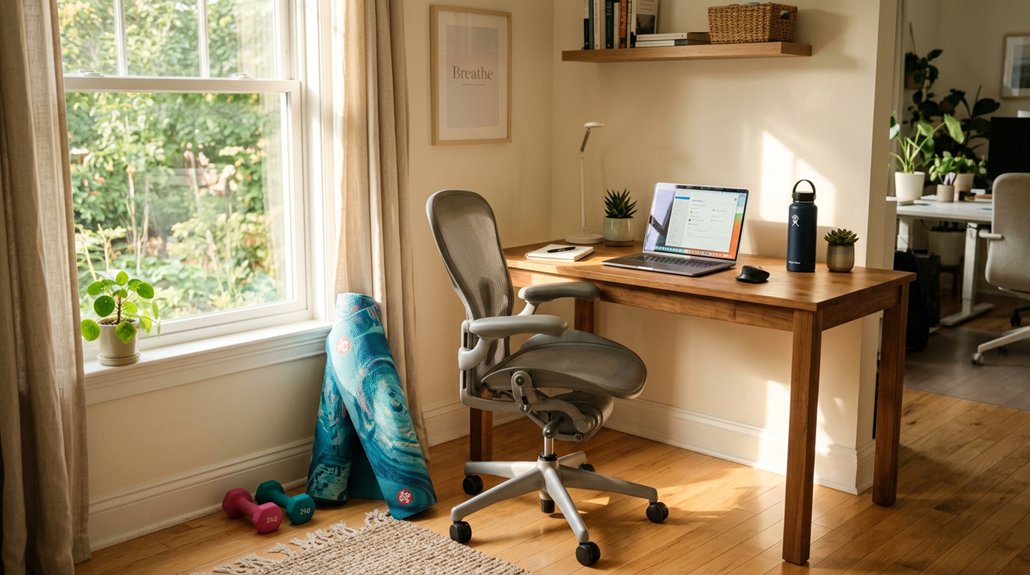
Have you ever wondered how brief breaks can boost your health and productivity during a sedentary workday? Movement breaks, or microbreaks, are short, frequent pauses typically taken every hour. They last about 10 minutes and include simple activities like stretching, walking, or squats to interrupt prolonged sitting.
These breaks are essential because they help reduce musculoskeletal risks, improve blood flow, and release muscle tension. By incorporating microbreaks into your routine, you can decrease sedentary behavior by around 24 minutes daily and feel less mentally fatigued. Using digital tools or fitness trackers can remind you to take these breaks regularly, helping you develop sustainable movement habits. Quiet exercise options like under-desk ellipticals can make it easier to stay active without interrupting your workflow. Ultimately, microbreaks keep you healthier, more focused, and more productive during long hours of sitting.
Easy Movement Ideas to Do at Your Desk
You can easily incorporate movement into your day with simple stretching exercises to boost flexibility and reduce muscle tension.
Seated movements like leg lifts or shoulder rolls are effective for breaking up long periods of sitting. These quick activities not only feel good but also improve circulation and keep you energized.
Additionally, using tools like footrest rockers can promote active leg movement and enhance circulation while you work.
Stretching Exercises for Flexibility
Incorporating simple stretching exercises into your workday can effectively alleviate muscle tension and improve flexibility without disrupting your workflow. Regular movement throughout the day helps prevent musculoskeletal issues and promotes better circulation.
Easy stretches like neck rolls, shoulder shrugs, seated spinal twists, and hamstring stretches can be done right at your desk in minutes. These movements enhance joint mobility, improve posture, and reduce discomfort from prolonged sitting.
By integrating these short stretching breaks every hour, you counteract the negative effects of a sedentary lifestyle and maintain physical flexibility. Additionally, choosing a sturdy electric standing desk can support safe and effective movement, making it easier to switch between sitting and standing positions throughout the day.
Regular movement not only relieves physical tension but also boosts mental alertness. Keep stretching consistently to stay comfortable, focused, and healthier during long work hours.
Simple Seated Movements
Engaging in simple seated movements throughout your workday can greatly boost circulation and ease muscle tension without disrupting your tasks. Simple seated movements like ankle circles, seated marches, and shoulder rolls are easy to incorporate and effective for movement throughout the day. Incorporating adjustable straps or ergonomic supports can help enhance your comfort and ensure proper support during these exercises. Performing seated stretches every 30 to 60 minutes ward off discomfort from prolonged sitting and support ergonomic health. Quick desk exercises such as seated leg lifts or twist stretches help increase blood flow and reduce sedentary risks during work hours. Research shows that adding micro-movements at your desk prevents musculoskeletal strain and improves focus. Using reminders or digital prompts encourages consistent movement throughout your day, helping you stay active, reduce fatigue, and maintain productivity with minimal effort.
How to Incorporate Stretching Into Your Workday
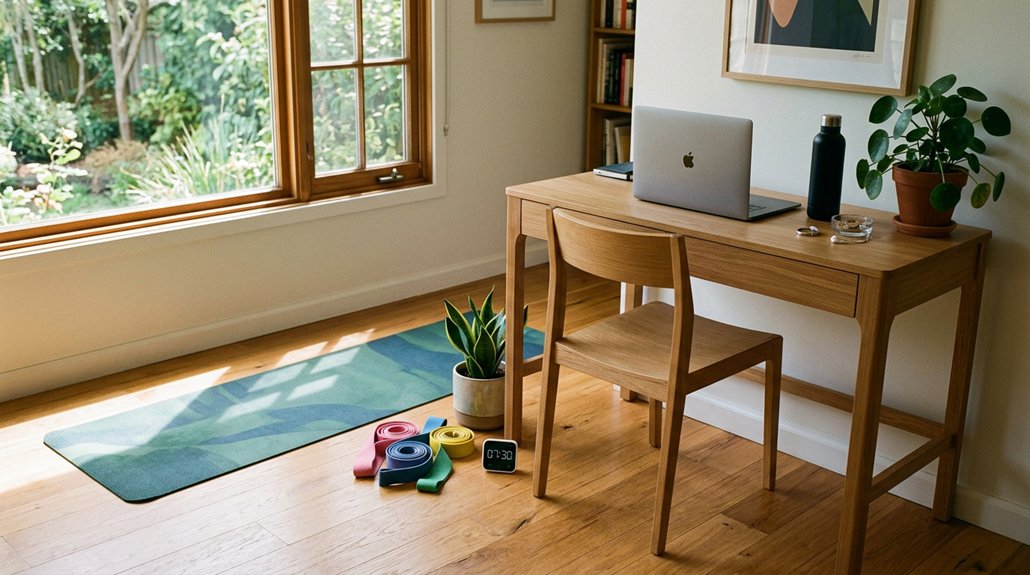
Integrating quick stretches into your workday can greatly reduce muscle tension, boost blood flow, and enhance focus. Simple movements like neck rolls and seated twists take just a couple of minutes and can be scheduled hourly. Using reminders or digital tools helps you stay consistent, making stretching a natural part of your routine. Additionally, choosing ergonomic office rugs with slip-resistant backing can help prevent slips and falls during these quick activities, ensuring safety as you move.
Stretching Benefits During Work
To reap the benefits of stretching during your workday, you can easily add brief routines into your routine without interrupting your tasks. Short stretching breaks throughout the day relieve muscle tension, reduce pain from prolonged sitting, and boost comfort. By focusing on simple movements like shoulder rolls, neck stretches, and hamstring reaches, you improve circulation, delivering oxygen and removing toxins. These microbreaks help combat mental fatigue by increasing blood flow to your brain, keeping you alert. Using guided stretch exercises or wellness apps during work breaks encourages consistent practice, supporting your physical well-being.
| Stretching Activity | When to Do It | Benefits |
|---|---|---|
| Shoulder Rolls | Every hour | Relieves shoulder tension |
| Neck Stretches | During meetings or breaks | Eases neck stiffness |
| Hamstring Reaches | Mid-morning or afternoon | Loosens hamstrings |
| Back Bends | Mid-afternoon | Reduces back soreness |
| Wrist stretches | Hourly | Prevents strain injuries |
Simple Stretching Techniques
Incorporating simple stretching techniques into your workday is easy and effective for maintaining movement and reducing muscle tension. You should aim for frequent breaks throughout the hour, performing small stretches like neck rolls, shoulder shrugs, wrist flexes, or seated spinal twists. These quick movements help relieve muscle tension and reduce discomfort from prolonged sitting. Using ergonomic foot rests can also promote better posture and foot positioning, further reducing strain and enhancing comfort during long hours at your desk. Short stretching breaks of just 2-3 minutes can boost circulation, delivering oxygen to muscles and helping clear toxins. Easy stretches such as standing hamstring stretches or calf raises can be done near your workstation without any special equipment. Using digital reminders or fitness trackers can prompt you to take these breaks regularly, keeping your muscles relaxed, improving posture, and enhancing focus during your workday.
Timing and Frequency Tips
Adding timing and frequency strategies to your routine guarantees you get the most benefit from stretching during work hours. Aim to take breaks every hour, even if just for a couple of minutes.
Just two minutes of movement or stretching can greatly lower your risk of chronic disease by 33% and reduce muscle tension. Using digital reminders or fitness trackers can help prompt these hourly breaks so you stay consistent.
Short, frequent breaks—whether standing, walking, or stretching—refresh your muscles, improve circulation, and reduce pain caused by prolonged sitting. Not only does this boost physical health, but it also enhances mental focus, cuts fatigue, and increases productivity. Incorporating adjustable posture correctors into your routine can support proper alignment during these movements, making your breaks even more effective.
Incorporate breaks every hour to make stretching a seamless part of your workday, helping you stay active and healthier long-term.
Simple Exercise Routines for Short Breaks
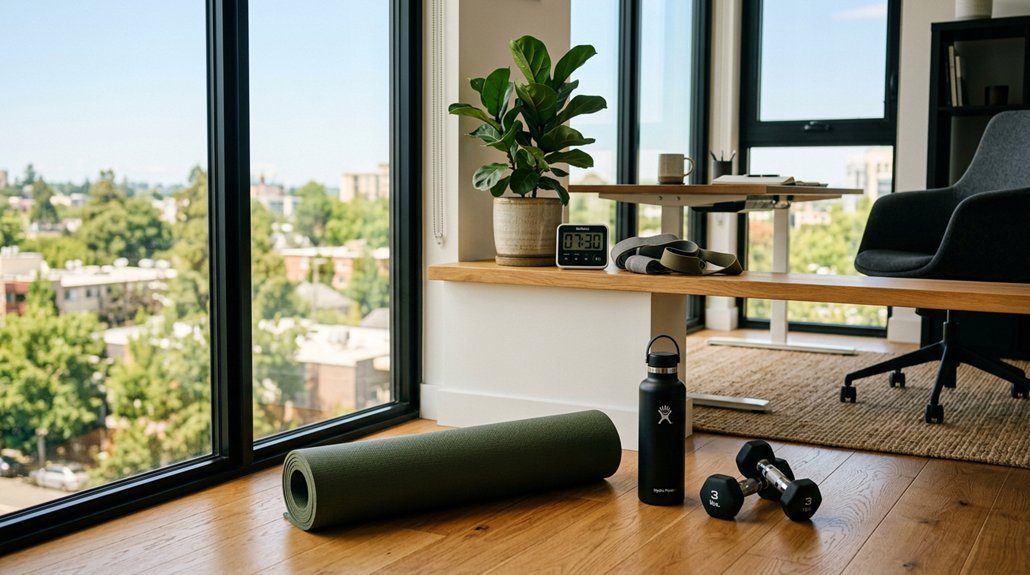
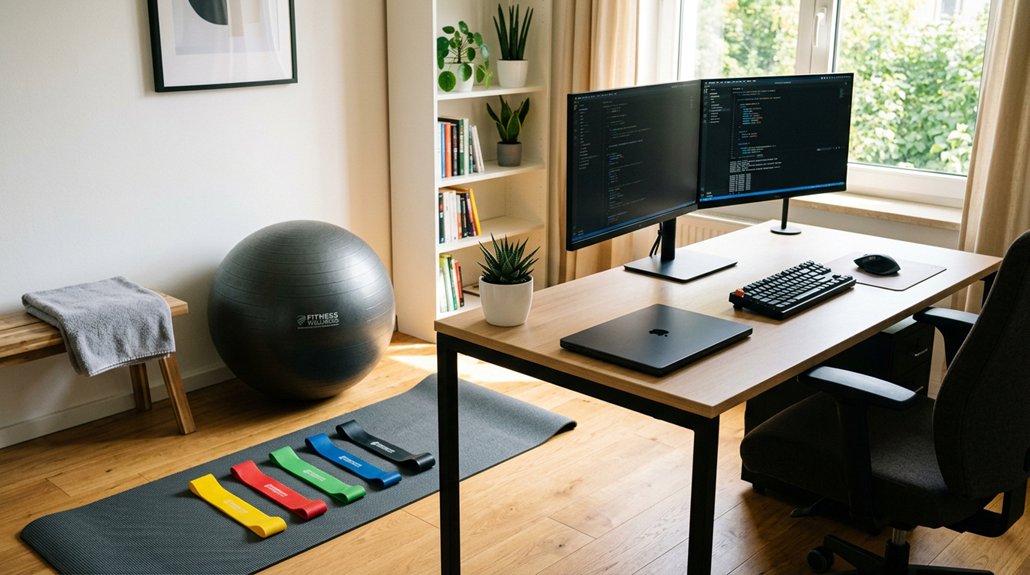
Taking short, active breaks during your workday can make a significant difference in reducing muscle tension and boosting circulation. Simple exercise routines during these short breaks, like walking, stretching, squats, lunges, jumping jacks, and push-ups, are highly effective.
Short active breaks reduce muscle tension and boost circulation, keeping you energized and focused throughout the day.
They help decrease musculoskeletal risks and improve blood flow, making you more alert. Incorporate these exercises into your routine to fight mental fatigue and stay focused.
Using an ergonomic stool can also enhance your comfort and support proper posture during quick movement breaks.
Here are three simple exercises you can try:
- Do a quick set of squats or lunges
- Perform jumping jacks or stretching maneuvers
- Complete a few push-ups or desk stretches
These simple exercise routines require no special equipment, fit easily into your day, and support a healthier, more energized workday.
Set Reminders to Keep Moving Throughout the Day
Setting digital reminders throughout your workday keeps you conscious of movement and helps combat the sedentary nature of desk jobs. By set reminders to prompt regular breaks, you reduce the risks associated with prolonged sitting.
Even just 2 minutes of movement per hour can cut your chronic disease risk by 33%, making these prompts crucial for your health. Fitness trackers and wellness apps are useful tools, providing timely cues to stand, stretch, or walk.
These reminders not only boost physical activity but also fight fatigue and mental exhaustion, improving focus and productivity. Incorporating posture correction devices can further enhance your movement routines by ensuring proper alignment and reducing strain. Consistently setting reminders to move helps break up sedentary time, keeping your body active and supporting overall well-being throughout the workday.
Designing a Home Workspace That Promotes Movement
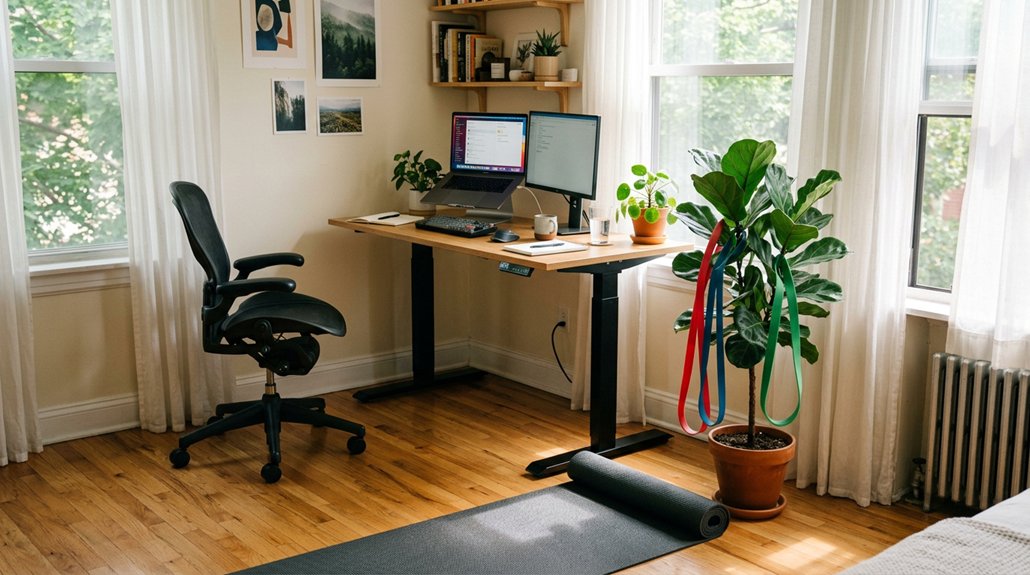
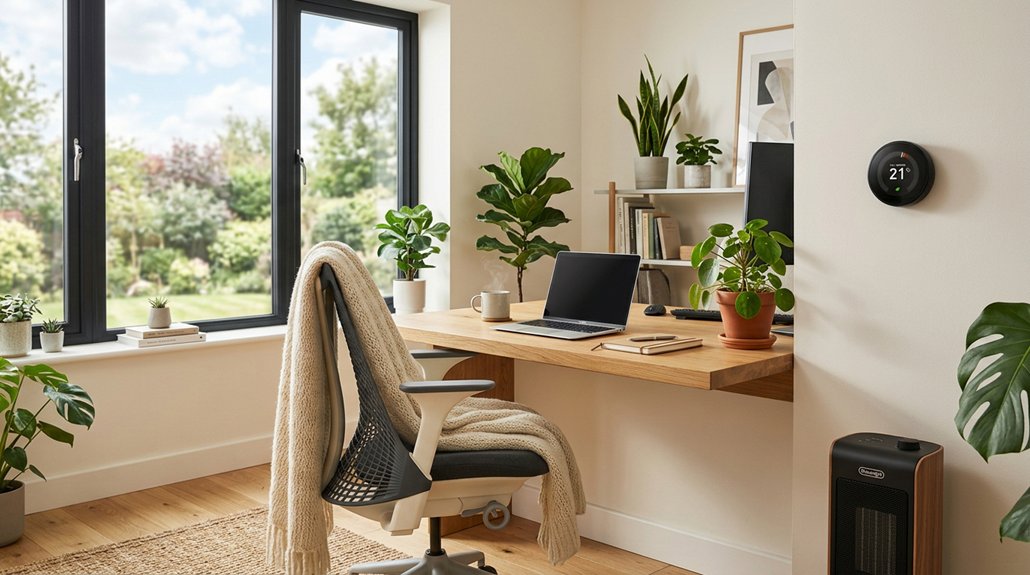
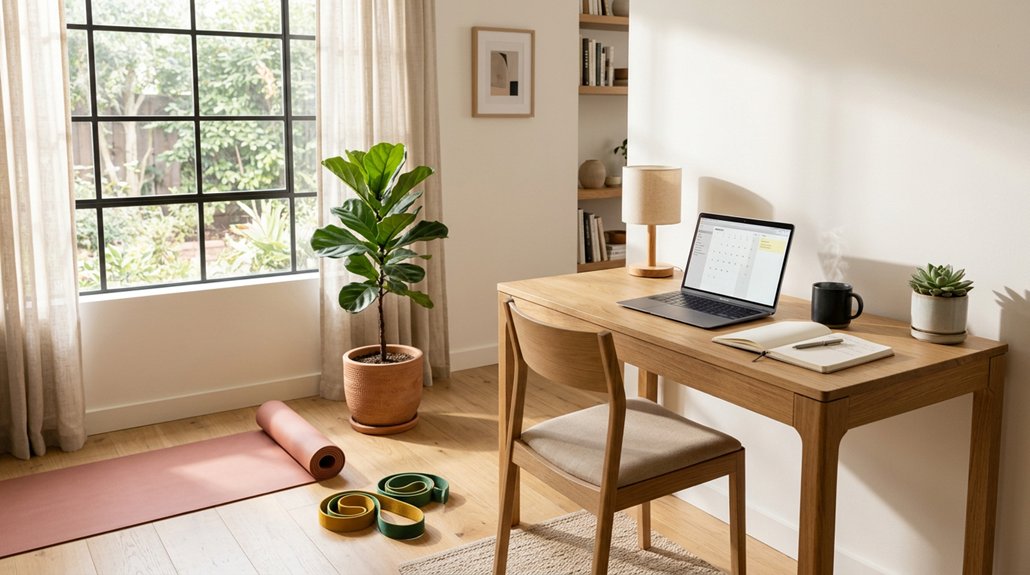
Designing a home workspace that encourages movement starts with creating an ergonomic environment tailored to your needs. An ergonomic home workspace supports comfortable posture changes and helps prevent muscle tension. Using an adjustable monitor stand allows you to easily reposition your screen for different tasks or postures, promoting ergonomic flexibility. Use an adjustable standing desk to alternate between sitting and standing, reducing sedentary time. Position your monitor at eye level, and keep your keyboard and mouse within easy reach to promote natural stretches and movement. Avoid non-ergonomic setups like kitchen tables or barstools, which can cause strain and discourage movement. Consider these tips: 1. Use adjustable standing desks for flexibility. 2. Arrange your monitor, keyboard, and mouse for easy access. 3. Incorporate microbreaks with walking or stretching routines. These simple changes make your workspace more movement-friendly and boost your overall well-being.
Tips for Alternating Between Sitting and Standing
To avoid prolonged sitting, regularly adjust your desk height and use digital reminders to prompt movement.
Incorporate short standing breaks every 30 to 60 minutes, and add light stretches or leg exercises during these periods. These simple steps can help you stay active, reduce discomfort, and improve overall health during your workday.
Adjust Desk Height Regularly
Switching between sitting and standing at your desk is essential for reducing sedentary time and improving overall health during the workday.
To do this effectively, you must regularly adjust your desk height. Properly adjusting the desk guarantees your keyboard and mouse are at elbow height, keeping your wrists straight and supporting ergonomic posture, which benefits your physical well-being.
Here are some tips:
- Set your standing desk to elbow height for comfort and injury prevention.
- Alternate every 30 to 60 minutes to promote circulation and reduce muscle tension.
- Use adjustable desks to easily customize height for different tasks and body dimensions.
Keeping your desk height flexible helps you enjoy the benefits of movement, reduces strain, and enhances focus.
Use Reminders for Changes
Using reminders to prompt changes between sitting and standing can greatly improve your daily movement habits. Digital reminders or fitness tracker alerts set during your work hours encourage microbreaks, helping you alternate positions regularly. These prompts interrupt prolonged sitting, which has health risks comparable to smoking and obesity, and boost circulation and muscle tension.
Incorporating reminders for short active breaks—around 10 minutes every work hour—also enhances physical activity and sharpens mental focus. Technology-based alerts make it easier to stay active, even in home-based or hybrid setups, combating the sedentary nature of remote work.
Regularly triggering movement through reminders reduces musculoskeletal discomfort and supports overall well-being during your workday, promoting healthier habits and preventing negative health effects associated with prolonged sitting.
Incorporate Standing Breaks
Incorporating regular standing breaks into your work routine can greatly reduce the negative effects of prolonged sitting. Alternating between sitting and standing every 30 to 60 minutes helps improve circulation and lowers musculoskeletal risks.
Using adjustable standing desks makes it easy to find a comfortable ergonomic posture during standing periods, supporting lumbar health and reducing muscle tension.
To make the most of these breaks, try:
- Set timers to remind you to switch positions frequently.
- Adjust your desk height for proper posture when standing.
- Use standing during virtual meetings or tasks to stay alert and combat fatigue.
How to Stay Motivated and Consistent With Movement
Staying motivated and consistent with movement breaks can be challenging, but small strategies can make a big difference. To encourage employees throughout the workday, set digital reminders or use fitness trackers to prompt microbreaks, reducing sedentary time by about 24 minutes per day. Incorporate social support, like group challenges or accountability partners, which boosts motivation and helps maintain routines. Engage in short, enjoyable activities such as stretching, walking, or desk exercises that release endorphins, improving your mood. Link movement to existing habits, like stretching during phone calls or meetings, to create sustainable cues. Offer incentives and recognition to keep long-term commitment alive and foster a proactive workplace culture.
| Strategy | Example |
|---|---|
| Use reminders or trackers | Set hourly alerts |
| Incorporate social support | Join a team challenge |
| Make activities enjoyable | Walk during breaks |
| Link to existing habits | Stretch during calls |
Incorporating Movement Into Virtual Meetings and Breaks

To combat the sedentary nature of virtual meetings, it’s essential to weave in movement breaks that keep participants energized and focused. Incorporating brief standing, stretching, or walking segments during meetings can boost your mood and improve concentration.
Encourage employees to take a quick walk or do light exercises, like squats or lunges, between segments. These microbreaks of about 2 minutes per hour help increase circulation and reduce mental fatigue.
To maximize these benefits:
- Use digital reminders or wellness apps to prompt microbreaks.
- Incorporate short movement or stretching routines during breaks.
- Consider walking meetings or active pauses within virtual calls.
Monitor Your Activity to Stay Active and Healthy
Monitoring your activity throughout the workday helps you stay aware of how much you move and sit. Using accelerometers or fitness trackers allows you to objectively measure your physical activity levels, giving real-time feedback and motivation. Regular monitoring can remind you to take microbreaks, such as walking or stretching, reducing sedentary time. Studies show that activity monitoring combined with short active breaks decreases sitting by about 24 minutes per day and boosts occupational movement. Digital alerts for hourly breaks encourage consistent movement, enhancing circulation, reducing musculoskeletal risks, and improving focus. Tracking your activity also helps set personalized goals, especially for remote or hybrid workers, making it easier to incorporate movement into your daily routine.
| Device Type | Purpose | Benefits |
|---|---|---|
| Fitness Tracker | Measure daily physical activity | Motivation and awareness |
| Accelerometers | Objectively monitor sedentary behavior | Data for goal setting |
| Digital Alerts | Remind to take periodic breaks | Improved circulation |
| Mobile Apps | Track movement and set goals | Personalized recommendations |
| Wearables | Monitor overall activity levels | Enhanced health awareness |
Frequently Asked Questions
How Much Movement Is Considered Not Sedentary?
You’re considered not sedentary when you interrupt your sitting with about 10 minutes of active movement each work hour. Incorporate walking, stretching, or light exercise in short bursts to effectively reduce sedentary behavior and stay healthy.
What Are Some Examples of Sedentary Activities?
You spend time sitting at your desk, typing, or researching online. You might watch TV, participate in video calls, or enjoy hobbies like reading or gaming—all of which involve minimal physical movement and are considered sedentary activities.
How to Stay Active When You Have a Sedentary Job?
To stay active in a sedentary job, take short 10-minute movement breaks every hour, walk or stretch regularly, use reminders or trackers, and combine these with ergonomic setups to reduce discomfort and boost overall activity levels throughout your workday.
How Many Hours a Day Is Considered Sedentary?
You’re considered sedentary if you sit for over 6 hours daily. Prolonged sitting beyond 7 to 8 hours greatly increases health risks, so it’s essential to take movement breaks regularly throughout your workday to stay healthy.