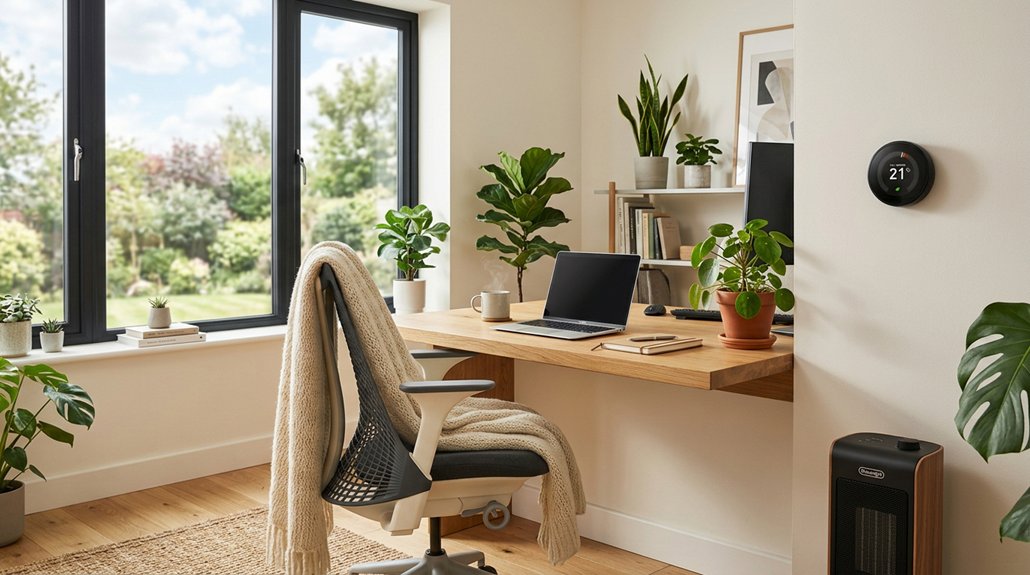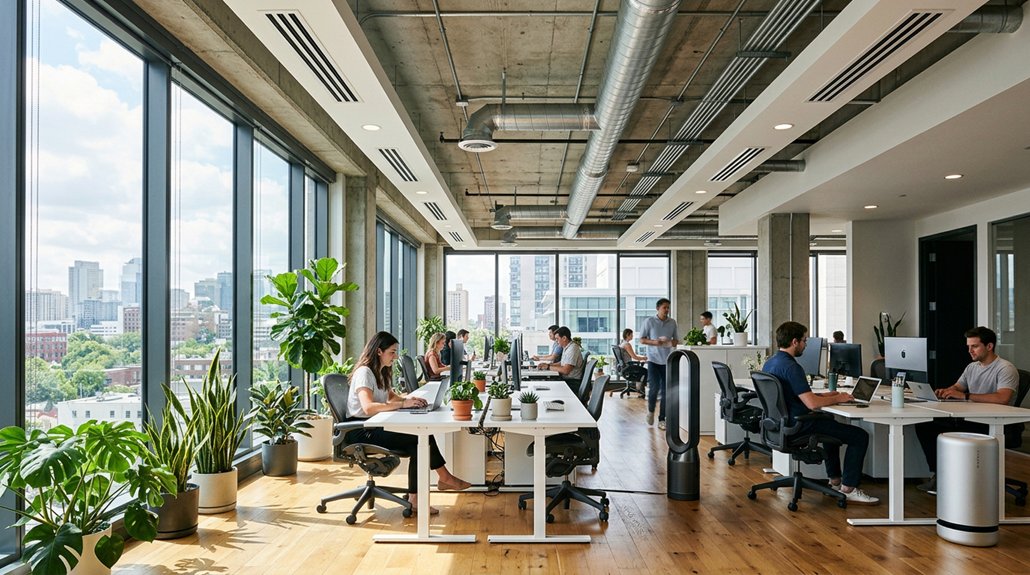
To boost your office airflow, start by opening windows and doors for natural ventilation, especially during favorable weather. Consider upgrading or adding mechanical systems like HVAC with heat recovery, and use fans or circulators to keep air moving. Place air purifiers near workstations, and install exhaust fans in areas like kitchens and bathrooms. Regularly maintain filters and vents, and add indoor plants to naturally improve air quality. Keep exploring for more easy tips to create a healthier workspace.
Assess Your Office’s Current Air Quality and Ventilation
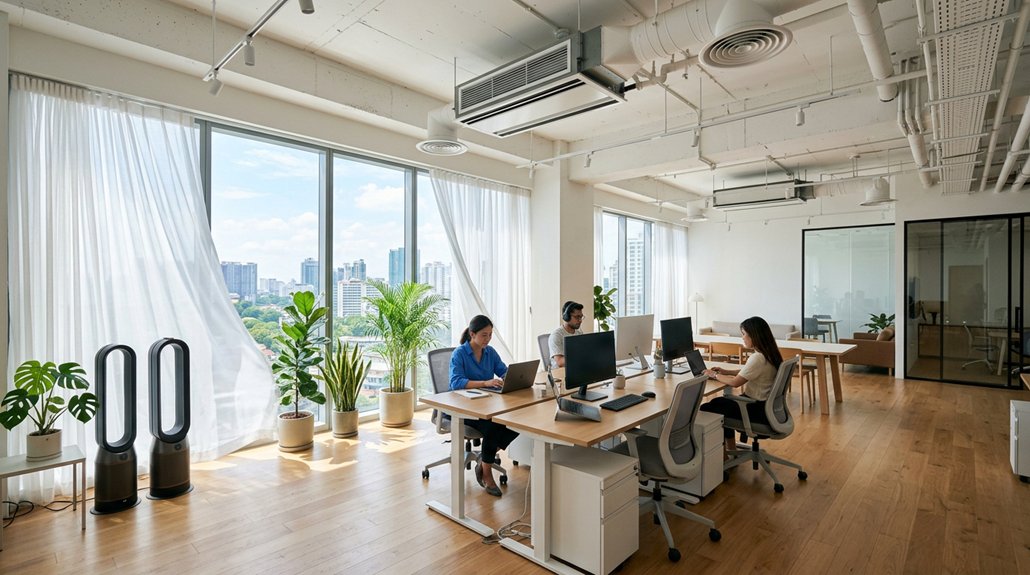
Start by evaluating your office’s air quality and ventilation to identify potential issues before making improvements. Use air quality monitors with real-time alerts to track CO2 levels and airborne particles, ensuring the environment remains healthy and productive.
Conduct a baseline assessment by measuring humidity, particulate matter, and checking for mold or water damage. Next, inspect your existing ventilation systems for proper operation—look for leaks, blockages, and filter cleanliness. Confirm that ventilation equipment runs independently from your HVAC and aligns with occupancy patterns to optimize fresh air exchange. Additionally, assess window operability and think about natural ventilation opportunities, like opening doors or windows. These steps help you understand where your indoor air quality can be improved and set the stage for effective upgrades. Monitoring indoor air quality parameters such as VOCs and PM2.5 levels can help identify air pollution sources and prioritize improvements.
Open Windows and Doors to Boost Natural Airflow
Opening windows and doors is one of the simplest yet most effective ways to boost natural airflow in your office. Opening windows diagonally creates a stronger airflow passage, enhancing natural ventilation and helping stale air escape.
Open windows diagonally to improve airflow and keep your office fresh and comfortable.
For the best results, open windows and doors for around 10 minutes every hour, split into two 5-minute intervals, to effectively refresh indoor air and reduce pollutants.
When weather permits, open windows and doors to lower carbon dioxide levels and stale air, creating a healthier environment. In windowless rooms, opening doors and using fans to push air through mimics natural ventilation, improving airflow.
Implementing effective air exchange techniques, such as using fans in conjunction with open windows, can significantly increase fresh air circulation. Combining these practices guarantees better air exchange, preventing stuffiness and promoting a fresh, comfortable workspace.
Upgrade or Install Mechanical Ventilation Systems for Better Fresh Air
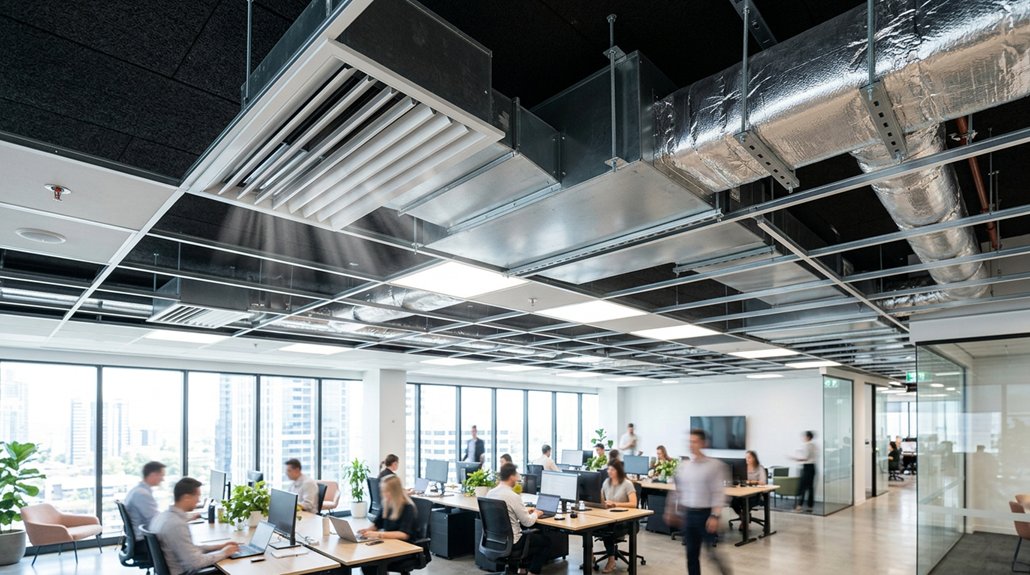
Enhancing natural airflow with open windows and doors helps improve indoor air quality, but in many office settings—especially large or windowless spaces—mechanical ventilation systems offer a consistent solution.
Installing or upgrading your HVAC system with mechanical ventilation units guarantees a steady supply of fresh air, which is essential for maintaining good air quality and reducing indoor pollutants. Modern mechanical ventilation systems, such as those with heat recovery, can achieve over 90% efficiency, saving energy while providing continuous airflow.
These systems often include sensors for real-time air quality monitoring, allowing you to adjust ventilation as needed. Incorporating fire-resistant materials in ventilation infrastructure enhances safety by reducing fire risks associated with electrical components or debris.
Regular maintenance, like filter cleaning or replacement, keeps airflow at peak performance and prevents equipment damage, guaranteeing your office stays fresh and healthy.
Use Fans and Circulators to Keep Indoor Air Moving
Using fans and circulators helps keep the air moving in your office, reducing stale pockets and improving ventilation. Position them to boost airflow toward vents or open doors, which encourages continuous exchange of indoor air. A well-chosen fan can also reduce energy consumption by efficiently circulating air without the need for constant cooling. Regularly cleaning and correctly placing your fans guarantees peak performance and consistent air circulation.
Enhance Air Circulation
Fans and air circulators are effective tools for promoting better airflow in your office, especially in windowless or enclosed spaces. They help improve air flow by pushing stale air out and pulling fresh air in, enhancing overall ventilation. Placing fans near doors and vents increases airflow speed, minimizing dead air zones and boosting natural ventilation. Using portable fans strategically, like directing air from intake to exhaust points such as windows or vents, supports cross-ventilation. Continuous use of ceiling or desk fans during mild seasons keeps air moving, even when HVAC systems are off. Air circulators evenly distribute conditioned air, preventing stagnation and hotspots. Ensuring proper airflow patterns can help optimize the overall effectiveness of your ventilation system. This constant circulation not only maintains balanced temperatures but also helps keep indoor air fresh and healthier for everyone in your office.
Optimize Fan Placement
Proper fan placement can greatly improve airflow in your office by directing movement where it’s needed most. Position fans near windows or doors to push stale indoor air out and draw in fresh air, boosting cross-ventilation and improving indoor air quality. In windowless rooms, use oscillating fans or air circulators to promote continuous air movement, preventing stagnation. Place fans to create directional airflow, like opening intake windows partially while exhausting at opposite sides. Combining fan use with door opening also enhances ventilation and reduces CO2 buildup. Regularly adjust fan speeds and directions seasonally to prevent dead air zones and maintain peak airflow. Proper placement can also help optimize airflow management, ensuring consistent air distribution throughout your workspace.
Place Air Purifiers and Cleaners for Effective Pollutant Removal

You should position air purifiers with HEPA filters near workstations and common areas to capture airborne particles effectively.
Strategically placing multiple devices and maintaining their filters guarantees consistent, high-quality air flow. Opt for models with real-time air quality monitoring to automatically adjust and optimize performance. Additionally, selecting white noise machines designed for office environments can help mask distracting sounds and create a more focused workspace.
Optimal Purifier Placement
Have you ever wondered why some air purifiers seem less effective than others? Proper placement is key to optimizing indoor air quality in office buildings.
Position air purifiers near pollution sources like printers, kitchens, or busy corridors to catch pollutants before they spread. Placing them centrally or close to workstations guarantees clean air reaches where employees spend most of their time.
Avoid corners or behind furniture, which can restrict airflow and reduce efficiency. If you have a large or segmented office, use multiple smaller purifiers strategically to cover all areas effectively. Also, keep purifiers away from windows and vents to prevent outdoor air or HVAC airflow from diluting their effect.
Monitoring airflow and filters regularly keeps your work environment fresh and healthy. Additionally, choosing units with adjustable brightness and color temperature can help create a comfortable atmosphere while maintaining optimal purifier performance.
Filter Maintenance Tips
Maintaining your air purifiers and filters is key to keeping indoor air clean and healthy. Regularly replacing air filters every 6 to 12 months prevents clogging and guarantees peak airflow and pollutant removal.
Use HEPA filters in air purifiers to trap fine particles like dust, pollen, and smoke effectively.
To keep your system performing well:
- Replace air filters in your HVAC and standalone purifiers regularly.
- Clean or swap filters to avoid dust buildup that hampers performance.
- Place air purifiers strategically near workstations and common areas for maximum coverage.
- Conduct routine audits on filters in shared spaces like meeting rooms and kitchens.
Proper maintenance of your filters and replacing air regularly helps maintain proper air quality and system efficiency.
Choosing Effective Devices
Choosing the right air purifiers and cleaners is essential for effectively reducing airborne pollutants in your office. To improve indoor air quality, opt for air purifiers equipped with HEPA filters, which can trap dust, pollen, smoke, and fine particles.
Place these devices near workstations, meeting rooms, and high-traffic areas to maximize pollutant removal and create a healthier environment. Select models with real-time indoor air quality monitoring so you can get alerts before levels become harmful.
Regularly maintain and replace filters based on manufacturer guidelines to guarantee sustained efficiency. When choosing devices for commercial buildings, prioritize those with low VOC emissions and eco-friendly materials to prevent introducing additional chemical pollutants.
This approach guarantees cleaner air and boosts overall workplace well-being.
Arrange Furniture and Spaces to Promote Improved Air Circulation
To improve air circulation in your office, it’s essential to arrange furniture thoughtfully so that airflow isn’t blocked. Poor ventilation can lead to stagnant indoor air, which affects overall air quality. Proper planning helps prevent this. Consider these steps:
- Position desks and workstations to avoid blocking air vents, ensuring unimpeded airflow.
- Leave space between desks and away from walls or windows to create natural air pathways.
- Use open-plan layouts or modular furniture that promotes cross-ventilation across zones.
- Place low partitions or plants that don’t restrict airflow, avoiding tall dividers near vents or corners.
Effective furniture arrangement supports building management efforts to combat poor ventilation, improving indoor air quality and creating a healthier office environment.
Add Exhaust Fans in Key Areas to Improve Ventilation Efficiency
Installing exhaust fans in areas with poor airflow, like kitchens and bathrooms, helps remove stale air and humidity. Make sure to place them near pollution sources for maximum efficiency.
Regular maintenance is key to keep them working well and guarantee continuous ventilation benefits.
Optimal Placement Strategies
Strategically placing exhaust fans in key areas can greatly boost your office’s ventilation efficiency.
To optimize airflow, consider these placement tips:
- Position exhaust fans near sources of pollutants—like kitchens, bathrooms, or copy rooms—to quickly remove odors and contaminants.
- Install fans on exterior walls or ceilings where stale air tends to gather, ensuring better air extraction.
- Use exhaust fans in windowless rooms or conference areas to prevent CO2 buildup by directing air toward supply vents or open doors.
- Pair exhaust fans with intake openings diagonally across the room to create effective cross-ventilation, improving overall air quality and airflow dynamics.
These strategies work together to enhance your office’s ventilation and maintain a healthier environment.
Maintenance for Continuous Effectiveness
Maintaining exhaust fans regularly is key to guaranteeing they keep working effectively across your office. Proper maintenance, including cleaning and replacing filters, prevents clogging and keeps airflow consistent. This safeguards your ventilation system from performance drops that can harm air quality.
Installing exhaust fans in strategic spots like restrooms, kitchens, and conference rooms helps remove stale air and pollutants, supporting healthier indoor environments. Using exhaust fans with variable speed controls allows you to adjust airflow based on occupancy and air quality needs, saving energy and improving ventilation efficiency.
Routine inspections and prompt repairs are essential to prevent mechanical failures that could disrupt airflow pathways. By prioritizing maintenance, you guarantee continuous air circulation, making your office healthier and maintaining peak air quality at all times.
Regularly Maintain and Replace Air Filters and Vents
Regularly maintaining and replacing air filters and vents is essential for guaranteeing ideal airflow in your office environment.
When you keep air filters and vents clean, you improve indoor air quality and guarantee the HVAC system runs efficiently. Here are some key steps:
- Replace air filters every 6 to 12 months to prevent clogging.
- Inspect and clean vents regularly to remove dust, debris, and insects.
- Upgrade to HEPA filters in commercial spaces for better removal of fine particulates.
- Conduct audits of filters and vents in shared areas like meeting rooms and kitchens to maintain consistent air purity.
Incorporate Indoor Plants to Naturally Purify the Air
Incorporating indoor plants into your office space naturally improves air quality by absorbing toxins and volatile organic compounds. Plants like Golden Pothos, Spider Plant, Dracaena, and Chrysanthemum are excellent choices because they actively purify the air. They produce oxygen through photosynthesis, which boosts air freshness and helps keep employees alert.
Positioning indoor plants near workstations and in common areas enhances localized air quality, creating a healthier environment for everyone. To guarantee ongoing effectiveness, regularly care for your plants to prevent mold growth on the soil. Good indoor plant maintenance also keeps the plants thriving, maximizing their ability to improve air quality over time.
Monitor Indoor Air Quality With Sensors and Adjust as Needed
Installing indoor air quality sensors allows you to continuously monitor key factors like CO2 levels and particulate matter, ensuring your office maintains a healthy environment.
Indoor air quality sensors help maintain a healthy office environment by tracking CO2 and particulate levels.
These sensors provide real-time data that helps identify when ventilation needs adjusting.
Consider these steps:
- Use CO2 sensors to detect high carbon dioxide levels, signaling inadequate ventilation.
- Set alerts so you’re notified before air quality drops to harmful levels.
- Regularly review sensor data to establish baseline conditions and spot trends.
- Take manual actions, like opening windows or tweaking mechanical ventilation, based on sensor feedback.
Frequently Asked Questions
How Can I Improve the Air Circulation in My Office?
You can improve air circulation in your office by opening diagonal windows or combining doors and windows for cross-ventilation, using fans strategically, keeping ventilation systems running, and regularly cleaning filters, ensuring fresh, continuous airflow throughout your workspace.
What Is the 3 Degree Rule of Ventilation?
The 3 Degree Rule of Ventilation means maintaining about a 3°C temperature difference between indoor air intake and exhaust. This slight gradient helps create natural airflow, drawing in fresh air and improving ventilation without excessive effort or mechanical systems.
How to Improve Indoor Air Quality in Office?
To improve indoor air quality, you should open windows regularly, replace filters, monitor humidity levels, use air purifiers, and add air-purifying plants. These steps help reduce pollutants and guarantee fresh, clean air in your office environment.
How to Improve Office Atmosphere?
You improve your office atmosphere by opening windows regularly, using fans to circulate air, adding indoor plants for freshness, and maintaining clean, efficient ventilation systems. These steps create a more comfortable, inviting, and healthy workspace for everyone.