Indirect lighting reduces eye strain by providing soft, evenly diffused light that minimizes harsh reflections and glare on your screen. It lowers the contrast between your monitor and surroundings, helping your eyes adjust smoothly without constant pupil movement. By reducing flickering and glare, it keeps your eyes comfortable for longer periods. Properly set up indirect lighting creates a more balanced, glare-free environment that will help ease eye fatigue and support better visual comfort. Keep exploring to find out how to set it up effectively.
What’s the Difference Between Direct and Indirect Lighting?
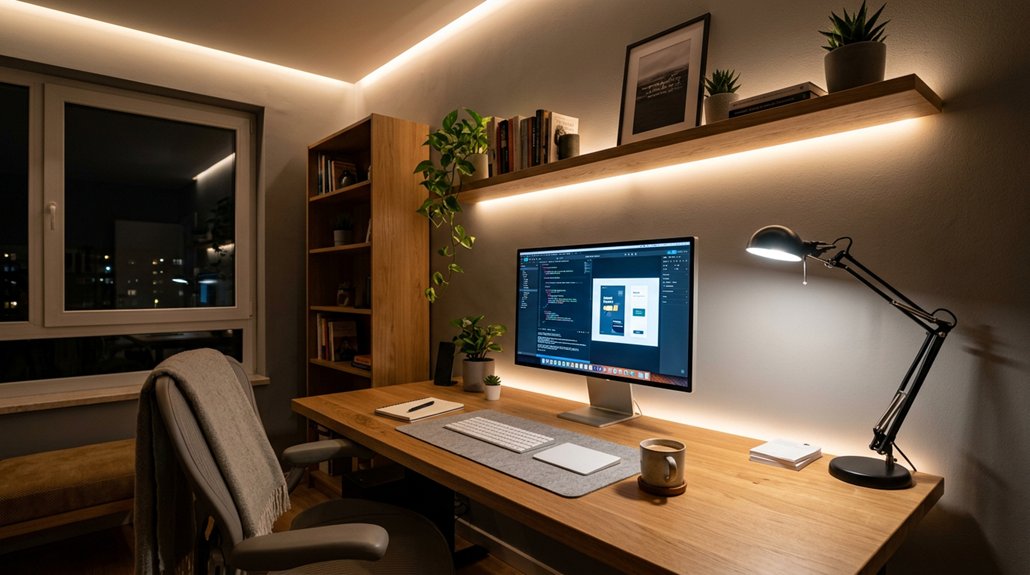
Have you ever noticed how harsh, direct light can cause glare and make it difficult to see clearly? Direct lighting shines straight onto surfaces or workspaces, often creating sharp shadows and making screens reflect with glare. This setup can lead to increased eye strain, headaches, and blurred vision. Using full-spectrum LED lighting with high CRI can further enhance visual comfort by providing more accurate and vivid color rendering. In contrast, indirect lighting reflects light off walls or ceilings, providing soft illumination that evenly fills the space. It reduces harsh reflections and minimizes screen glare, helping improve visual clarity. By creating a balanced ambient lighting environment, indirect lighting prevents frequent pupil dilation and contraction, which can tire your eyes.
Why Soft, Diffused Light Boosts Your Eye Comfort
Soft, diffused light enhances your eye comfort by creating a gentle, uniform glow that reduces harsh shadows and glare. This type of lighting, often achieved through indirect lighting, guarantees the eyes can adjust smoothly without constant strain. A well-designed bias lighting setup, such as the LED strips and smart solutions described, can help create this indirect lighting effect effectively. It evenly distributes illumination, preventing bright spots that lead to eye fatigue and discomfort. Using soft, diffused light with warm tones from LED lights helps lower contrast between your screen and the surrounding environment, decreasing the need for frequent pupil adjustments.
Soft, diffused lighting creates a gentle glow that reduces glare and eye strain for comfortable, extended focus.
This balanced lighting:
- Minimizes glare and sharp shadows
- Promotes steady focus
- Reduces symptoms like headaches and blurred vision
- Supports longer periods of productivity and visual comfort
How Indirect Lighting Reduces Glare and Screen Contrast
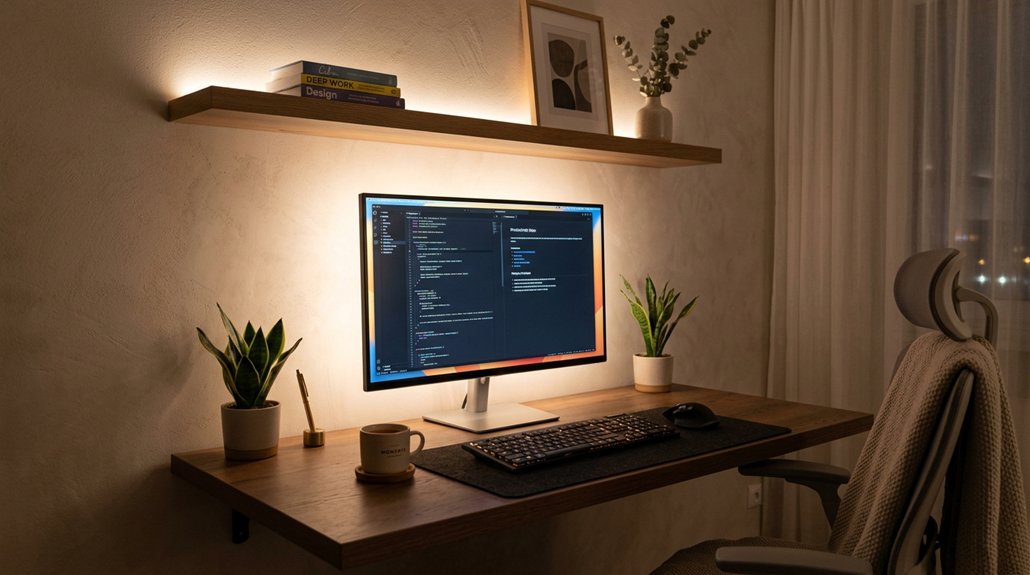
Indirect lighting plays a pivotal role in reducing glare and screen contrast, creating a more comfortable viewing environment. By evenly diffusing light across surfaces, it minimizes harsh reflections and prevents intense glare that can cause eye discomfort.
Without direct light aimed at your monitor, stark contrasts between the screen brightness and surrounding areas are eliminated, allowing your eyes to adjust more naturally. The soft, ambient glow reduces fluctuations in pupil dilation caused by high contrast, lowering visual fatigue.
This balanced illumination helps prevent overly bright reflections and maintains clear visibility without washing out colors. Combining indirect lighting with optimized screen brightness enhances visual ergonomics. As a result, you experience less eye strain, headaches, and blurred vision, promoting a healthier, more comfortable workspace. Flicker-free LEDs also contribute significantly to reducing visual irritation by providing steady, consistent light.
Easy Tips to Set Up Indirect Lighting at Home
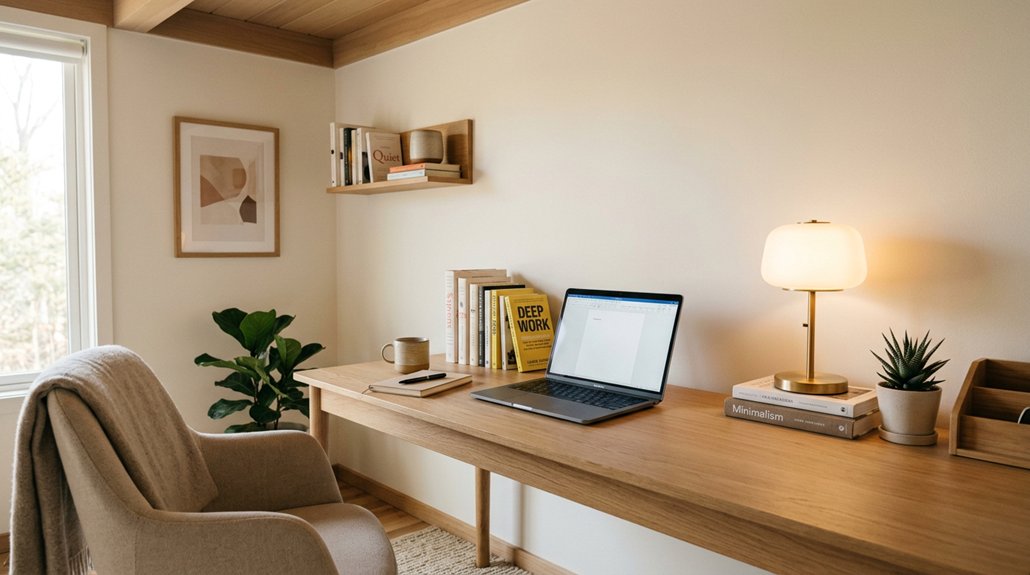
Wondering how to set up your home for ideal eye comfort? Start by positioning indirect light sources like wall sconces or lamps with shades to reflect light off walls or ceilings. This creates soft, even illumination that reduces glare and harsh shadows.
Use adjustable LED bulbs with warm color temperatures (3000K–4000K) for a cozy, eye-friendly glow. Place desk lamps behind and slightly above monitors to provide focused task lighting without causing screen glare.
Add bias lighting, such as LED strips behind screens, to balance contrast and prevent pupil strain. Incorporate dimmer switches or smart bulbs for brightness control, matching ambient light to your screen brightness. These simple steps optimize ambient light and reduce eye fatigue effectively.
Common Mistakes to Avoid When Installing Indirect Lighting
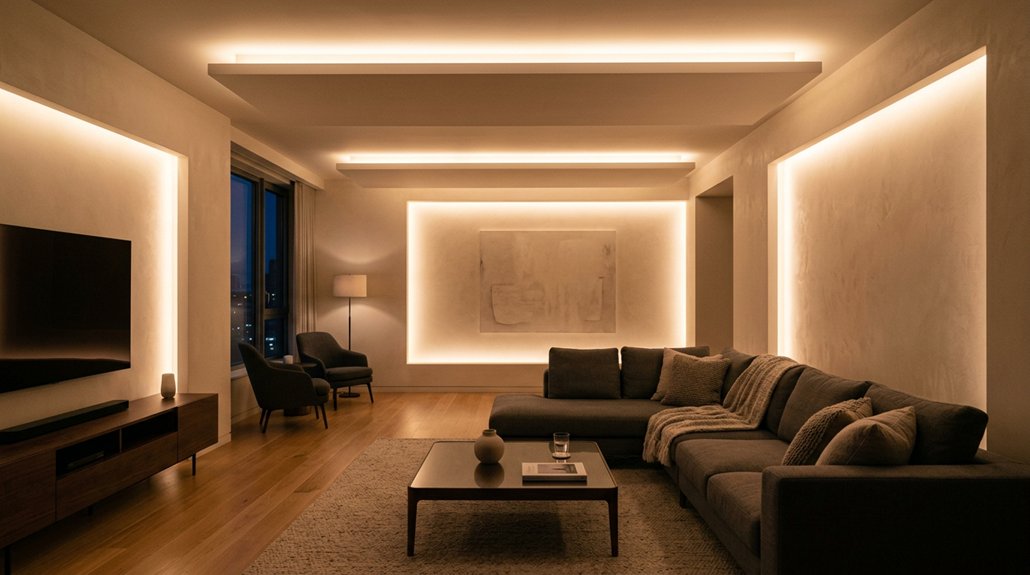
To guarantee your indirect lighting setup benefits your eyes, you need to avoid common mistakes that can inadvertently cause more harm than good. Don’t place indirect lighting sources directly behind or above your screen, as glare and reflections can increase eye strain.
Avoid dim or uneven lighting that forces constant pupil adjustment, leading to ocular fatigue and headaches. Steer clear of flickering LED or fluorescent bulbs, which can cause discomfort and reduce focus.
Make sure brightness levels match your screen, preventing over-brightening that strains your eye muscles. Additionally, don’t neglect adjustable LED fixtures, so you can fine-tune brightness and color temperature, avoiding fixed harsh or overly cool tones that worsen digital eye strain and disrupt your circadian rhythm. Proper installation is key to comfort. Being mindful of lighting placement and calibration can significantly reduce eye fatigue during extended screen time.
Frequently Asked Questions
What Is the Best Lighting to Reduce Eye Strain?
You should use soft, indirect lighting with adjustable warm to neutral LED bulbs positioned behind or above your screen. This setup minimizes glare, harsh shadows, and flicker, helping you reduce eye strain and maintain comfortable, balanced workspace illumination.
Is Indirect Sunlight Good for Eyes?
Yes, indirect sunlight is good for your eyes because it offers gentle, balanced illumination, reduces glare and shadows, and helps maintain comfortable focus. Position your workspace near windows with sheer curtains for ideal eye comfort.
What Is the 30 30 30 Rule for Eyes?
You should follow the 30 30 30 Rule, which means looking at something 30 feet away for 30 seconds every 30 minutes. This helps relax your eye muscles, reduce fatigue, and prevent discomfort during prolonged screen time.
Which Fruit Is Best for Eyes?
You’d find kiwi fruit best for your eyes because its lutein and zeaxanthin help filter harmful blue light and reduce digital eye strain. Eating kiwi regularly supports your retinal health and overall visual comfort.
In Summary
By choosing indirect lighting, you create a softer, more comfortable environment that reduces glare and eye strain. It’s simple to set up and makes a noticeable difference, especially when working or relaxing at home. Just avoid common pitfalls, and you’ll enjoy a well-lit space that supports your eye health. Embracing indirect lighting not only improves comfort but also helps prevent long-term eye fatigue, making your daily activities more pleasant and less stressful on your eyes.