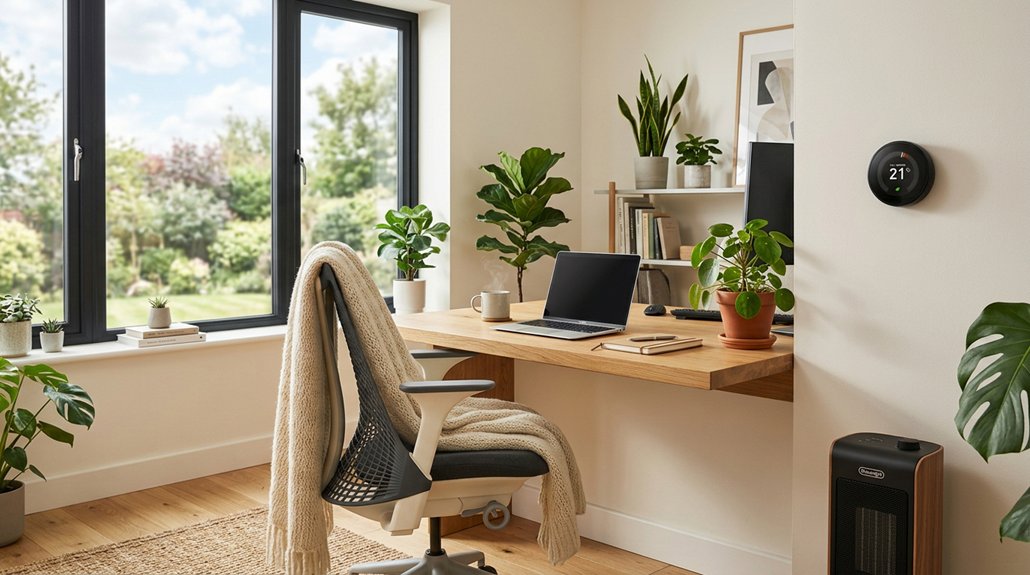
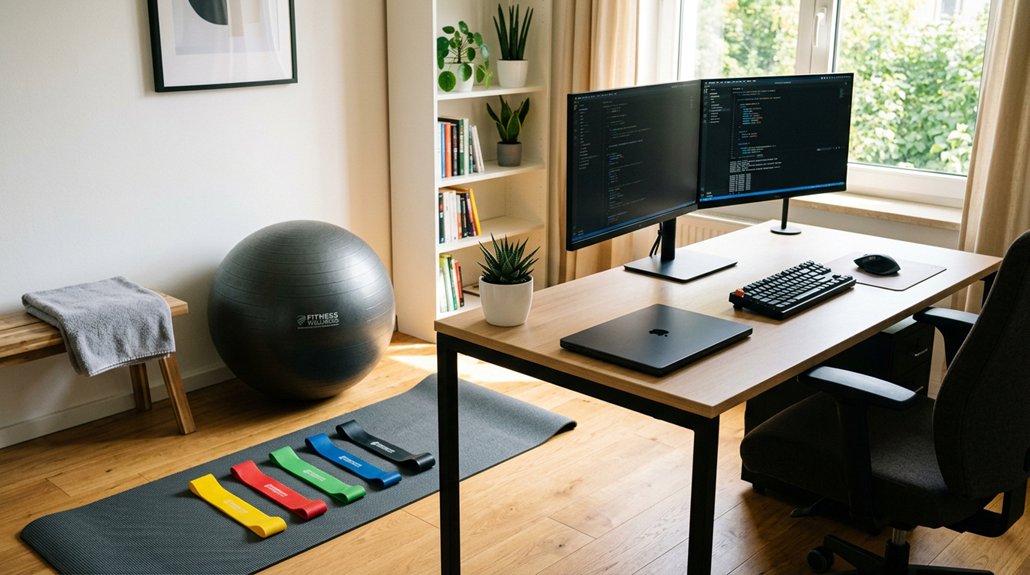
Taking regular breaks in your home office is key to improving circulation and preventing health issues from prolonged sitting. Move every 30 to 60 minutes with quick exercises like stretching, leg lifts, or walking. Use timers or apps to stay consistent and choose activities that boost blood flow and reduce stiffness. Focus on your body’s signals and adjust your schedule as needed. Keep going to discover more tips for making movement seamless and effective throughout your workday.
How Can You Recognize Signs of Poor Circulation During Work?
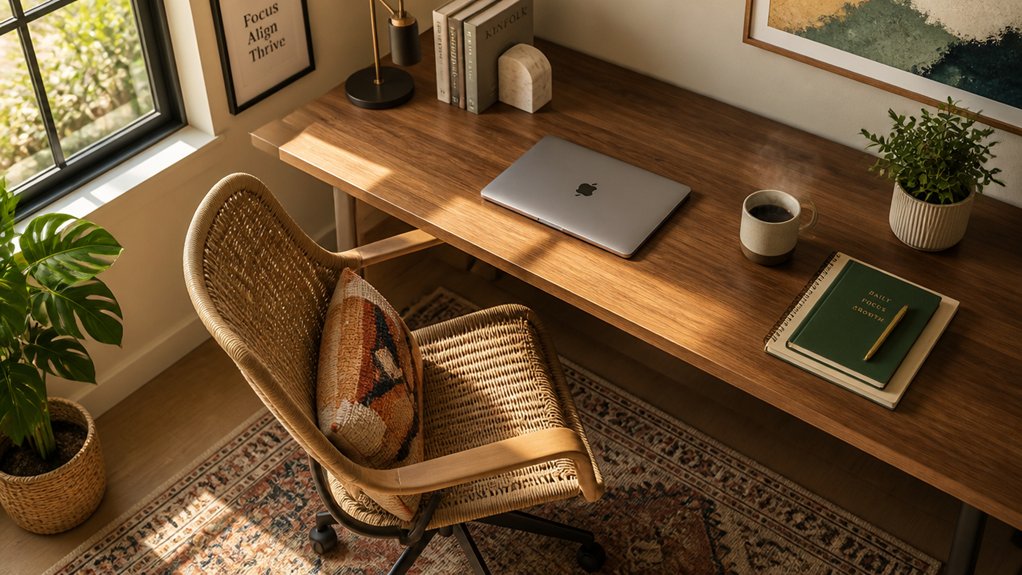
How can you tell if your circulation is suffering during work? Pay attention to signs like frequent stiffness and muscle tension, especially in your neck, shoulders, hips, and lower back.
If you notice numbness or tingling in your hands, fingers, or feet, it could signal reduced blood flow from sitting too long. Cold or pale extremities are also common indicators of poor circulation.
Feeling fatigue, drowsiness, or a heavy sensation in your legs after hours at your desk can be a warning sign. Additionally, noticeable swelling or cramping in your legs suggests circulation issues.
To prevent these problems, it’s crucial to take regular breaks, which allow blood to flow freely and reduce these discomforts. Recognizing these signs early helps you address ergonomic support problems promptly.
Why Is Improving Blood Flow Important for Long-Term Health?
Improving blood flow is essential for maintaining your long-term health because it guarantees that oxygen and nutrients reach your organs and tissues efficiently, especially when sitting for extended periods. When your blood circulates well, you lower your risk of cardiovascular issues, like heart disease and strokes. Regular movement prevents blood pooling and blood clots, keeping deep vein thrombosis at bay. Good circulation also supports your brain function, enhancing concentration and memory. Additionally, improved blood flow reduces muscle stiffness and tension, easing discomfort and avoiding musculoskeletal problems. Staying active helps regulate body temperature and boosts your immune system, safeguarding your health over time, especially when using supportive anti-fatigue mats that encourage foot movement.
What Are the Effects of Sitting Too Long on Your Body and Brain?
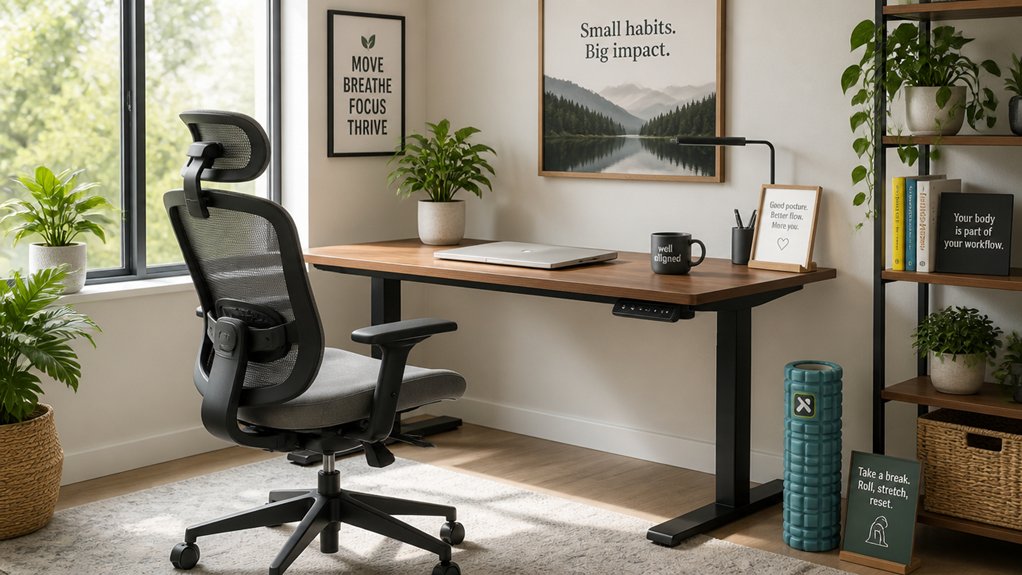
Sitting too long can restrict blood flow, leading to muscle stiffness and increasing your risk of heart issues. It also impacts your brain by lowering focus, harming mental clarity, and causing fatigue. Taking regular breaks keeps your circulation healthy and sharpens your thinking. To maintain proper posture and spinal health, using a supportive lumbar pillow can help prevent discomfort during extended sitting periods.
Blood Flow Reduction
When you sit for extended periods, blood flow to your muscles and organs slows down considerably, which can lead to muscle stiffness, joint pain, and a higher risk of blood clots.
Without regular movement, your muscles tense up, especially in the hips and lower back, causing discomfort. Reduced blood circulation also hampers oxygen and nutrient delivery to your brain, leading to decreased focus and mental fatigue.
Sitting for too long slows cardiovascular function, increasing the chances of heart disease and metabolic issues. To counteract this, breaking every 30 to 60 minutes with short stretch breaks helps restore healthy blood flow.
These breaks support physical comfort and mental alertness, reducing the risks associated with prolonged sitting and promoting overall circulation health.
Cognitive Function Impact
Extended periods of inactivity hinder your brain’s efficiency by limiting blood flow and oxygen supply, which are essential for peak cognitive function. When you sit too long, your blood circulation decreases, causing muscle stiffness and reducing oxygen to your brain. This impairs focus, decision-making, and memory. Chronic sedentary behavior can also increase stress levels and disrupt neurotransmitter balance, negatively affecting mental clarity. Regular movement breaks every 30–60 minutes help restore neural function, boosting cognition and creativity. Incorporating active footrest use can promote ongoing leg movement and circulation even during sedentary tasks.
How Does Regular Movement Boost Circulation and Overall Well-Being?
Have you ever noticed how taking short movement breaks can instantly make you feel more alert and refreshed? When you take breaks to move, you boost blood circulation, delivering oxygen and nutrients to your muscles and organs.
This reduces stiffness and muscle tension, helping your body function efficiently. Regular movement also lowers the risk of cardiovascular issues and blood clots linked to prolonged sitting.
To maximize the benefits:
- Activate your parasympathetic nervous system to reduce stress hormones.
- Increase blood flow to your brain, improving focus and mental clarity.
- Support musculoskeletal health, preventing pain and fatigue.
- Incorporating a compact under-desk bike pedal into your routine can make it easier to sustain movement throughout the day.
How Can You Design Your Home Office for Better Blood Flow?
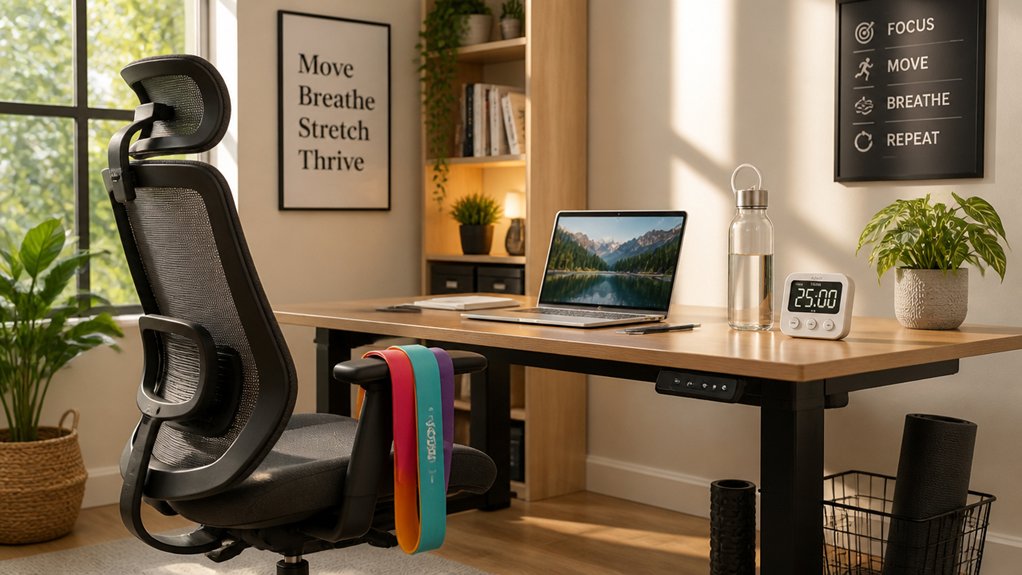
To boost circulation, organize your home office with an ergonomic desk and adjustable chair that encourage you to change positions frequently. Create designated movement zones nearby for stretching or light exercises, making it easy to stay active throughout the day. Additionally, keep essentials within reach and support your posture with proper seating to reduce muscle strain and promote better blood flow. Incorporating multiple height adjustment options in your chair can help you switch between sitting and standing positions, further enhancing circulation.
Ergonomic Desk Arrangement
Designing your home office with an ergonomic desk arrangement helps boost blood flow and reduce discomfort. To achieve this, focus on key setup details.
- Position your desk and chair so your feet rest flat on the floor or on a footrest, preventing blood pooling.
- Arrange your monitor at eye level, maintaining proper posture and reducing neck and shoulder tension that can restrict blood flow.
- Choose an adjustable chair with lumbar support and appropriate height settings to promote spinal alignment and keep blood vessels unobstructed.
- Incorporate lumbar support mechanisms into your chair setup to further enhance lower back comfort and support proper circulation.
Ensuring enough space under the desk for leg movement is also essential, allowing easy stretching and circulation breaks.
Incorporating these elements into your ergonomic desk arrangement supports better blood flow and overall comfort during your workday.
Incorporate Movement Zones
Creating a dedicated movement zone within your home office makes it easier to take a break and incorporate regular activity into your routine. Set aside a small area for stretching or light exercises, making it convenient to move during work hours.
Position your workspace to include a standing desk or adjustable setup, so you can easily switch between sitting and standing. Place visual or physical cues, like resistance bands or a yoga mat, nearby to remind you to take a break for brief stretching sessions every 30–60 minutes.
Position your movement zone close to a window or door for quick outdoor walks or fresh air breaks that boost circulation and refresh your mind. Guarantee there’s enough open space to perform safe stretches, such as lunges or shoulder rotations.
Use Proper Seating Support
Choosing the right seating support makes a significant difference in maintaining healthy blood flow throughout your workday. An ergonomic chair with adjustable lumbar support helps you maintain the natural curve of your spine, ensuring proper circulation.
To optimize blood flow, focus on these key points:
- Use an ergonomic chair that allows your feet to rest flat on the floor or on a footrest, preventing thigh pressure that can restrict blood flow.
- Adjust your seat so your knees are at or slightly below hip level to avoid compressing blood vessels.
- Incorporate a seat cushion that evenly distributes weight, reducing pressure points on the pelvis and legs.
- Select a stool or chair with height adjustability that suits your body shape and workspace setup, promoting healthy posture and circulation.
Position your workstation to promote an upright posture, avoiding slouching. Proper seating support encourages better blood circulation and overall comfort during long work hours.
What Are Easy Desk Exercises and Stretches to Improve Circulation?
Looking for simple ways to boost circulation during your workday? Taking breaks for easy desk exercises is a great start. When you take a break, try seated leg lifts or ankle rotations to engage leg muscles without leaving your desk.
Stretch your neck, shoulders, and back for 30–60 seconds every half hour to reduce stiffness and promote blood flow. Standing lunges targeting your hip flexors help counteract the effects of prolonged sitting. Quick stretches like toe touches or shoulder rotations using resistance bands also prevent muscle tension and boost circulation.
Combining these gentle movements with deep breathing activates relaxation responses and improves your cardiovascular health. Remember, taking regular breaks for simple stretches keeps your blood flowing smoothly and makes your workday healthier and more comfortable.
How Can You Incorporate Quick Movement Snacks Into Your Day?
You can easily fit quick movement snacks into your day by scheduling brief exercise sessions or stretches at regular intervals.
Incorporate activities like jumping jacks, brisk walking, or desk stretches every 30 to 60 minutes to boost circulation. Setting calendar reminders helps you stay consistent and makes these movement breaks an effortless part of your routine.
Easy Movement Techniques
Incorporating quick movement snacks into your day is a simple way to boost circulation and break up long periods of sitting. These easy movement techniques can be seamlessly integrated into your routine to keep you active.
For example:
- Perform exercise snacks like 1-minute jumping jacks, stair climbing, or speed walking every 30 to 60 minutes to stimulate blood flow.
- Do quick desk stretches such as standing lunges for your hip flexors or seated back extensions during work breaks to target tension spots.
- Engage in short physical activities like squats or leg lifts, which promote cardiovascular health and counteract muscle stiffness.
Using calendar reminders to schedule micro-movement breaks every 25 to 30 minutes can help you stay consistent. Break every period with these simple, targeted movements for better circulation all day.
Scheduling Movement Snacks
Scheduling movement snacks throughout your day helps maintain steady circulation and reduce the negative effects of prolonged sitting. Every hour, set a reminder to incorporate quick activities like jumping jacks, squats, or speed walking for just a minute. These exercise snacks boost blood flow and energy. Use short 3-6 minute breaks for stair climbing, leg lifts, or standing stretches such as lunges or shoulder rotations. Integrating micro-breaks between work tasks helps reduce muscle tension and encourages better posture. To stay consistent, plan your movement snacks and pair them with hydration and mindful breathing for peak circulation and mental clarity.
| Movement Activity | Duration |
|---|---|
| Jumping jacks | 1 minute |
| Squats | 1 minute |
| Speed walking | 1 minute |
| Leg lifts | 3-6 minutes |
| Lunges/shoulder rotations | 3-6 minutes |
What Are Practical Strategies to Build Sustainable Movement Break Habits?
What’re effective ways to develop lasting movement break habits that boost circulation and overall wellbeing? The key is creating routines that become part of every workday.
First, schedule movement breaks as recurring calendar events and use physical or digital timers to make them inevitable, supporting consistent habits.
Second, tailor break timing and activities to your productivity rhythms—micro-breaks every 20–30 minutes and longer breaks every 90 minutes help sustain focus and energy.
Third, choose simple physical activities like desk stretches, seated back extensions, or lunges, held for 30–60 seconds.
To support these habits, create a break-friendly environment by removing obstacles and keeping a list of preferred recharge activities.
Experiment with break ratios to find what feels natural, making these habits sustainable in the long run.
How Can Timers and Reminders Help You Stay Active Throughout the Day?
Timers and reminders serve as effective tools to keep you moving consistently throughout the day. Taking breaks throughout the day with alerts encourages regular movement, like stretching every 30 to 60 minutes, which counters the negative effects of sitting too long.
Studies show micro-breaks under 10 minutes, prompted by reminders, improve blood circulation, reduce muscle tension, and boost focus and productivity during sedentary work.
Scheduling these breaks with alarms or apps helps make taking breaks a fixed part of your routine, overcoming workplace inertia and the “always-on” culture. Placing timers away from your workspace encourages you to stand or walk to turn off the alerts, increasing physical activity and supporting musculoskeletal health.
Digital reminders also help you recognize fatigue signs and adjust break timing based on your energy levels.
Why Should You Combine Movement With Mindfulness for Complete Wellness?
Have you ever considered how combining movement with mindfulness can enhance your overall well-being?
During a taking a break, integrating gentle movement with mindfulness activates relaxation and boosts mental clarity. This practice offers multiple benefits:
- It reduces stress, lowering cortisol levels through slow stretches and deep breathing, promoting calmness.
- It prevents muscle tension and stiffness by increasing body awareness and encouraging better posture.
- It enhances productivity by reducing mental fatigue and supporting clearer decision-making.
What Are Fun and Motivating Ways to Make Movement More Engaging?
Transforming movement into an enjoyable activity can greatly boost your motivation to stay active during breaks. Making sure your routines are engaging helps you stick with them longer.
Making movement enjoyable boosts motivation and helps you stay active longer.
Try incorporating short, vigorous “exercise snacks” like 1-minute jumping jacks or stair climbing — they boost circulation and energy fast. Using music playlists or dancing breaks can make movement fun and lift your mood, encouraging consistency.
Turning stretching into a challenge or game, by holding poses for 30-60 seconds and tracking your progress, adds motivation. Outdoor walks that combine fresh air and sunlight not only improve circulation but also reduce mental fatigue and sharpen focus.
Finally, leveraging apps or online timers with fun reminders and rewards makes taking regular movement breaks easy and enjoyable, turning them into habits you’ll actually look forward to.
How Can You Track Your Progress and Adjust Breaks for Best Results?
How can you guarantee your breaks effectively boost circulation and energy? By tracking work intervals and monitoring your body’s signals, you can optimize your break schedule.
First, use time-tracking tools or apps to make certain you take breaks every 30–60 minutes, following guidelines for circulation benefits. Second, pay attention to physical signs like reduced muscle tension and stiffness to gauge if your breaks are working.
Third, keep a log of your break activities and observe their impact on your focus and energy. Adjust your break length and activity intensity based on fatigue signals such as slowed pace or distractions.
Experiment with different break ratios, such as Pomodoro’s 25/5 or micro-breaks every 20–30 minutes, and refine your schedule accordingly.
What Are Common Mistakes to Avoid When Trying to Improve Circulation?
To maximize the benefits of your breaks for circulation, it’s important to steer clear of common pitfalls.
First, avoid sitting continuously for long periods without taking breaks every 30–60 minutes. This can lead to decreased circulation and muscle tension. Don’t perform static stretches or hold one position too long during breaks, as this can restrict blood flow rather than enhance it.
Also, avoid engaging in screen-based activities like doomscrolling during breaks, since they don’t promote physical movement needed to boost circulation. Never work through your breaks or skip them due to workload, as continuous inactivity worsens circulation and increases health risks.
Finally, don’t rely only on short breaks; incorporate light activity like walking or stretching to effectively improve blood flow at home.
What Are the Long-Term Benefits of Consistent Movement for Circulatory Health?
Consistent movement during your breaks offers significant long-term benefits for circulatory health by keeping blood flowing smoothly through your body. This helps reduce the risk of blood clots and heart disease.
Regular movement during breaks improves circulation, reducing risks of blood clots and heart disease.
Regular short stretches and walks improve vascular function, leading to better oxygen and nutrient delivery to muscles and organs over time.
The long-term advantages include:
- Enhanced cardiovascular health, lowering the risk of chronic conditions like varicose veins and deep vein thrombosis.
- Reduced muscle stiffness and tension, supporting musculoskeletal health and decreasing pain.
- Better mental clarity and lower stress levels, promoting overall well-being.
Frequently Asked Questions
How to Take Breaks While Working From Home?
You should schedule short breaks every 30 to 60 minutes, step away from your workstation, perform quick exercises like jumping jacks or lunges, and stretch for 30 to 60 seconds. Then, hydrate and avoid screens during breaks.
What Is the Most Creative Way to Take a Break in the Office?
You can turn break time into a fun challenge, like holding resistance band shoulder W-rotations or doing mini walking meetings. Incorporate outdoor mindfulness walks or quick desk stretches, making breaks energizing and creatively engaging for your body and mind.
Is Taking a 15-Minute Break Ok at Work?
Taking a 15-minute break is definitely okay at work. It helps you stretch, reduce muscle tension, and boost circulation. Plus, it improves focus, cuts down eye strain, and refreshes your mind, making your work more productive and comfortable.
How Often Should You Take Short Breaks From Your Desk?
You should take short breaks every 20 to 30 minutes. Use these micro-breaks to stretch or move around, which helps boost circulation, reduce muscle tension, and keep your focus sharp throughout your workday.